
Chennai’s GCC Expansion and Its Potential Impact on Real Estate Market
Chennai has long been recognised for its strong manufacturing, automobile, IT, healthcare, financial services, and engineering sectors. In...
Read More

Every parent wants to see their child smile, laugh, and thrive in life. But happiness is more than just occasional giggles or playful moments it reflects a child’s emotional well-being, confidence, and sense of security. Observing the signs of a happy child can help parents understand how their kid feels, whether they are content, and how they cope with challenges. From playful energy and curiosity to empathy and strong social connections, these signs of happiness in a kid provide a clear picture of their overall mental and emotional health. Paying attention to these indicators can help parents in their parenting journey by nurturing a supportive and loving environment that fosters long-term joy and well-being.
A happy child exhibits certain behaviors and attitudes that reflect their emotional well-being and contentment. Observing these signs of happiness can help parents with effective parenting tips to understand how their child feels and ensure they are growing in a supportive environment. Below are the key indicators to look out for:
A happy child often smiles and laughs freely. Their joy is visible not just in moments of fun but also in everyday interactions. These expressions indicate that they feel safe, loved, and comfortable in their surroundings.
Examples:
Children who are genuinely happy show curiosity about the world around them. They ask questions, explore new activities, and engage enthusiastically in learning experiences.
Examples:
A happy child can handle minor setbacks or disappointments without becoming overly frustrated. They bounce back quickly and continue to engage positively with their surroundings.
Examples:
Children who feel happy and secure often show care for others. They can understand and respond to the feelings of friends, siblings, or even pets.
Examples:
A happy child enjoys spending time with family, friends, and peers. They engage confidently in conversations and activities, showing comfort in social settings.
Examples:
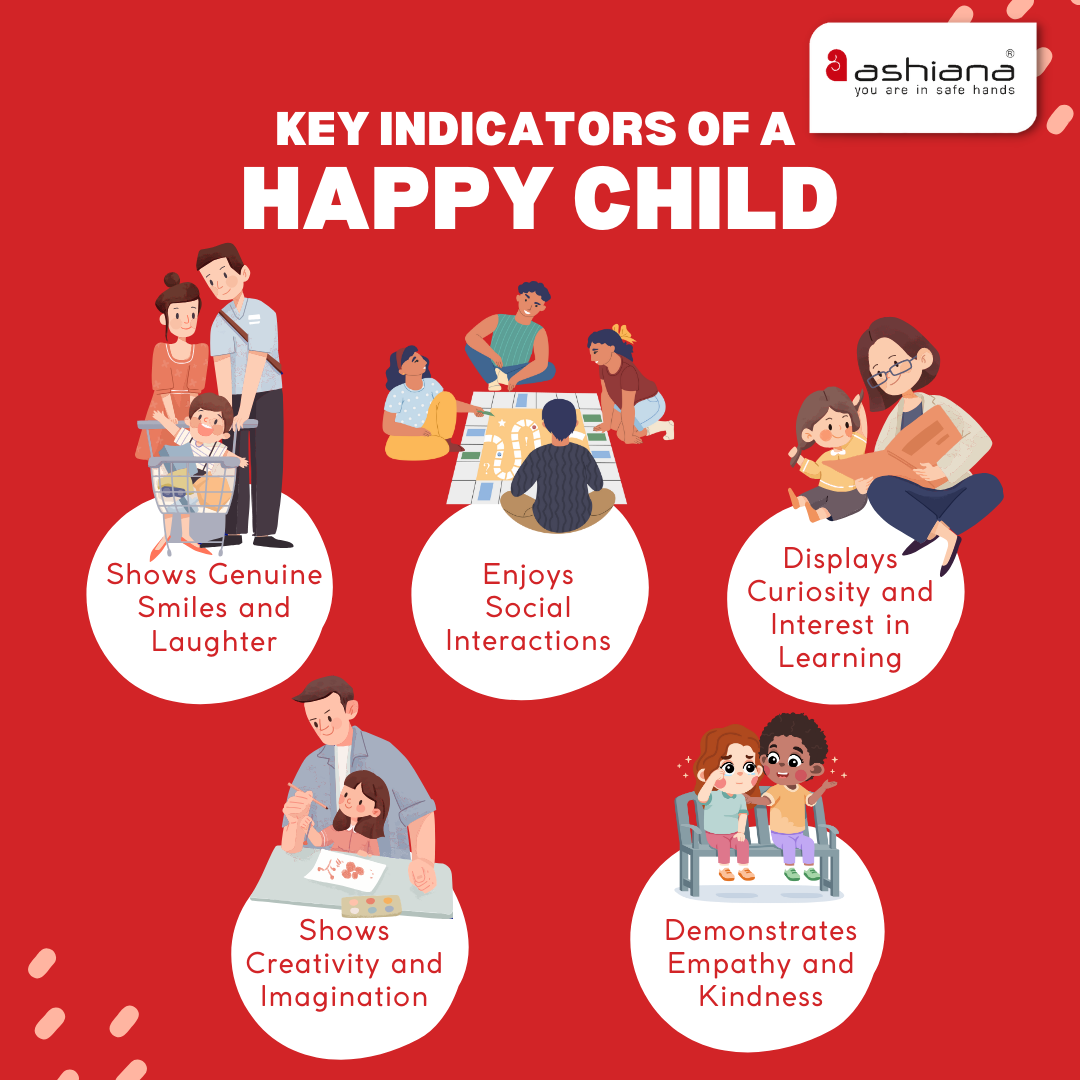
Happiness often encourages children to explore their creativity. A content child expresses themselves through drawing, storytelling, role play, or other imaginative activities.
Examples:
A happy child feels secure enough to try things on their own. They take initiative, make simple decisions, and enjoy accomplishing tasks independently.
Examples:
Content children often show thankfulness and recognize positive moments in life. Gratitude reflects their understanding and acceptance of the world around them.
Examples:
A happy child exhibits a balanced energy level-enthusiastic during play and able to rest or focus when needed. This reflects emotional stability and well-being.
Examples:
Children who are genuinely happy are comfortable sharing their feelings. They express joy, disappointment, curiosity, or excitement openly without fear of judgment.
Examples:
Many adults assume that children should be happy all the time, but that isn’t realistic. Children, like adults, experience a wide range of emotions, and learning to cope with strong feelings is an important part of emotional growth.
A child’s happiness is deeply influenced not just by love and care from parents, but also by the environment they grow up in. With the right parenting tips and a safe, nurturing, and engaging home space, children can explore, learn, and express themselves freely. Studies show that children who grow up in supportive communities and thoughtfully designed homes feel more secure, confident, and content.
That’s where Ashiana Housing makes a difference. Their project, like Ashiana Amarah, is specially designed with children in mind, offering kid-friendly amenities, safe play areas, and a community that encourages learning and joy at every step. From interactive spaces to thoughtfully planned homes, Ashiana Amarah provides an environment where children don’t just live, but truly thrive and grow happily.
A happy child does not smile all the time, but one who experiences a healthy balance of emotions and knows how to cope with challenges. Observing the signs of happiness can help parents provide the support and encouragement children need to grow confidently and joyfully. This parenting guide emphasizes that by fostering a loving environment, encouraging curiosity, creativity, and emotional expression, parents can help their kids develop resilience, social skills, and a sense of contentment that lasts into adulthood.