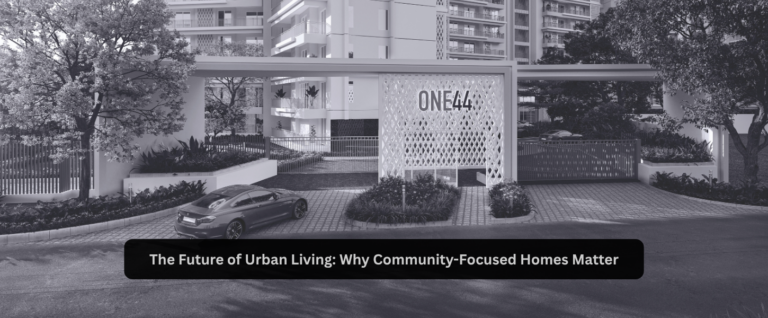
The Future of Urban Living: Why Community-Focused Homes Matter
Square footage, location, and specifications remain important considerations when choosing a home. But increasingly, the decision doesn’t end...
Read More

A child reaching for a toy, stepping around furniture, arranging puzzle pieces, or judging how far to throw a ball is already using spatial awareness. This essential ability helps children understand where their bodies are in relation to people, objects, and surrounding spaces. It influences movement, coordination, handwriting, sports participation, and even everyday tasks such as dressing or navigating a room.
Because spatial understanding develops through experience, parents do not need complex lessons or expensive tools to nurture it. Simple activities at home and within the community can support child development, strengthen confidence, and turn ordinary moments into practical learning opportunities.
Spatial awareness is a child’s ability to understand where their body is in relation to people, objects, and the surrounding environment. It helps children judge distance, direction, size, and movement, allowing them to perform everyday tasks with greater confidence. From catching a ball and riding a bicycle to writing neatly or navigating a playground, spatial awareness plays a vital role in both physical coordination and cognitive development. As this skill develops through everyday experiences, children become better equipped to solve problems, move confidently, and interact safely with the world around them.
Spatial awareness allows children to judge distance, direction, position, size, and movement. A child uses it when deciding whether a block will fit into a space, following a route through a playground, or maintaining an appropriate distance from others.
It is closely connected to cognitive development, coordination, and visual perception. Strong spatial abilities can also support later learning in mathematics, science, design, reading, and sports.
Children who regularly explore movement and space often become more confident when approaching unfamiliar physical or visual challenges. This is why spatial development deserves attention within both early childhood education and everyday family life.
An obstacle course encourages children to judge distances, plan movements, and understand how their bodies relate to their surroundings. Cushions, chairs, boxes, and safe household objects can be arranged to create pathways for crawling, stepping, balancing, or jumping.
As children move through the course, they build coordination and motor skills while learning concepts such as over, under, beside, between, near, and far. Parents can make the activity more engaging by changing the layout and inviting children to create their own routes.
Blocks, cardboard boxes, magnetic tiles, and construction toys give children the freedom to experiment with height, balance, shape, and position.
When a structure falls, children naturally reconsider its base, placement, or design. This strengthens problem-solving skills because the activity does not depend on a single correct answer. Through repeated building and rebuilding, they begin to understand how individual parts fit into a larger whole.
This form of learning through play also encourages patience, creativity, and independent decision-making.
Drawing, cutting, folding, pasting, and arranging objects on paper help children understand boundaries, proportion, direction, and visual placement.
A collage, for instance, requires a child to decide where each piece should go and how much space is available. Similarly, tracing shapes or completing simple mazes strengthens hand-eye coordination and helps children interpret spatial relationships more accurately.
These activities combine creativity with focused movement, making them especially valuable for both cognitive and fine motor development.
Games such as “Simon Says,” “Red Light, Green Light,” yoga, and simple follow-the-leader activities help children understand body position, balance, direction, and personal space.
Instructions like “stand behind the chair,” “raise your left hand,” or “take two steps forward” encourage children to connect language with physical movement. Over time, this improves coordination while making spatial vocabulary easier to understand. Sports can extend this learning further by teaching children how to judge speed, force, distance, and direction in real time.
Puzzles help children visualize how pieces relate to one another before placing them. Starting with simple shape puzzles and gradually introducing more complex designs can improve attention, memory, and visual reasoning.
Parents can also turn familiar walks into spatial exercises by asking children to identify landmarks, remember routes, or describe where objects are located. These small challenges help children create mental maps and strengthen their ability to navigate independently.
The environment surrounding a child can either limit movement or invite exploration. Open green areas, safe play zones, sports spaces, activity rooms, and walkable pathways provide children with regular opportunities to move, observe, and make decisions.
This is one reason modern families increasingly value Kid-centric homes and communities planned around children’s everyday needs. Rather than treating play as an occasional activity, such environments make physical exploration part of daily life.
Within this evolving approach to residential design, Ashiana Housing has focused on creating communities where children can learn naturally through movement, interaction, and participation. At Ashiana Amarah and Ashiana Aaroham, thoughtfully planned spaces encourage outdoor play, sports, peer engagement, and active exploration. These experiences help strengthen spatial understanding while also contributing to confidence, independence, and overall well-being.
Developing spatial awareness does not require formal instruction alone. It grows when children build, move, explore, solve puzzles, create art, and interact confidently with their surroundings.
Everyday activities can strengthen motor skills, improve problem-solving skills, and support healthy cognitive development. When these experiences are reinforced by safe, engaging residential environments, children gain more opportunities to learn through play and become increasingly independent.
For modern families, choosing homes and communities that support movement, exploration, and active childhood can play a meaningful role in long-term development. Thoughtfully designed Kid-Centric Homes therefore offer more than amenities; they create everyday settings where children can understand space, build confidence, and grow through experience.
Spatial awareness is a child’s ability to understand the position of their body and objects around them. It helps them judge distance, direction, movement, and space during everyday activities.
Spatial awareness supports child development by improving coordination, balance, motor skills, problem-solving abilities, and cognitive development. It also lays the foundation for learning subjects like mathematics, reading, and science.
Activities such as obstacle courses, building with blocks, solving puzzles, arts and crafts, movement games, sports, and outdoor exploration help children strengthen their spatial awareness through play and practical experiences.
Kid-Centric Homes provide safe play areas, open green spaces, activity zones, and sports facilities where children can explore, move freely, and develop spatial awareness naturally through everyday experiences.