What Is a Senior Living Resort? A Complete Guide for Families in India
Retirement should be about enjoying life at a comfortable pace, staying connected with loved ones, and having the...
Read More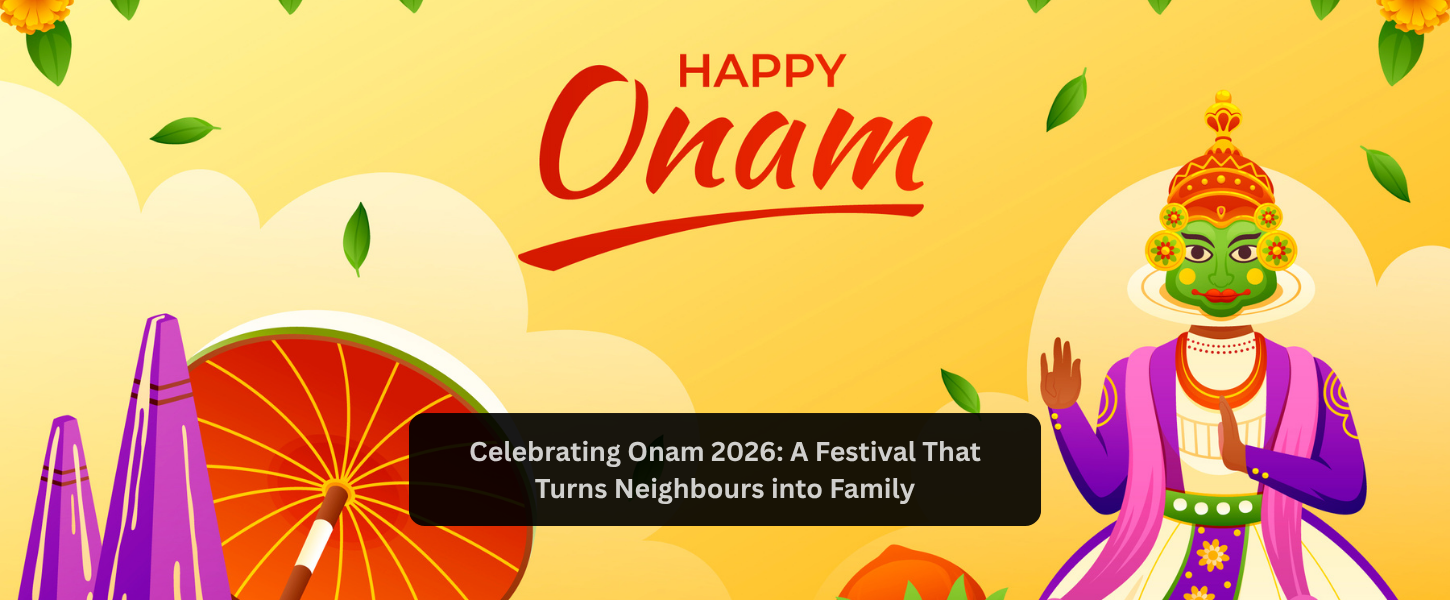

Onam is one of Kerala’s most celebrated festivals, known for its rich traditions, cultural rituals and the spirit of togetherness it brings among people. Celebrated as the homecoming of the legendary King Mahabali, the festival represents prosperity, gratitude, equality and happiness.
As the arrival of Onam 2026 approaches, homes and communities come alive with colourful pookalams, traditional celebrations, cultural performances and the grand Onasadya feast. While the festival has deep roots in Kerala’s heritage, its message of unity and togetherness continues to bring people closer across communities.
From creating flower decorations together to sharing festive meals with loved ones, Onam reminds us that celebrations become more meaningful when they are shared.
The significance of Onam is closely connected with the legend of King Mahabali, a beloved ruler remembered for his kindness, generosity and a kingdom where people lived with happiness and prosperity.
According to legend, Lord Vishnu appeared before King Mahabali in the form of Vamana, a young Brahmin. When Vamana asked for three paces of land, Mahabali agreed to fulfil his request. Vamana then revealed his divine form and covered the earth and heavens in two steps. With no space left for the third step, Mahabali offered himself with humility.
Impressed by Mahabali’s devotion and the love he held for his people, Lord Vishnu granted him a special wish to return and visit his kingdom and subjects once every year. Onam celebrates this annual return of King Mahabali and represents the joy of welcoming someone loved back home.
Over generations, this story has become an important part of Kerala’s cultural identity. The festival reflects values of harmony, abundance and togetherness, bringing families and communities together through meaningful traditions.
Onam celebrations take place over ten days, beginning with Atham and concluding with Thiruvonam, the most important day of the festival.
Onam 2026 celebrations will be observed from 16th August to 26th August, with Thiruvonam marking the main celebration day.
The festival also coincides with Kerala’s harvest season, making it a celebration of nature’s abundance, gratitude and prosperity.
Onam celebrations are known for traditions that bring families, friends and communities together.
Pookalam is one of the most recognisable Onam traditions. These beautiful flower arrangements are created at entrances and courtyards as a symbol of welcome and celebration.
Many families and communities come together to design elaborate pookalams, making the activity a shared experience filled with creativity and joy.
Onasadya is a traditional vegetarian feast served on banana leaves during Onam. It includes a variety of dishes prepared with seasonal ingredients and reflects Kerala’s rich culinary heritage.
The meal is more than food; it represents sharing, hospitality, and the joy of celebrating together.
Vallam Kali, or the famous snake boat race, is one of Kerala’s most exciting Onam traditions. Teams of rowers come together with coordination and teamwork, while communities gather to cheer and celebrate.
Pulikali is a vibrant folk performance where artists paint themselves as tigers and perform traditional dances. The colourful celebration brings people together and adds energy to the festive atmosphere.
Onam has always carried an unspoken rule: it is best enjoyed together. A single pookalam looks lovely, but a courtyard full of pookalams created by different families becomes a work of shared art. One home’s Onasadya is a good meal; a potluck Onasadya with dishes from five neighbouring kitchens becomes a feast to remember. This is where the community you live in quietly shapes how meaningful your Onam celebration turns out to be.
Small shifts like these are what transform Onam 2026 from a personal ritual into a shared celebration that neighbours look forward to every year.
You do not need to be in Kerala to feel the true spirit of Onam. Here are a few simple ideas that communities across India use to celebrate together:
Festivals like Onam are, at their heart, about people. The joy of a shared pookalam, a community Onasadya, or an evening of Onam celebration with neighbours depends entirely on the kind of community you live in.
This is exactly the spirit that thoughtfully planned residential communities aim to nurture every single day, not just during festivals. When neighbours already know each other from shared clubhouses, gardens, and community spaces, celebrations like Onam happen naturally rather than needing to be planned from scratch.
At Ashiana Housing, communities are designed around shared spaces and meaningful interactions that encourage neighbours to connect beyond everyday routines. Community areas, activities and celebrations create opportunities for residents to build relationships and celebrate important occasions together.
When festivals like Onam arrive, these connections help transform celebrations into shared memories.
Onam 2026 is a timely reminder that some of life’s warmest memories are made not alone, but with the people around us. Whether it is a shared pookalam, a community Onasadya, or simply exchanging happy Onam wishes with the family next door, the true spirit of this harvest festival lies in togetherness.
This year, as Kerala and Malayali communities everywhere prepare to welcome King Mahabali home, consider stepping out of your own home too, because Onam is, above all, a festival that turns neighbours into family.
Onam 2026 begins on 16th August and continues for ten days through 26th August 2026, with Thiruvonam being the most significant day of the celebrations.
Onam is Kerala’s most important harvest festival, celebrated to mark the mythical annual homecoming of King Mahabali and to give thanks for the season’s harvest.
The festival’s key traditions include pookalam (flower-carpet designs), vallam kali (snake-boat races), Onasadya (a grand feast on banana leaves), and pulikali (tiger dance performances).
Communities often organise group pookalam-making sessions, potluck-style Onasadya feasts, cultural evenings, and small storytelling sessions for children to celebrate Onam together.
Onam brings together people across communities and backgrounds through shared traditions like communal feasts and collaborative flower carpets, making it as much a celebration of togetherness as of harvest.