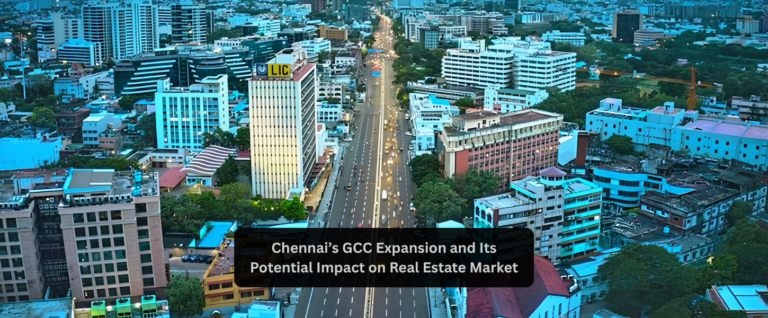
Chennai’s GCC Expansion and Its Potential Impact on Real Estate Market
Chennai has long been recognised for its strong manufacturing, automobile, IT, healthcare, financial services, and engineering sectors. In...
Read More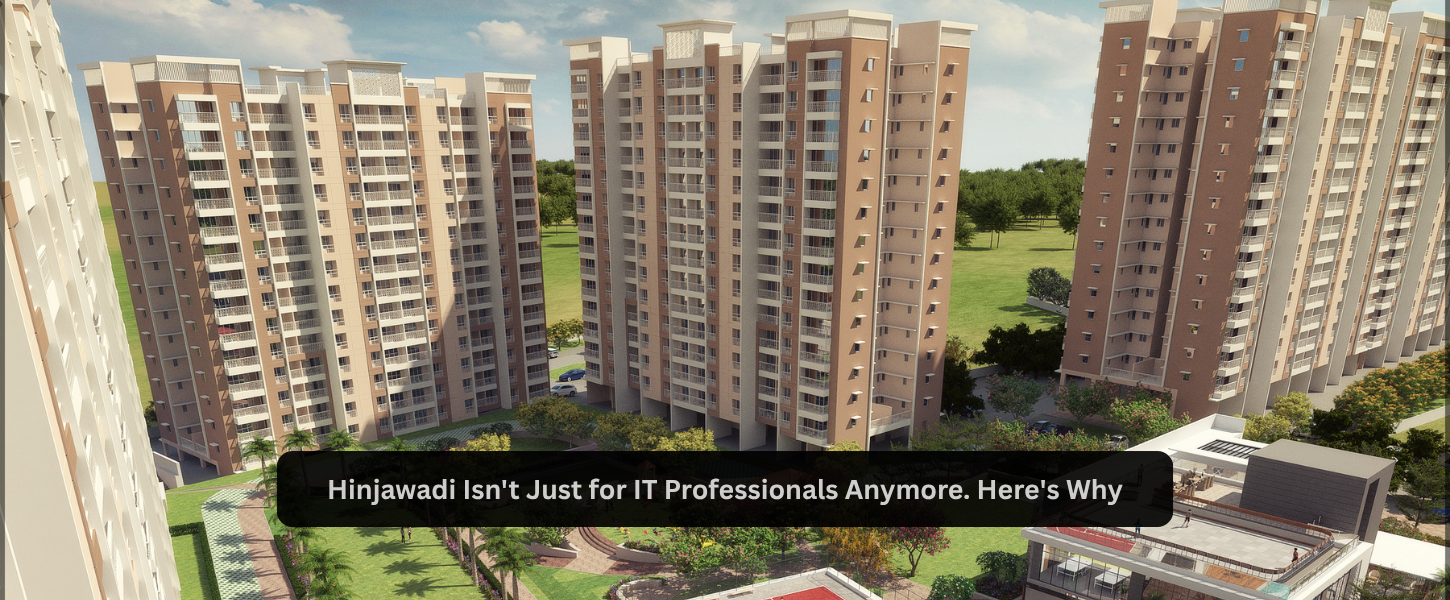

For years, Hinjawadi has been closely associated with IT Professionals, technology parks, and the weekday rush of Pune’s corporate workforce. The presence of the Rajiv Gandhi Infotech Park naturally made the area a preferred residential location for people working in and around the technology sector.
However, Hinjawadi’s identity is gradually becoming broader. This transformation also reflects a larger change in Pune real estate. Buyers today are not necessarily choosing a home only because it is close to their workplace. Families, entrepreneurs, investors, hybrid workers, and people looking for a well-connected residential environment are increasingly considering locations based on how comfortably they can support everyday life.
There is no separating Hinjawadi’s growth story from the technology sector. The employment ecosystem created a steady demand for housing, particularly among IT Professionals who preferred to live closer to work. Over time, however, this demand encouraged a much larger residential ecosystem to develop around the area.
What was once largely viewed through the lens of offices and daily commuting now has residential communities, retail options, schools, healthcare facilities, restaurants, and recreational spaces in and around the broader Hinjawadi belt. This has changed the way buyers perceive the locality.
The shift is also visible in the kind of housing people seek. Instead of homes serving simply as convenient places to stay close to the office, buyers increasingly expect well-planned communities that can accommodate family life, leisure, social interaction, and professional needs. As the residential market in Pune continues to mature, this combination of employment access and everyday convenience gives Hinjawadi a broader appeal.
One of the most important factors influencing a residential location is how easily residents can connect with other parts of the city. Historically, Hinjawadi’s appeal was particularly strong among IT Professionals because living nearby could reduce the daily commute. Infrastructure improvements are gradually changing that equation.
The Pune Metro Line 3 corridor between Hinjawadi and Shivajinagar is an important part of this transformation. Alongside the metro, wider regional infrastructure developments are expected to strengthen connectivity between western Pune and other parts of the city. These improvements have contributed to growing real estate interest in Hinjawadi and surrounding areas.
The way people use their homes has also changed significantly. With work from home and hybrid working becoming established parts of professional life, an apartment is no longer just where the working day begins and ends.
Homebuyers increasingly value an additional room that can function as a study, larger living spaces, quieter surroundings, green areas, and common spaces that make spending more time within the residential community comfortable. This has also influenced demand for larger configurations such as 2 & 3 BHK flats, particularly among households looking at their requirements over the longer term.
For IT Professionals, this can mean having enough flexibility to work remotely without compromising family spaces. But the same requirements apply to consultants, entrepreneurs, freelancers, educators, and professionals from many other industries. As work from home becomes part of the decision-making process, residential locations that offer a balance between connectivity and spacious community living can appeal to a much wider audience.
A family buying a home evaluates a neighbourhood very differently from someone choosing temporary accommodation close to work. Schools, healthcare, open spaces, recreation, everyday shopping, security, and the overall quality of the residential environment all become important considerations.
This is one reason Hinjawadi’s expanding residential ecosystem matters. As the locality and its surrounding micro-markets develop, buyers can evaluate it not simply as a corporate destination but as a place where different stages of family life can be accommodated.
The growing preference for 2 & 3 BHK flats also fits this change. A young couple may initially use an additional bedroom as a home office, while the same room could later become a child’s bedroom or guest room. Families with children may prefer the additional flexibility from the beginning. Such considerations make housing choices increasingly long-term rather than purely commute-driven.
End-use demand is only one side of the story. Hinjawadi’s established employment base and continuing infrastructure development also make it relevant from a property investment perspective.
A large working population creates an underlying requirement for rental housing. IT Professionals remain an important part of this tenant base, but the area’s growing residential and commercial ecosystem may support demand from professionals across industries as well.
At the same time, infrastructure can influence the long-term prospects of a micro-market. Improved connectivity, commercial activity, and new residential development often shape buyer interest over time. This is one reason Hinjawadi and the broader western corridor continue to feature prominently in conversations around Pune real estate. Recent market reporting has also highlighted growing residential activity and infrastructure-led interest in Hinjawadi and neighbouring locations.
The evolution of Hinjawadi is part of a larger shift within the residential market Pune is experiencing. A generation ago, residential decisions were often dominated by a few straightforward considerations: price, distance from work, and basic neighbourhood infrastructure. Those factors remain important, but the list has expanded.
Today’s buyers may also consider access to green spaces, amenities, community design, children’s needs, hybrid-working requirements, future infrastructure, and the flexibility of the home itself. This is why 2 & 3 BHK flats can appeal to a diverse mix of buyers rather than a single professional demographic.
The broader housing market in Pune is therefore becoming increasingly linked to lifestyle. A home’s value to its resident is not determined by square footage alone, but by how effectively the surrounding neighbourhood supports everyday routines and longer-term aspirations. Developers such as Ashiana Housing reflect this evolving approach by focusing on thoughtfully planned residential communities that combine homes with lifestyle-oriented amenities and a comfortable living environment.
Hinjawadi fits naturally into this changing conversation because its employment ecosystem already provides a strong foundation. What is changing is everything developing around that foundation, creating opportunities for established developers like Ashiana Housing to cater to homebuyers seeking a balance between connectivity, community, comfort, and modern lifestyle needs.
Hinjawadi’s IT identity is unlikely to disappear, nor should it. The technology ecosystem has been central to the area’s growth and will continue to make it particularly relevant for IT Professionals. What is changing is that employment is no longer the only reason to consider living here.
Infrastructure improvements, an expanding residential ecosystem, changing homebuyer expectations, larger housing configurations, and the growing importance of community-oriented living are collectively giving the locality a more rounded identity. This evolution mirrors the direction of Pune real estate itself, where buyers increasingly look for homes that can accommodate work, family, leisure, and future needs within one connected environment.
For anyone observing the housing market in Pune today, Hinjawadi represents an interesting transition: from an address chosen mainly for the office commute to a residential destination capable of attracting a far more diverse community.
And that may be the clearest sign of how far Hinjawadi has come. It is still one of Pune’s most recognisable technology hubs, but the homes around it are no longer meant only for the people working inside those technology parks.
Hinjawadi is evolving beyond its identity as an IT hub due to improving connectivity, expanding social infrastructure and the development of modern residential communities. While IT Professionals remain an important homebuyer segment, families, entrepreneurs, hybrid workers and investors are also considering the area for its residential potential and access to key parts of Pune.
Hinjawadi can be considered by families seeking a location that combines employment access with a growing residential ecosystem. The availability of schools, healthcare facilities, shopping options, recreational spaces and modern 2 & 3 BHK flats has helped broaden its appeal beyond professionals looking simply to live close to their workplace.
Infrastructure improvements, including the Pune Metro Line 3 connecting Hinjawadi with Shivajinagar, are expected to strengthen connectivity with other parts of the city. Better accessibility, combined with the area’s established employment ecosystem, is one of the factors supporting residential development and buyer interest in this part of Pune real estate.
Changing lifestyles have encouraged buyers to look for homes that provide greater flexibility. 2 & 3 BHK flats can offer additional space for children, guests or a dedicated work from home setup. This makes larger configurations relevant not only to IT Professionals, but also to families and professionals planning for longer-term residential needs.