
Going for Gold: 7 Life Lessons Kids Can Learn from India’s Asian Games Champions
In the early days of October, living rooms across India echoed with cheers. Families gathered around television screens,...
Read More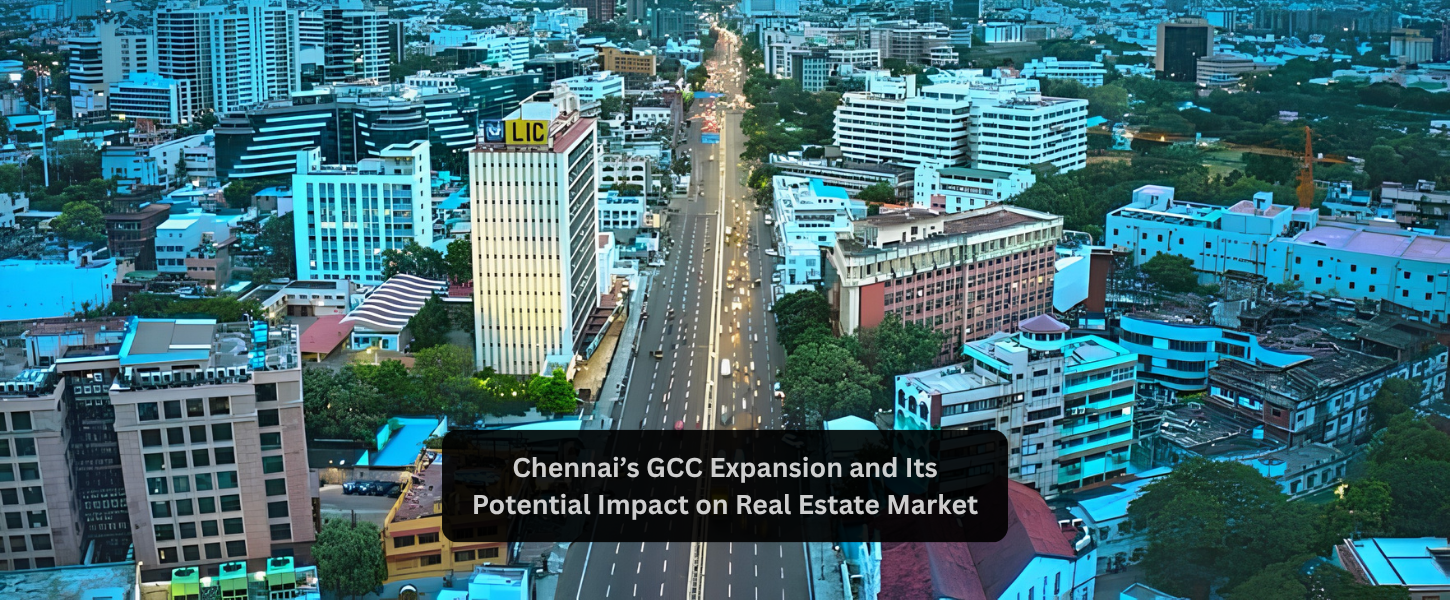

Chennai has long been recognised for its strong manufacturing, automobile, IT, healthcare, financial services, and engineering sectors. In recent years, another growth engine has been gaining momentum: Global Capability Centres (GCCs).
The expansion of Chennai’s GCC ecosystem is influencing more than the city’s commercial office market. As global companies establish and expand operations, the resulting employment growth can create demand for housing, transportation, retail, hospitality, and other urban services.
This connection between employment and housing is particularly relevant for Chennai real estate, where established residential corridors and emerging neighbourhoods are evolving alongside new commercial development.
Global Capability Centres are no longer limited to conventional IT support functions. Companies are increasingly using GCCs for engineering, research and development, analytics, finance, healthcare, product development, and other specialised functions.
Chennai’s combination of skilled talent, established industrial infrastructure, comparatively competitive office costs, and a diversified economic base has strengthened its position as a GCC destination.
According to Cushman & Wakefield, GCCs accounted for 57% of Chennai’s office leasing in Q3 2026, while the city’s overall office leasing reached 1.99 million sq. ft. during the quarter.
This expansion matters for Chennai real estate because sustained employment creation can gradually influence where people choose to live.
Ref: https://www.cushmanwakefield.com/en/india/insights/marketbeat-india/chennai-marketbeat
The relationship between commercial and residential real estate is relatively straightforward: when employment opportunities increase in a particular corridor, more professionals need convenient places to live nearby.
This does not mean that every new GCC automatically results in higher property prices. However, sustained job creation can support demand for both rental and owner-occupied housing over time.
Professionals may prioritise homes that reduce commuting time and provide access to schools, healthcare, retail, restaurants, public transport, and recreational facilities.
For Chennai real estate, this could strengthen demand in and around established employment corridors, particularly across South and West Chennai.
Old Mahabalipuram Road (OMR) remains one of Chennai’s most prominent technology and employment corridors. Areas including Perungudi, Tharamani, Sholinganallur, Navalur, and the SIPCOT belt have developed substantial commercial and residential ecosystems.
As Chennai’s GCC presence expands, established office corridors can attract additional residential demand from employees seeking shorter or more manageable commutes.
Recent residential-market data supports the broader strength of Chennai’s southern markets. JLL reported that the Southern submarket, including Pallavaram and Sholinganallur, accounted for a significant share of residential sales in Q2 2026, while Chennai’s overall residential sales reached an eleven-quarter high.
The GCC effect should therefore be viewed as one contributor to a wider combination of employment, infrastructure, connectivity, and housing demand.
Employment growth can support housing demand, but price appreciation depends on several factors.
Supply is equally important. If new residential inventory keeps pace with demand, price growth may remain measured. If demand grows faster than available housing in a particular micro-market, prices and rents may face greater upward pressure.
The impact can also vary between neighbourhoods. Areas immediately surrounding major employment centres may experience stronger rental demand, while peripheral locations could benefit gradually as infrastructure and connectivity improve.
For Chennai real estate, this means buyers should evaluate individual micro-markets rather than assuming that the entire city will experience the same impact from GCC expansion.
Employment growth alone cannot reshape a city’s housing market. Infrastructure plays an equally important role.
Better roads, public transportation, metro connectivity, social infrastructure, and commercial development can expand the geographical area from which employees are willing to commute.
Chennai’s ongoing infrastructure development is therefore important to the future impact of Chennai’s GCC ecosystem. If connectivity between employment hubs and residential areas improves, housing demand may spread beyond immediate office locations.
This could create opportunities for emerging residential corridors while reducing pressure on some established areas.
The evolution of Chennai real estate is also creating space for residential communities designed around specific stages of life.
Ashiana Housing has an established senior-living presence in Chennai through projects including Ashiana Shubham, Ashiana Vatsalya, and Swarang. While senior living serves a different housing requirement from GCC-driven workforce housing, its presence illustrates an important trend: Chennai’s residential market is becoming increasingly diverse in the types of communities and lifestyles it serves.
For example, a city experiencing sustained employment growth does not only require homes for incoming professionals. It also needs housing options that cater to families, retirees, and different life stages.
This broader perspective is important when considering the long-term evolution of Chennai real estate.
As established employment corridors become more mature, rising land and property costs may encourage developers and buyers to look towards surrounding locations.
This does not mean every peripheral location will automatically become a real estate hotspot. Connectivity, infrastructure, employment accessibility, social amenities, and development quality remain critical.
However, areas that combine improving infrastructure with access to employment corridors may gradually attract more residential interest.
For investors, this creates an opportunity to examine emerging locations before they become fully established—but it also makes careful micro-market research essential.
Chennai’s GCC expansion is part of a larger economic transformation. The city is attracting global businesses while continuing to strengthen its manufacturing, engineering, healthcare, technology, and financial-services ecosystems.
The real estate impact is likely to develop gradually. Commercial expansion can support employment, employment can generate housing demand, and infrastructure can determine how widely that demand spreads.
For Chennai real estate, this creates an interesting long-term outlook. Established corridors such as OMR may continue to benefit from their employment concentration, while well-connected emerging locations could gain from the city’s outward expansion.
However, GCC growth should be viewed as one factor within a larger real estate equation. Supply, affordability, infrastructure, connectivity, economic conditions, and quality of development will all influence the eventual outcome.
Ultimately, the significance of Chennai’s GCC expansion lies not simply in the number of offices being established, but in how those offices contribute to jobs, urban growth, and changing housing preferences. If these elements continue to develop together, Chennai could see a residential market that becomes broader, more diverse, and increasingly aligned with the city’s evolving economic landscape.
The expansion of Chennai’s GCC ecosystem could support residential and rental demand by creating new employment opportunities. The impact is likely to vary by location depending on connectivity, housing supply, infrastructure, and proximity to employment hubs.
Established employment corridors such as OMR, Perungudi, Tharamani, Sholinganallur and surrounding southern markets could continue to attract housing demand. Emerging locations with improving connectivity may also benefit as Chennai’s employment ecosystem expands.
GCC expansion can contribute to housing demand, but it does not automatically result in higher property prices. Price movements also depend on residential supply, infrastructure, affordability, interest rates, and broader market conditions.
New employment opportunities can attract professionals relocating to Chennai, potentially increasing demand for rental housing near employment corridors. Rental demand may be particularly relevant in locations offering convenient commuting options and access to everyday amenities.
Ashiana Housing has a senior-living presence in Chennai through communities including Ashiana Shubham, Ashiana Vatsalya and Swarang. These projects represent the growing diversity of Chennai’s residential market, where housing is increasingly being developed for different lifestyles and stages of life.