
What Is a Senior Living Resort? A Complete Guide for Families in India
Retirement should be about enjoying life at a comfortable pace, staying connected with loved ones, and having the...
Read More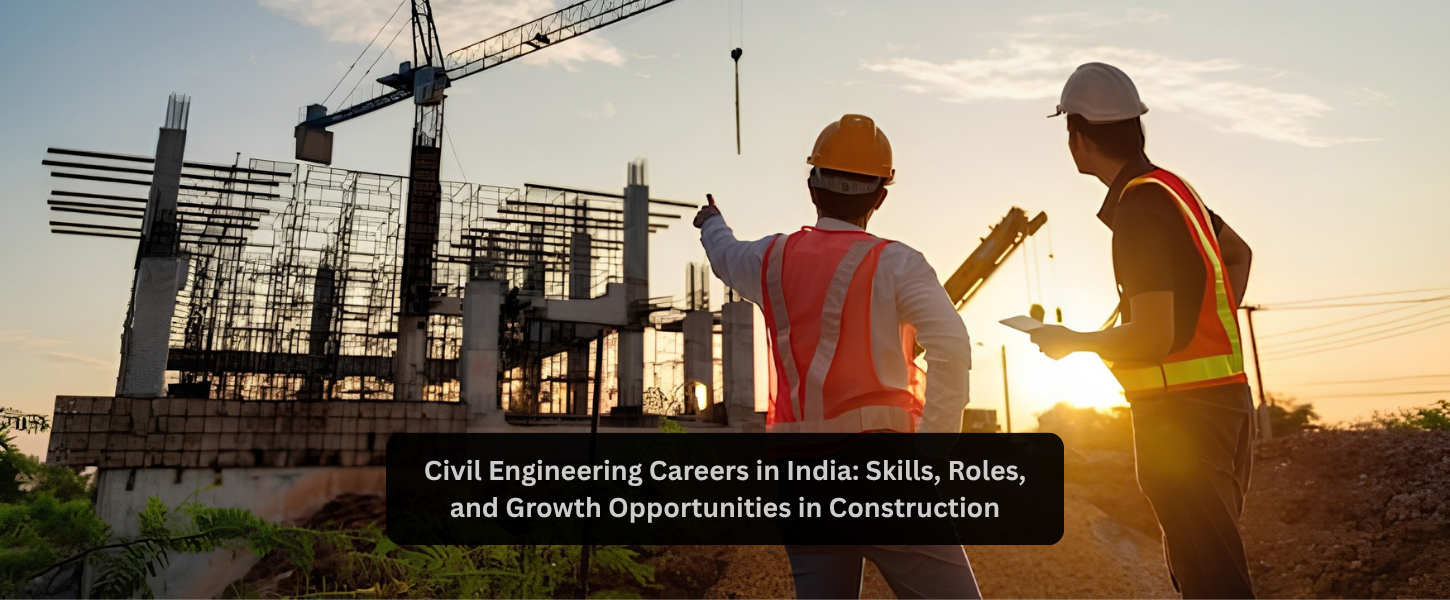

Civil engineering has long been a critical discipline behind India’s physical and economic development. From residential communities and commercial buildings to highways, bridges, industrial facilities, and urban infrastructure, civil engineers contribute to projects that shape how cities and communities function.
As India’s construction and infrastructure sectors continue to expand, opportunities for professionals with technical expertise, project management capabilities, and an understanding of modern construction practices are also evolving. For students and professionals considering Careers in India, civil engineering offers multiple pathways across construction, infrastructure, real estate, consulting, project management, and public-sector organisations.
A successful career in civil engineering today, however, involves more than understanding structural principles. Employers increasingly value professionals who can combine technical knowledge with digital skills, communication, problem-solving, and project execution capabilities.
Civil engineering covers a wide range of activities involved in planning, designing, constructing, and maintaining the built environment.
Professionals can work across residential and commercial construction, transportation infrastructure, water management, urban development, industrial projects, and environmental engineering.
The diversity of applications makes civil engineering one of the more versatile technical fields for professionals exploring careers in India.
The sector also continues to evolve alongside India’s urbanisation and infrastructure development. Growing cities require housing, transportation networks, utilities, public facilities, and commercial infrastructure, creating demand for professionals who understand both engineering principles and practical project execution.
A career in civil engineering can lead to several roles depending on an individual’s education, specialisation, experience, and professional interests.
Site engineers are responsible for supervising construction activities and ensuring that work is executed according to approved drawings, specifications, safety standards, and project schedules.
The role often involves coordinating contractors, monitoring material usage, inspecting work quality, and addressing day-to-day site issues.
Structural engineers focus on designing and analysing structures to ensure strength, stability, durability, and safety. They may work on residential buildings, commercial developments, industrial facilities, bridges, and other infrastructure.
Project engineers combine technical responsibilities with project coordination. They may track schedules, coordinate different teams, review technical requirements, and support project delivery.
With experience, this pathway can lead towards project management and senior construction leadership positions.
These professionals focus on project costs, quantities, contracts, procurement, and financial monitoring. Their work helps organisations manage construction budgets and evaluate project economics.
Planning engineers develop and monitor project schedules, track progress, identify delays, and coordinate timelines across different activities. Knowledge of project-management software and data analysis can be particularly valuable in this role.
The growing use of Building Information Modelling (BIM) has created opportunities for professionals who can work with digital models and coordinate architectural, structural, and services information.
BIM can improve collaboration, planning, quantity estimation, and project coordination, making digital proficiency increasingly relevant to modern Civil Engineering careers.
Technical knowledge remains the foundation of the profession, but today’s construction industry increasingly requires a combination of technical and professional capabilities.
A strong understanding of structural principles, construction materials, surveying, geotechnical engineering, estimation, and construction methods remains essential.
Professionals should also stay familiar with relevant building codes, safety standards, and industry practices.
Construction is becoming increasingly technology-driven. Familiarity with tools such as AutoCAD, Revit, BIM platforms, project-management software, and data-based planning systems can strengthen professional capabilities.
Technology does not replace engineering expertise; instead, it enables professionals to plan, coordinate, and execute projects more efficiently.
Construction projects involve multiple stakeholders, deadlines, budgets, contractors, suppliers, and regulatory requirements.
Understanding project planning, scheduling, procurement, risk management, and cost control can help civil engineers progress into managerial positions.
Civil engineers rarely work in isolation. Projects require coordination between architects, consultants, contractors, developers, government authorities, vendors, and clients.
Clear communication and the ability to work across teams are therefore important skills for professionals building long-term Careers in India.
Construction projects can encounter unexpected site conditions, material constraints, design changes, weather-related disruptions, and scheduling challenges.
The ability to analyse a problem, assess alternatives, and implement practical solutions is one of the most valuable capabilities in a Career in Civil Engineering.
The career trajectory in civil engineering can vary considerably depending on specialisation and experience.
Professionals may begin in site execution, design, surveying, planning, estimation, or quality control before moving into senior engineering and management roles.
With experience, opportunities can expand into positions such as project manager, construction manager, contracts manager, planning head, design manager, quality head, or development management professional.
Some professionals also move into consulting, real estate development, infrastructure management, technical sales, project finance, or entrepreneurship.
This flexibility is one reason Civil Engineering continues to feature among technical options for people evaluating long-term Careers in India.
The real estate sector is another major area where civil engineering expertise is applied.
Residential developments, commercial buildings, townships, senior living communities, industrial facilities, and mixed-use projects all require professionals who can translate designs into safe, efficient, and high-quality physical structures.
Civil engineers may contribute throughout the project lifecycle, from feasibility and planning to construction, quality management, handover, and maintenance.
This makes the relationship between Civil Engineering and real estate particularly significant as Indian cities continue to expand and residential requirements evolve.
Also Visit: Ashiana Housing Careers
Sustainability is becoming increasingly important across the construction industry.
Professionals are now required to consider resource efficiency, water management, energy performance, waste reduction, environmentally responsible materials, and sustainable construction practices.
Knowledge of green-building principles and sustainable development can therefore provide an additional advantage for professionals building a modern Career in Civil Engineering.
The emphasis is gradually shifting from simply constructing more buildings to creating infrastructure that is efficient, resilient, and suitable for long-term use.
A strong foundation in engineering education is only the starting point. Professionals can strengthen their career prospects by gaining practical exposure through internships, site experience, project work, certifications, and specialised training.
Keeping up with construction technology is equally important. Professionals who understand digital tools, BIM, project management, sustainability, and modern construction practices can adapt more effectively as the industry evolves.
It is also useful to develop a clear area of specialisation. Rather than trying to master every aspect of the sector, professionals can gradually build expertise in areas such as structural engineering, project management, planning, quantity surveying, infrastructure, or construction technology.
India’s continued urbanisation and infrastructure development are likely to keep construction and engineering at the centre of economic growth. However, the nature of the profession is changing.
Future professionals will need to combine engineering fundamentals with technology, project management, sustainability, and collaboration. Digital construction methods, BIM, automation, data-driven planning, and modern materials are likely to become increasingly integrated into project delivery.
For individuals considering Careers in India, this creates a profession with multiple avenues for specialisation and advancement.
Ultimately, a successful Career in Civil Engineering is built through a combination of technical competence, practical experience, continuous learning, and the ability to adapt to changing industry requirements. As India’s construction sector becomes more sophisticated, professionals who can contribute effectively across the project lifecycle will remain valuable to organisations building the country’s next generation of infrastructure and communities.
Civil Engineering offers opportunities across construction, infrastructure, real estate, consulting, and project management. Professionals can work as site engineers, structural engineers, planning engineers, project engineers, quantity surveyors, and construction managers.
A successful Career in Civil Engineering requires technical knowledge along with skills in project management, problem-solving, communication, construction technology, and digital tools such as AutoCAD and BIM platforms.
Civil Engineering can offer diverse long-term career paths because construction and infrastructure projects require professionals across planning, design, execution, quality, cost management, and project leadership. Specialisation and continuous skill development can further support career progression.
Technologies such as Building Information Modelling (BIM), digital project-management systems, automation, and data-driven planning are changing how construction projects are designed and delivered. Developing digital skills can help civil engineering professionals adapt to evolving industry requirements.
Yes. Civil engineers can work across residential, commercial, industrial, and mixed-use real estate projects. Their responsibilities may include project planning, construction management, quality control, cost estimation, design coordination, and project execution.