How Modular and Adaptive Homes Can Extend Senior Independence at Every Life Stage

A home should evolve with its residents, not restrict them. For older adults, this idea is at the heart of modular and adaptive homes, spaces designed to change gracefully with life’s stages. As people live longer and seek active, independent lifestyles, the need for flexible, well-planned senior citizen homes has grown rapidly across India.

Modern senior living is no longer about dependency; it’s about designing homes that promote safety, comfort, and autonomy, so every individual can enjoy dignity and ease well into their retirement years.

How Modular and Adaptive Homes Can Extend Senior Independence at Every Life Stage

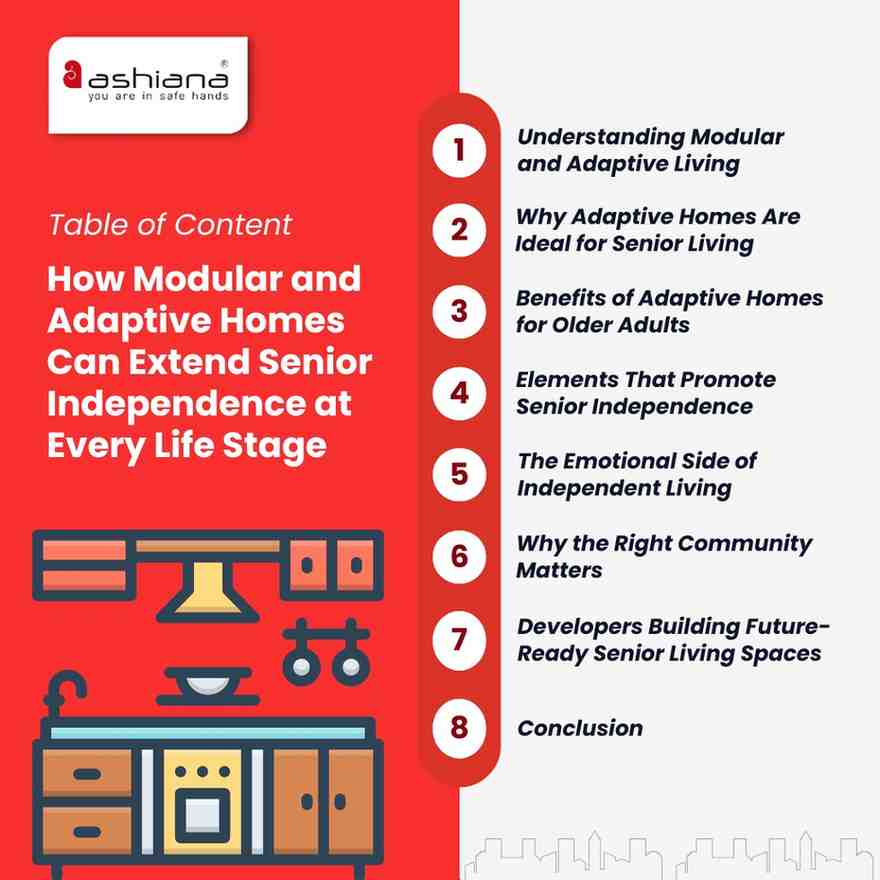
Understanding Modular and Adaptive Living


Modular homes are built with flexibility in mind. Their layouts, furnishings, and utilities can be rearranged or upgraded easily as needs change. This adaptability makes them ideal for seniors whose mobility or health requirements may evolve.

Key Characteristics of Modular Home Designs


  • Flexible layouts: Walls, furniture, and fittings that can be adjusted or expanded without major renovation.
  • Ergonomic planning: Wider doors, slip-resistant flooring, and barrier-free bathrooms ensure effortless movement.
  • Smart technology integration: Voice-controlled lighting, emergency alerts, and automated appliances simplify daily life.
  • Efficient space utilization: Compact yet comfortable designs that allow easy accessibility without clutter.

In short, modular homes provide the freedom to customize living environments so residents can continue living independently with minimal external support.

Why Adaptive Homes Are Ideal for Senior Living


Adaptive housing takes modular design a step further, focusing on personalized functionality and comfort that suits changing physical or cognitive abilities.

Unlike conventional retirement homes, adaptive spaces evolve alongside the resident. A living room can convert into a bedroom, a staircase can be fitted with lifts, and bathrooms can include adjustable fittings. These small yet meaningful changes empower seniors to live confidently in their own homes for longer.

Benefits of Adaptive Homes for Older Adults


  • Safety and Accessibility: Features like grab bars, non-slip floors, and sensor lights minimize the risk of falls.
  • Ease of Maintenance: Simplified layouts reduce upkeep stress and make cleaning or repairs effortless.
  • Comfort and Familiarity: Seniors can remain in familiar surroundings, avoiding the emotional disruption of relocation.
  • Long-Term Affordability: Instead of moving to new facilities, homes can adapt to changing needs, saving both money and effort.

Design Elements That Promote Senior Independence


An effective modular home design blends aesthetics with practicality. It enhances mobility and comfort without compromising style.

  • Natural Lighting and Ventilation: Ample light improves mood and visibility, reducing eye strain and accidents.
  • Multi-Functional Furniture: Foldable tables, adjustable beds, and storage-smart furniture add flexibility.
  • Accessible Bathrooms: Level flooring, grab bars, and hand showers ensure daily safety and convenience.
  • Smart Home Features: Motion sensors, panic buttons, and automated curtains offer independence with reassurance.
  • Green Corners: Balconies and small gardens give seniors access to fresh air and a calming connection with nature.

These thoughtful touches make modular homes not only safe but also emotionally uplifting, spaces where seniors can truly thrive.

The Emotional Side of Independent Living


Independence is more than physical capability, it’s about emotional well-being, confidence, and self-worth. When seniors live in homes tailored to their comfort, they feel in control of their routines and decisions.

Adaptive housing encourages social interaction through shared community spaces and activity areas while maintaining privacy. It helps older adults pursue hobbies, connect with neighbors, and stay engaged, key factors that promote mental health and happiness in later years.

Why the Right Community Matters


While thoughtful design is essential, the surrounding environment plays an equally important role in enhancing the quality of life for seniors. A well-planned community that offers healthcare support, recreational facilities, and opportunities for social interaction can make daily living safer, more comfortable, and more enjoyable. Such communities ensure that seniors remain active, engaged, and cared for, promoting both physical and emotional well-being.

When exploring senior citizen homes, there are several key features to consider. On-call medical assistance and emergency response systems provide immediate support when needed, while fitness zones and meditation areas help maintain physical health and mental calm. Hobby rooms, clubs, and organized social events encourage engagement, creativity, and interaction, helping seniors stay connected with their peers.

Safety is also a top priority, with trained security personnel and surveillance systems offering peace of mind to both residents and their families. By combining the comfort of modular, modern homes with a supportive and interactive community, senior living spaces can provide a truly holistic and fulfilling lifestyle that caters to every aspect of well-being.

Developers Building Future-Ready Senior Living Spaces


Modern developers are redefining what it means to age gracefully. Among them, Ashiana Housing stands out for its thoughtful approach to senior living in India. With over four decades of experience, Ashiana has pioneered communities that cater specifically to the emotional and physical needs of seniors.

Their retirement homes are designed with modular layouts, adaptive features, and abundant green spaces. One such example is Swarang by Ashiana offers an activity-rich clubhouse where every detail supports a lifestyle of independence and dignity. Whether it’s living close to nature, staying active through hobby programs, or enjoying a community of like-minded peers, Ashiana’s senior living projects embody the future of comfortable aging in India.

Conclusion


As India’s population ages, the demand for housing that supports long-term independence continues to grow. Modular homes and adaptive designs offer the perfect solution, homes that change as you do. They promote safety, comfort, and flexibility, ensuring seniors can lead fulfilling lives without compromising on freedom or dignity.

With trusted developers leading this transformation, the future of senior citizen homes looks brighter than ever, a future where aging means living better, not lesser.

Don't forget to share this valuable article with others

What is a modular home and how is it different from a traditional home?

A modular home is built using pre-designed sections that can be modified or expanded over time. Unlike traditional homes, they allow easy upgrades and redesigns without full reconstruction.

Adaptive homes include safety and accessibility features such as non-slip flooring, wider doorways, and adjustable fittings, allowing seniors to live independently with minimal assistance.

Yes, modular homes are often more cost-efficient in the long run because they reduce renovation costs and adapt to lifestyle changes without relocation.

Key amenities include healthcare support, emergency response systems, social activity areas, and fitness or wellness zones that promote active aging.

About The Author

Ashiana, Ashiana Housing build homes. Homes surrounded by vast green spaces and fresh breeze. Homes cocooned in secured gated complexes. Homes where futures are forged and there are opportunities to grow. And Homes in environments brimming with healthy activity, trust and respect. At heart, we build communities with care.

Other posts by

Free

Subscribe Now to our blog. Stay up to date with the latest real estate market, investment option, updates on senior living & kid centric world & Just enter your email address to subscribe

Join 1000+ of fellow readers. Get expert real estate knowledge straight to your inbox absolutely free. Just enter your email address below.

Get our blogs straight in your inbox,
know real estate better:
en_USEnglish
en_USEnglish

wait your request is under process

Site Visit

wait your request is under process