How Navratri and Dussehra Are Celebrated in a Gated Community
Few things lift the mood of a neighbourhood like the nine nights of Navratri. The beat of the...
Read More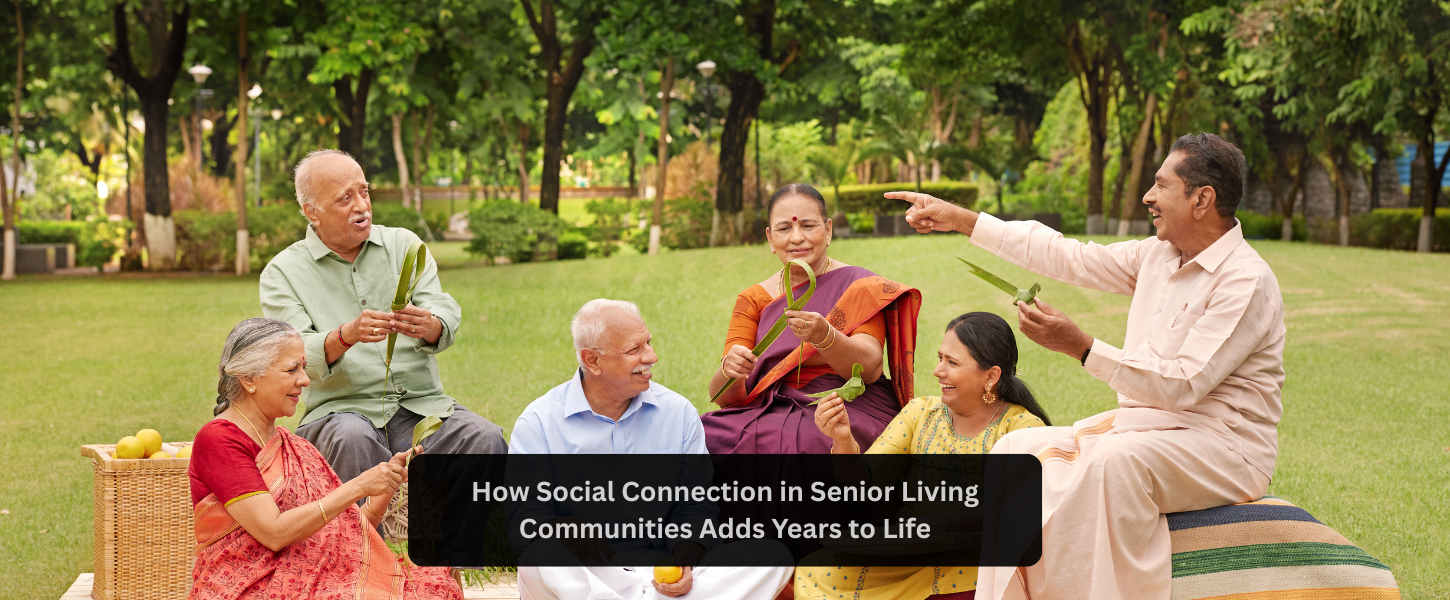

We often talk about health in terms of numbers: blood pressure readings, cholesterol levels, and daily step counts. We obsess over the latest superfoods and the necessity of “getting our greens.” But as we look at the landscape of aging in 2026, a surprising medical truth has taken center stage: the most powerful predictor of a long, healthy life isn’t found in a pill bottle or a gym, but in the company we keep.
For many seniors, the family home, once a bustling hub of activity, gradually transforms into a place of quiet. As children move for careers, neighbors relocate, and mobility becomes a challenge, the “sanctuary” can become a “Social Desert.” This isolation gradually becomes a physiological threat.
In contrast, modern senior living communities are being recognized by medical professionals not just as housing, but as longevity incubators. By engineering “Social Geometry” into daily life, these communities are effectively adding years to life.
To understand why senior living works, we must first understand the “Silent Weight” of staying home alone. In 2026, the medical community views social isolation with the same urgency as chronic smoking.
If isolation is the poison, connection is the antidote. But in a traditional suburban neighborhood, connection requires effort: planning a meet-up, navigating traffic, or managing a calendar. In a senior living community, the architecture itself does the heavy lifting. We call this Social Geometry.
In a community, “grabbing a coffee” doesn’t require a 20-minute drive. It is a stroll down a sunlit corridor. This “low-stakes” social interaction- the brief chat in the elevator or the “good morning” in the hallway- provides a constant stream of micro-connections that keep the nervous system regulated and the mood elevated.
Senior living communities replace the passive consumption of television with active participation. Whether it is a community garden, a woodworking shop, or a choir, these activities provide a sense of ikigai- the Japanese concept of “a reason to get up in the morning.” When a senior knows their peers expect them at the 10:00 AM pottery class, they have a sense of accountability and belonging that keeps them physically and mentally engaged.
The best communities in 2026 aren’t silos for the elderly; they are gateways. Many communities host volunteer programs, mentorship sessions with local students, and family-centered festivals. This prevents the “echo chamber” effect of aging and keeps residents engaged with the evolving world, a key factor in psychological resilience.
The social connection found in senior living acts as a “multiplier” for other healthy behaviors. It is much easier to maintain a healthy lifestyle when you are doing it in a group.
For many families, the decision to move a parent into senior living is clouded by guilt. There is a lingering feeling that we are “taking them away” from their home. However, in 2026, the perspective is shifting. Families are realizing that keeping a parent in a large, empty house, where they are safe but lonely, is not a gift.
Moving a parent to a senior living community is a proactive investment in their vitality. It is about choosing a future where they can thrive among peers, rather than just manage a household in solitude. It allows the adult children to step out of the “caregiver and property manager” role and back into the role of the loving son or daughter.
Explore senior living communities by Ashiana Housing, a leading name in senior living in India, where social connection, wellness, and active living come together to create fulfilling retirement experiences.
The family home is a beautiful container for memories, but it isn’t always the best container for a vibrant future. In 2026, we know that the “best fit” for our parents is the place where they are safest, most social, and most supported.
By choosing senior living, you are choosing more than a new address; you are choosing to add years to their life and life to their years. It is an act of compassion that prioritizes their happiness today and their health for the decade to come.
Social geometry isn’t about forced interaction; it’s about availability. Most communities offer plenty of “quiet zones,” private libraries, and, of course, the privacy of their own apartment. The goal is to eliminate “involuntary isolation,” giving introverts the choice to engage on their own terms.
Most modern communities have “Ambassador Programs.” New residents are paired with “buddies” who have lived there for a while. These ambassadors introduce them at dinner, show them where the best hobby clubs are, and help bridge the gap during those first few weeks.
While it’s not a fountain of youth, the data is staggering. The Harvard Study of Adult Development, one of the longest-running studies on happiness, found that social connection is the #1 predictor of health and happiness in later life, even more than genetics or social class.
Community design in 2026 is “Universal Design.” This means every space is accessible by wheelchair or walker. Activities are also adapted, such as “Chair Yoga” or “Seated Art Classes”, ensuring that physical limitations do not lead to social limitations.
Don’t talk about “care” or “assistance.” Talk about lifestyle. Focus on the clubhouse, the chef-prepared meals, and the freedom from chores. Frame it as a “Right-Sizing” move toward a life with more fun and less friction.