
Chennai’s GCC Expansion and Its Potential Impact on Real Estate Market
Chennai has long been recognised for its strong manufacturing, automobile, IT, healthcare, financial services, and engineering sectors. In...
Read More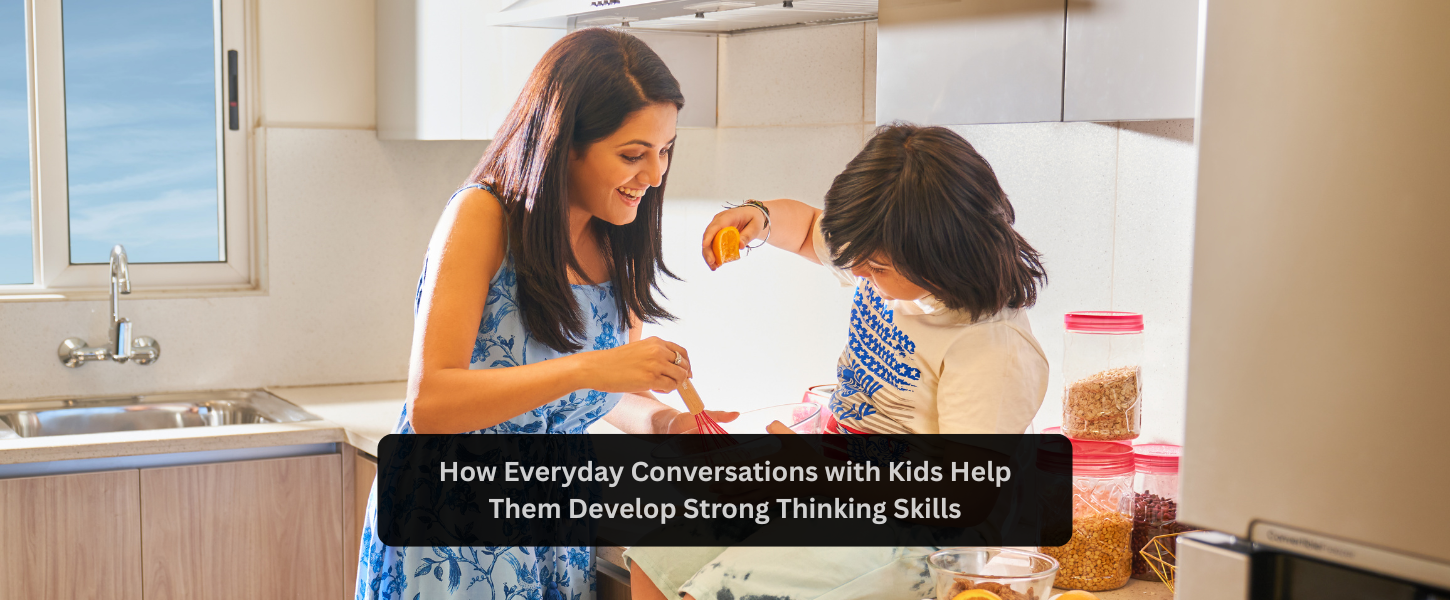

Everyday conversations with kids do much more than strengthen family bonds. They play a vital role in child development, helping children build language abilities, improve communication skills, develop curiosity, and strengthen critical thinking skills that support lifelong learning.
Every parent hopes to raise a child who can think independently, solve problems confidently, and communicate effectively. While schools play an important role in developing these abilities, many of the foundations for strong thinking are built at home through everyday interactions. Simple conversations with kids during meals, walks, playtime, or bedtime can become powerful opportunities for learning and growth.
Far more than casual exchanges, these conversations help children process experiences, express ideas, ask questions, and understand the world around them. Over time, regular and meaningful dialogue contributes to stronger critical thinking skills, supports child development, and encourages lifelong curiosity and learning.
Many parents view conversations as a way to understand what happened during the day. However, these interactions serve a much larger purpose.
Every meaningful conversation helps children:
When children regularly engage in thoughtful discussions with parents and caregivers, they begin to understand how ideas connect, how arguments are formed, and how different perspectives can coexist.
These experiences become valuable building blocks for both child learning and overall development.
Children are naturally curious. They constantly observe, question, and try to make sense of the world around them. The right conversations can transform this curiosity into stronger critical thinking skills.
Instead of asking questions that lead to one-word answers, parents can encourage deeper thinking through open-ended discussions.
For example:
Questions like these encourage children to reflect, analyze, and evaluate information rather than simply recalling facts.
Over time, these habits help children become more thoughtful decision-makers and independent thinkers.
Strong communication at home contributes to multiple aspects of child development.
Children learn to organize thoughts, make connections, and solve problems through discussion. Regular conversations challenge their brains to process information and express ideas effectively.
Talking about feelings and experiences helps children understand emotions and develop empathy. It also creates a safe space where children feel heard and valued.
Children who engage in regular family conversations often develop stronger interpersonal skills. They learn active listening, respectful communication, and how to participate confidently in discussions.
Together, these skills create a strong foundation for lifelong success.
Many parents want deeper conversations but are unsure where to start. The good news is that meaningful interactions often emerge from ordinary moments.
Children are more likely to share when they feel genuinely heard. Maintain eye contact, avoid distractions, and show interest in what they are saying.
Questions beginning with “why,” “how,” and “what do you think” encourage children to think beyond simple answers.
Some of the best discussions happen naturally during:
These moments provide opportunities for consistent connection and learning.
Instead of immediately providing answers, invite children to explore ideas and reach conclusions on their own. This approach supports both confidence and independent thinking.
Education does not begin and end in school. In fact, many important life skills are developed through everyday interactions at home.
When children regularly engage in meaningful conversation, they learn how to:
These abilities directly contribute to child learning and help children become more engaged learners both inside and outside the classroom.
The environment in which children grow up can significantly influence the quality of their experiences and interactions. Communities that encourage engagement, outdoor activities, and social connections naturally create more opportunities for conversations and learning.
This philosophy forms the foundation of Ashiana Housing‘s Kid-Centric Homes concept. By designing communities around children’s developmental needs, Ashiana creates environments where learning extends beyond school hours and into everyday life. Ashiana Housing has further strengthened its commitment to child-centric living through projects like Ashiana Amarah and Ashiana Aaroham.
These communities recognize an important truth: childhood development is influenced not only by schools and parents but also by the environments children experience every day. By encouraging social interaction, active lifestyles, and family engagement, such communities help create opportunities for richer conversations and stronger developmental outcomes.
The most meaningful learning moments often happen in the simplest ways. Regular conversations with kids help children build language abilities, strengthen critical thinking skills, improve communication skills for kids, and develop the confidence to express their ideas.
As parents continue searching for ways to prepare children for an ever-changing future, one of the most effective tools remains surprisingly simple: spending time talking, listening, and learning together. Through thoughtful conversations with kids, families can nurture stronger thinkers, better communicators, and more confident individuals ready to navigate the world around them.
Regular conversations help children build language, thinking, emotional, and communication skills.
Meaningful discussions encourage children to analyze situations, express opinions, and consider different perspectives.
Open-ended questions such as “What was the best part of your day?” or “Why do you think that happened?” work well.
By actively listening, asking thoughtful questions, and creating opportunities for daily interaction.
Yes, regular conversations enhance child learning by improving comprehension, curiosity, problem-solving, and communication skills.