
How Navratri and Dussehra Are Celebrated in a Gated Community
Few things lift the mood of a neighbourhood like the nine nights of Navratri. The beat of the...
Read More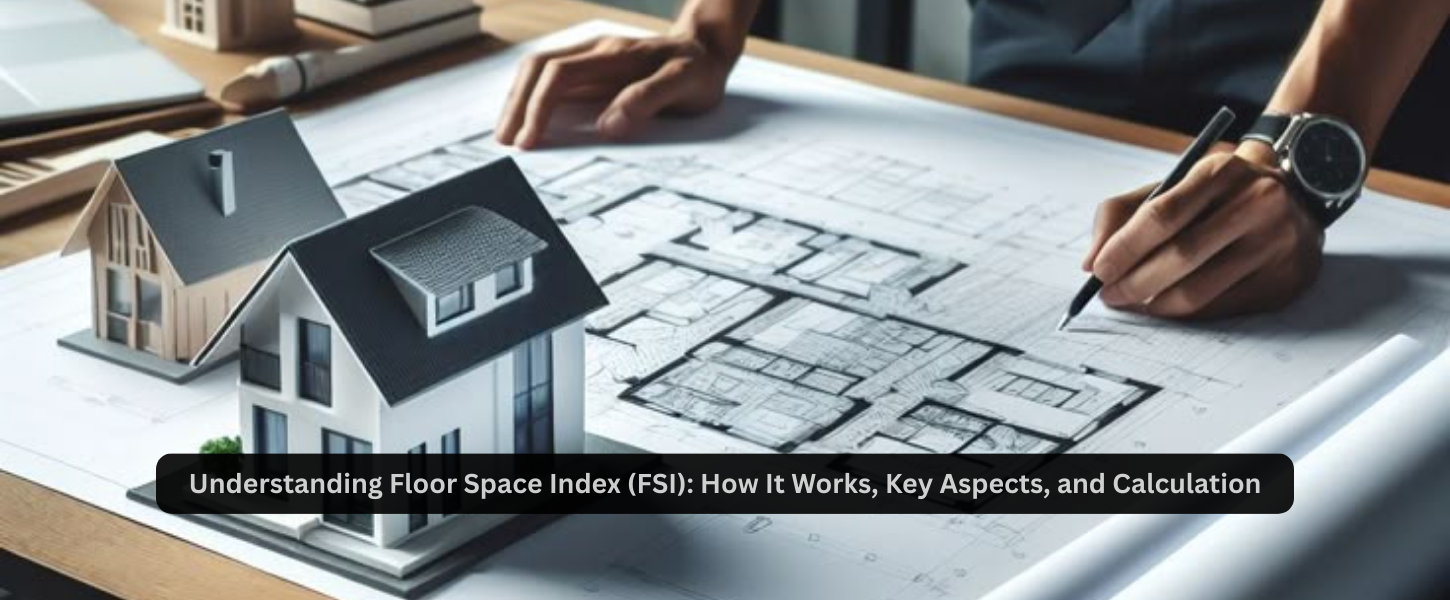

The Floor Space Index (FSI) is one of the most important factors influencing the development potential of a plot in real estate. Understanding FSI is crucial for developers, homeowners, and investors alike, as it directly affects the construction area, property value, and building design.
The Floor Space Index (FSI), also known as Floor Area Ratio (FAR), refers to the ratio of a building’s total floor area to the size of the land (plot area) it is built on. In simple terms, FSI determines how much area can be constructed on a particular plot of land. It is a key metric that guides architects, builders, and urban planners to ensure that structures are built in accordance with local zoning laws.
For example, if a plot of land is 1,000 square meters and the FSI allowed is 2, the total built-up area on that land can be up to 2,000 square meters. This includes all floors of the building.
The concept of FSI varies based on the location and type of development. Regulatory authorities in different regions, such as municipal corporations or development authorities, set the FSI for specific areas based on the urban planning needs, infrastructure capacity, and population density.
Typically, urban areas with high population density and better infrastructure will have a higher FSI, allowing for taller buildings. In contrast, residential or suburban areas with less dense populations may have a lower FSI.
Calculating FSI is straightforward and involves the following formula:
FSI = Total Built-Up Area / Plot Area
For instance, if a plot has an area of 500 square meters and the total built-up area (including all floors) is 1,500 square meters, the FSI will be:
FSI = 1,500 / 500 = 3
This means the total built-up area is three times the size of the plot area.
Consider an example of an apartment complex being constructed on a 2,000-square-meter plot in a metropolitan city with an FSI of 2. The developer would be allowed to construct a building with a total built-up area of up to 4,000 square meters, spread over multiple floors.
FSI plays a significant role in urban planning. It helps city planners manage the height and density of buildings to avoid overcrowding and ensure proper infrastructure and resources like water, electricity, and waste management.
The FSI of a property directly impacts its value. High FSI areas typically see a rise in property prices due to the potential for more construction and higher residential or commercial occupancy.
In urban environments, where land availability is limited, FSI allows developers to optimize land use. By increasing the FSI, developers can create taller buildings with more units, thereby addressing housing shortages in high-demand areas.
FSI regulations help in controlling congestion in a city by restricting the total built-up area based on available infrastructure. It ensures that urban development does not outpace the capacity of existing roads, transportation, and utilities.
In India, FSI is regulated by local municipal authorities, and each city or region may have different rules governing the permissible FSI. For instance, cities like Mumbai and Delhi have high FSI in certain areas due to their dense populations, while smaller cities or towns have lower FSI to maintain a balanced urban environment.
Developers like Ashiana Housing understand the importance of FSI in shaping communities. They strategically select locations with the right FSI to ensure that their projects meet both the aesthetic and functional needs of future residents while adhering to the regulatory norms.
The Floor Space Index (FSI) is a pivotal factor in real estate development that determines how much space can be built on a given plot of land. Whether you are an investor, developer, or homebuyer, understanding FSI will give you a clearer picture of real estate opportunities in India.
By keeping up-to-date with FSI guidelines, you can better navigate the complexities of real estate investment, ensuring that you maximize the value of your property while contributing to sustainable urban development.