
The Future of Urban Living: Why Community-Focused Homes Matter
Square footage, location, and specifications remain important considerations when choosing a home. But increasingly, the decision doesn’t end...
Read More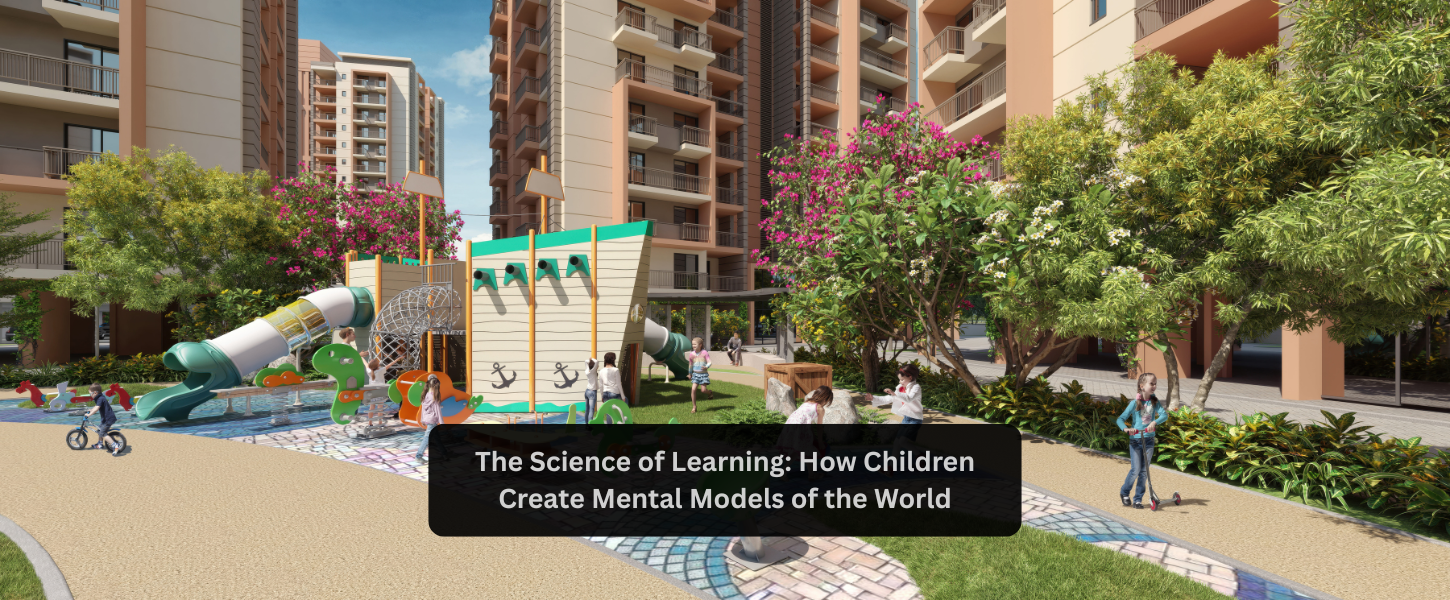

The science of learning explains how children build mental models through everyday experiences. Supportive environments, meaningful interactions, and exploration strengthen cognitive development, critical thinking, and lifelong learning.
Every day, children make sense of the world by asking questions, observing people, and connecting new experiences with what they already know. This natural process lies at the heart of the science of learning. Rather than simply memorizing facts, children gradually build mental frameworks that help them interpret information, solve problems, and make decisions. These frameworks, known as mental models, shape how children think, learn, and respond to new situations throughout life.
As parents become more aware of how children learn, they are looking beyond traditional education and seeking environments that support curiosity, exploration, and holistic growth. This growing awareness has also influenced how families choose their homes, with thoughtfully designed communities playing an increasingly important role in children’s development.
Mental models are the internal maps children create to understand how the world works. Every conversation, observation, experience, and activity adds another layer to these mental frameworks.
For example, a child who repeatedly observes that watering plants helps them grow gradually develops a deeper understanding of cause and effect. Similarly, watching adults cooperate, solve problems, or make decisions helps children build mental models for relationships, communication, and responsibility.
These experiences strengthen children’s learning because they begin connecting concepts instead of simply remembering isolated facts.
The science of learning shows that children learn best when they actively engage with experiences rather than passively receive information. Every meaningful interaction strengthens children’s brain development by creating and reinforcing neural connections.
As these connections grow stronger, children become better at organizing information, recognizing relationships, and applying knowledge in new situations. This process supports healthy cognitive development and enables children to approach challenges with greater confidence.
Rather than viewing learning as memorization, children begin to understand how ideas connect, creating a stronger foundation for future academic success.
Children often remember information longer when they understand the concept behind it. This is where conceptual learning becomes essential.
Instead of teaching children only what to think, conceptual learning encourages them to explore why something happens and how different ideas relate to one another. Whether they are building with blocks, observing weather changes, or experimenting during play, children develop a deeper understanding because they are actively constructing knowledge.
This approach also encourages meaningful learning, where information becomes connected to real-life experiences instead of remaining isolated facts.
Mental models are strengthened through everyday experiences that encourage children to observe, question, and reflect.
Simple moments such as cooking with parents, exploring a park, reading stories, or participating in community activities help children compare situations, recognize patterns, and draw conclusions. These experiences gradually develop critical thinking skills, enabling children to evaluate information rather than simply accept it.
As children become more confident thinkers, they learn to make better decisions, solve problems independently, and adapt to unfamiliar situations.
The environment plays a significant role in how children build mental models. Spaces that encourage exploration naturally provide more opportunities for observation, discovery, and learning.
Some of the most valuable learning experiences happen outside the classroom through:
These activities encourage children to ask questions, test ideas, and develop stronger conceptual understanding through direct experience.
As families increasingly prioritize holistic growth, Kid Centric Homes have become an important part of modern residential planning. Beyond providing safety and comfort, these child-friendly homes create environments that encourage exploration, curiosity, and everyday learning.
Recognizing this need, Ashiana Housing has pioneered the Kid-Centric Homes concept in India by designing communities that support children’s overall development. Through projects such as Ashiana Amarah, a Kid-Centric Home, and Ashiana Aaroham, a Curated Kid-Centric Home, children have access to thoughtfully designed play areas, activity zones, sports facilities, and community spaces that encourage interaction and discovery.
These family-centric communities provide opportunities for children to build mental models through observation, participation, and real-life experiences. By combining kid-friendly amenities with spaces that promote exploration and collaboration, these communities support holistic child development while making learning a natural part of everyday life.
The science of learning reminds us that children do not simply absorb information; they actively build mental models that shape how they understand the world. Every meaningful experience, conversation, and opportunity to explore contributes to stronger cognitive development, deeper conceptual learning, and lasting critical thinking skills.
As parents increasingly seek environments that nurture curiosity and lifelong learning, Kid Centric Homes are emerging as valuable spaces where children can grow with confidence. By encouraging exploration, interaction, and meaningful learning, these communities help lay the foundation for capable, resilient, and future-ready individuals.
The science of learning explores how children acquire, process, and retain knowledge through experiences, observation, and interaction.
Mental models are internal frameworks that help children organize information, understand concepts, and solve problems.
They help children connect ideas, improve reasoning, strengthen memory, and develop better decision-making skills.
Conceptual learning helps children understand the “why” behind ideas, making knowledge easier to apply in real-life situations.
They provide safe, engaging environments that encourage exploration, interaction, and hands-on experiences, supporting holistic child development and lifelong learning.