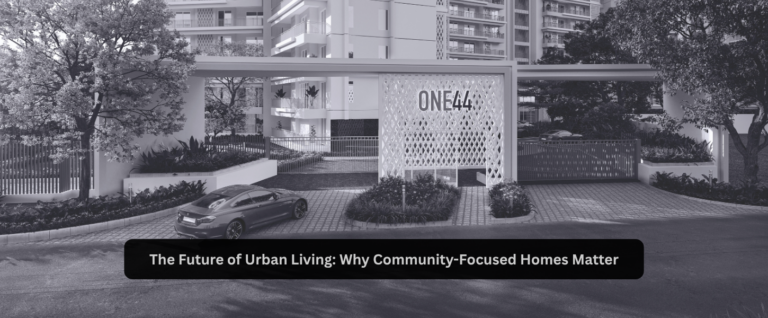
The Future of Urban Living: Why Community-Focused Homes Matter
Square footage, location, and specifications remain important considerations when choosing a home. But increasingly, the decision doesn’t end...
Read More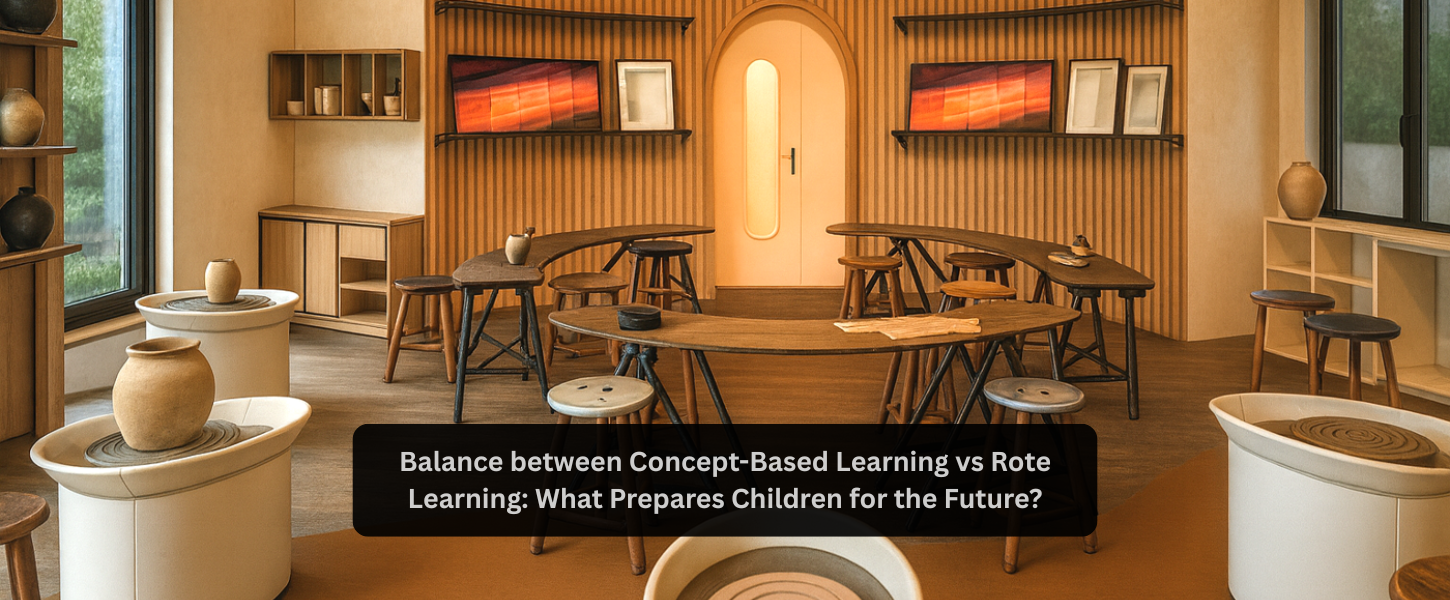

For generations, academic success has often been associated with rote learning, the ability to memorize facts, formulas, and answers for examinations. While memorization has its place, today’s rapidly changing world demands much more than recall. Children need to understand concepts, think independently, and apply knowledge in unfamiliar situations. As parents increasingly recognize this shift, they are also choosing living environments that encourage curiosity, exploration, and meaningful learning beyond school.
While rote learning helps children memorize information, concept-based learning builds understanding, curiosity, and real-world application. Combined with supportive environments like Kid Centric Homes, it prepares children for lifelong learning and future success.
Rote learning is based on repetition and memorization. It helps children remember information quickly and can be useful for learning basic facts such as multiplication tables, spellings, or vocabulary.
However, relying solely on memorization often limits a child’s ability to understand why something works. When concepts are not fully understood, children may struggle to apply their knowledge to new situations or solve problems independently.
Unlike memorization, concept-based learning focuses on helping children understand ideas, identify relationships, and connect new knowledge with previous experiences.
When children understand concepts rather than simply remembering answers, they are more likely to:
This approach transforms learning from an exam-focused activity into a lifelong skill.
Children naturally become more engaged when they understand the purpose behind what they are learning. Instead of asking, “What is the answer?” they begin asking, “Why does this happen?” or “How does this work?”
These questions encourage exploration and strengthen children’s learning by helping children connect ideas across different subjects. As a result, they become active participants in the learning process rather than passive recipients of information.
Research consistently shows that children learn more effectively when they actively engage with concepts instead of memorizing isolated facts. This process of meaningful learning strengthens cognitive development by encouraging children to analyze, compare, observe, and draw conclusions.
Whether they are conducting simple science experiments, building models, solving puzzles, or participating in creative activities, children develop stronger reasoning abilities because they are learning through experience rather than repetition.
These experiences also improve adaptability, enabling children to confidently approach unfamiliar situations.
A child’s surroundings play an equally important role in shaping how they learn. Environments that encourage curiosity, exploration, and interaction naturally reinforce concept-based learning beyond the classroom.
Everyday experiences such as creative play, outdoor exploration, reading, storytelling, collaborative games, and hands-on projects help children strengthen their conceptual understanding. By engaging in these activities, they connect ideas with real-life experiences, making learning more meaningful, enjoyable, and easier to retain.
These opportunities allow children to connect ideas with real-life experiences, making learning more engaging and memorable.
As parents increasingly seek environments that support holistic growth, Kid Centric Homes have become an important part of modern residential living. Recognizing this need, Ashiana Housing has pioneered the concept of creating child-friendly homes that nurture learning beyond academics.
Projects like Ashiana Amarah, a Kid-Centric Home, and Ashiana Aaroham, a Curated Kid-Centric Home, are thoughtfully designed to encourage exploration, collaboration, and experiential learning. With activity spaces, sports facilities, open green areas, and community engagement programs, these family-centric communities create opportunities for children to observe, interact, and develop new skills naturally.
By combining kid-friendly amenities with thoughtfully planned spaces, these safe residential communities support child-focused living and contribute to holistic child development, helping children become confident learners both inside and outside the classroom.
Although rote learning continues to play a role in helping children remember essential information, it is concept-based learning that prepares them for future challenges. By encouraging curiosity, conceptual understanding, and independent thinking, children become better equipped to solve problems, adapt to change, and apply knowledge confidently.
As education evolves, thoughtfully designed Kid-Centric Homes are becoming valuable partners in this journey. By creating environments that inspire exploration, collaboration, and meaningful learning, they help children build strong foundations for lifelong success while supporting their overall growth and development.
Rote learning is a method of memorizing information through repetition without focusing on understanding the underlying concepts.
Concept-based learning emphasizes understanding ideas and applying knowledge, while rote learning focuses mainly on memorization.
It improves conceptual understanding, critical thinking skills, confidence, and long-term knowledge retention.
Yes. Memorization is useful for basic facts, while concept-based learning helps children understand and apply what they learn.
They provide child-friendly spaces, activity zones, and community experiences that encourage exploration, creativity, and holistic child development beyond the classroom.