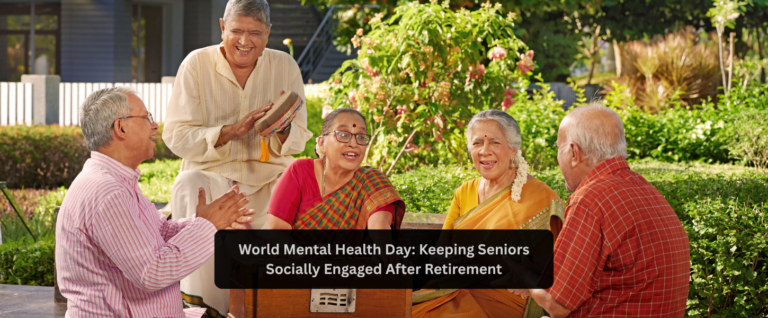
World Mental Health Day: Keeping Seniors Socially Engaged After Retirement
Retirement can open the door to a slower, more flexible lifestyle, but it can also bring significant changes...
Read More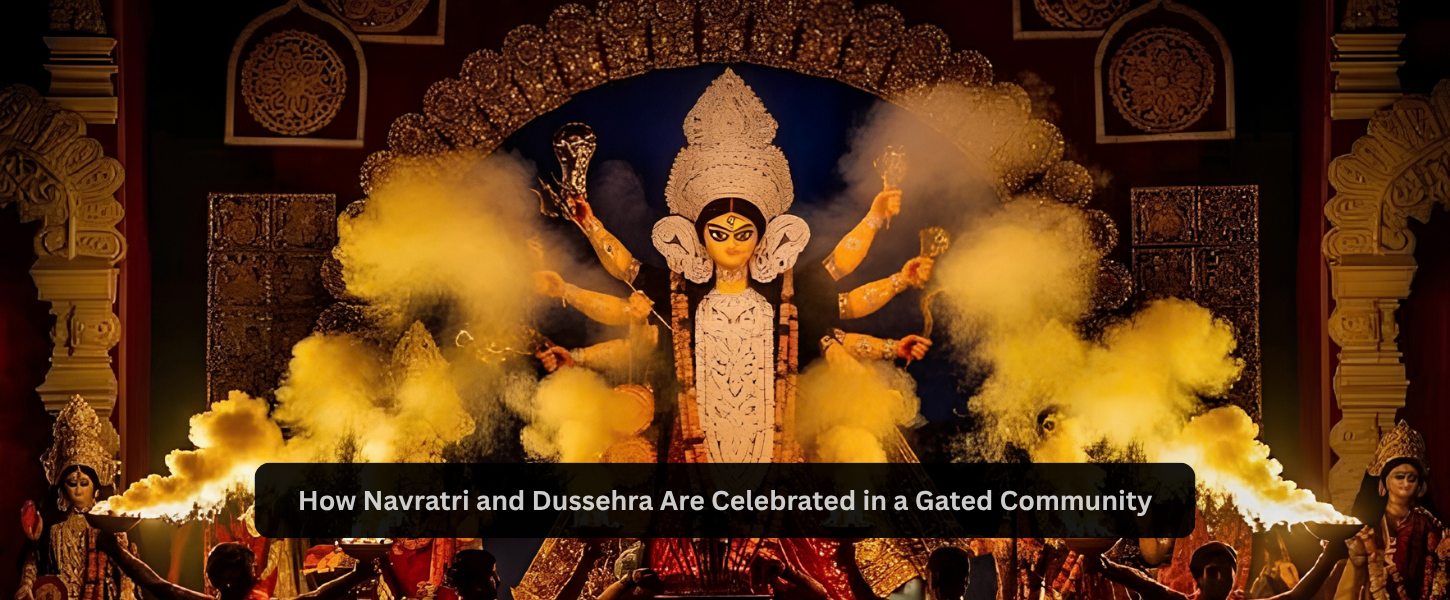

Few things lift the mood of a neighbourhood like the nine nights of Navratri. The beat of the dhol, the swirl of colourful chaniya cholis, the fragrance of incense and the glow of diyas come together to create an atmosphere that feels like home, no matter where you live. In recent years, festivals in gated communities have grown into some of the most memorable, well-organised and heartwarming celebrations in urban India.
With Navratri 2026 beginning on 11 October and Dussehra 2026 falling on 20 October, residents across the country are already planning decorations, cultural programmes and community meals. In this blog, we look at how these two festivals come alive within a gated community, and what makes the experience special for families of every age.
A gated community offers something increasingly rare in city life: a ready-made circle of neighbours, shared open spaces and a secure environment. When a festival arrives, these ingredients make celebration effortless. Instead of travelling to crowded venues, residents simply step out to the clubhouse lawn or the central courtyard.
Residential societies also bring helpful structure to the festivities. Resident welfare associations and cultural committees plan the schedule weeks, coordinate with vendors, arrange security and ensure that every celebration remains safe, inclusive and respectful of neighbours. The result is a festive calendar that is joyful without being chaotic.
Navratri begins with Ghatasthapana, the ritual installation of the sacred kalash. Many communities set up a beautifully decorated Devi sthapana in the clubhouse or community hall, where residents gather each morning and evening for aarti. Elders lead the prayers, while children take pride in helping with flowers, diyas and prasad.
No Navratri is complete without garba and dandiya. In a gated community, these evenings are usually held on a well-lit lawn or podium area, with a proper stage, a sound system and comfortable seating for those who prefer to watch. Because entry is regulated and the space is contained, parents feel at ease letting children dance, and grandparents can enjoy the music in comfort. This sense of ease is one of the biggest reasons families so love festivals in gated communities.
Many societies follow the tradition of wearing a specific colour each day. Residents coordinate through their community groups, and the lobby, amenity areas, and even the evening photo wall become a vibrant display of that day’s shade. It is a simple idea that encourages participation and creates lasting memories.
On Ashtami or Navami, many residents hold Kanya Pujan, welcoming young girls as the embodiment of the Goddess. Community kitchens often serve a traditional bhog of puri, halwa and chana for everyone.
For Bengali residents and many others, Durga Puja is the heart of the season. Several gated communities set up a pandal in a central open space, complete with an idol, traditional decorations and cultural programmes. Dhunuchi dance, anjali on Ashtami, sindoor khela on Dashami and shared community feasts bring neighbours from different regions together.
Even residents who do not usually take part in Durga Puja often join in, drawn by the music, the food and the warmth of the gathering. This is where festivals in gated communities truly reflect India’s unity in diversity.
Dussehra 2026 marks the victory of Lord Rama over Ravana, and gated communities celebrate it in ways that are both traditional and safe. Common highlights include:
Because the programme is planned and timed, the celebration remains orderly and considerate towards residents who prefer a quieter evening.
Safety and inclusiveness are the quiet strengths behind every successful community celebration. Here is what typically makes the difference:
These features are what make family-friendly homes truly valuable during the festive season. When open lawns, wide pathways, a clubhouse and round-the-clock security are part of the design, every generation can participate without worry.
If you are part of a resident welfare association or cultural committee, these simple practices can help you host a celebration that everyone enjoys:
When people compare residential societies, they usually look at location, price and amenities. Yet the quality of community life matters just as much. Family-friendly homes are not only about spacious rooms. They are about shared lawns where children can play, clubhouses where elders can gather, and a culture of neighbours who celebrate together.
At Ashiana Housing, communities are planned around open green spaces, clubhouses and activity areas that make such gatherings natural and comfortable. If you are looking for a place where festivals in gated communities are celebrated with warmth, safety and a true sense of belonging, such a setting can make everyday living, and every festival, far more meaningful.
Navratri and Dussehra are about devotion, joy and togetherness, and few settings capture these values better than a well-planned residential community. From the first aarti to the final Ravan Dahan, festivals in gated communities turn neighbours into friends and homes into a larger family. As Navratri 2026 and Dussehra 2026 approach, we wish every resident a safe, happy and blessed celebration.
Looking for a community where every festival feels like a family occasion? Explore Ashiana Housing’s residential communities and find a home where celebrations are shared, safe and truly memorable.
Yes. Controlled entry, CCTV surveillance, planned programmes and designated seating areas help ensure that children and senior citizens can enjoy the celebrations comfortably.
Navratri 2026 begins on 11 October, and Dussehra 2026 is observed on 20 October. Please confirm the exact dates and muhurat with your local panchang.
Not always. Durga Puja is typically organised where there is a significant Bengali or Durga Puja-observing resident group. However, many communities welcome all residents to join the pandal, the aarti and the community feast.
Absolutely. Most communities treat these celebrations as cultural gatherings that bring neighbours together, and everyone is welcome to join in the music, food and fun.