
How Navratri and Dussehra Are Celebrated in a Gated Community
Few things lift the mood of a neighbourhood like the nine nights of Navratri. The beat of the...
Read More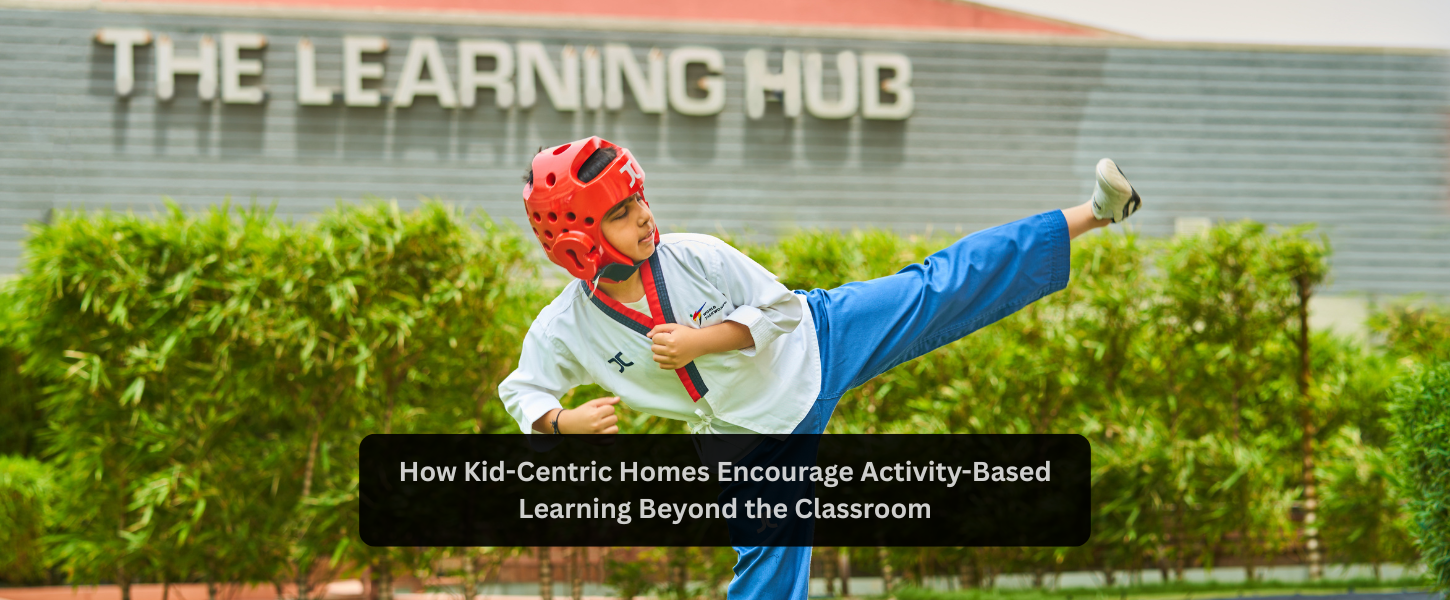

Activity-based learning helps children learn through participation, exploration, and real-life experiences. Kid-Centric Homes support this approach by creating environments where learning extends beyond classrooms and becomes part of everyday life.
Learning today extends far beyond classrooms and textbooks. Parents increasingly value environments that support their children’s growth through real-world experiences and everyday interactions. This shift has increased the importance of activity-based learning, where children learn through exploration, participation, and hands-on experiences. As a result, families are seeking communities that encourage learning, creativity, and development beyond school hours.
Children naturally learn through experiences. Whether they are building something, participating in a sports activity, exploring nature, or solving problems with friends, they are constantly developing new skills and understanding.
Unlike passive learning methods, activity-based learning encourages children to engage directly with concepts and situations. This makes learning more meaningful, memorable, and relevant to real life.
Education research consistently highlights that children retain information more effectively when they actively participate in the learning process. Through practical experiences, they develop curiosity, confidence, and the ability to apply knowledge in different situations.
The concept of learning beyond the classroom has become increasingly important in a rapidly changing world. While schools provide academic foundations, children’s daily environments often shape how they apply and expand what they learn.
For example, a child participating in a gardening activity learns far more than how plants grow. They develop patience, responsibility, observation skills, and an appreciation for nature. Similarly, participation in community events can help children build communication skills, teamwork, and social awareness.
When learning opportunities are embedded within everyday experiences, children begin to see education not as a task but as a natural part of life.
One of the greatest advantages of activity-based learning is its impact on overall child development. Through active participation, children develop skills that support multiple aspects of growth simultaneously.
Physical activities strengthen coordination and fitness. Creative activities stimulate imagination and innovation. Collaborative experiences encourage teamwork and communication. Together, these experiences contribute to a more balanced and comprehensive developmental journey.
More importantly, children gain confidence through achievement. Completing a project, learning a new skill, or solving a problem independently helps build self-esteem and encourages a positive attitude toward learning.
At the heart of activity-based learning lies experiential learning, where children gain knowledge through direct experiences. Instead of simply reading about concepts, they interact with them in meaningful ways.
For instance, children participating in sustainability activities such as composting or water conservation projects develop a practical understanding of environmental responsibility. Similarly, creative activities like storytelling, theatre, and collaborative projects help children express ideas while developing communication and problem-solving abilities.
Because these experiences engage multiple senses and emotions, they often leave a deeper and more lasting impression than traditional instruction alone.
The environment in which children grow up can significantly influence their willingness to explore and learn. Communities that offer opportunities for activity, interaction, and discovery naturally support continuous child learning.
Features that encourage activity-based learning often include:
These environments provide children with opportunities to experiment, collaborate, and discover their interests in a safe and supportive setting.
The growing popularity of Kid Centric Homes reflects a broader shift in how families define quality living. Parents are increasingly seeking child-friendly homes that support not only safety and comfort but also learning, exploration, and overall development. Recognizing this evolving need, Ashiana Housing has been a pioneer in creating residential communities that place children’s growth at the center of community planning.
Unlike conventional residential developments, Kid-Centric Homes are designed to encourage exploration, independence, and participation through thoughtfully planned spaces and engaging activities. This approach supports holistic child development, helping children grow intellectually, socially, emotionally, and physically while making everyday experiences more meaningful and enriching.
Ashiana Housing has been one of the pioneers in introducing the Kid Centric Homes concept in India. Recognizing that childhood development extends beyond academics, the company has focused on creating communities where learning becomes a natural part of daily life.
Projects such as Ashiana Amarah and Ashiana Aaroham, Kid-Centric Homes, are designed around the belief that children learn best when they have opportunities to explore, interact, and participate. Through thoughtfully designed play areas, sports facilities, activity zones, and community engagement programs, these communities create an environment that supports both experiential learning and overall development.
By combining safety, recreation, learning opportunities, and social interaction, Ashiana Housing demonstrates how residential communities can contribute meaningfully to a child’s growth journey while enhancing family life as a whole.
The future will demand skills that extend far beyond academic knowledge. Creativity, adaptability, collaboration, problem-solving, and resilience are becoming increasingly important for success.
Activity-based learning helps nurture these abilities by encouraging children to think independently and engage actively with the world around them. When supported by environments that encourage exploration and participation, children become better equipped to navigate future challenges with confidence.
This is why communities that prioritize child development are becoming an increasingly important consideration for modern families.
As education continues to evolve, learning can no longer be confined to classrooms alone. Activity-based learning provides children with opportunities to explore, experiment, and develop practical skills through real-life experiences. These experiences contribute significantly to child development, strengthen confidence, and make learning more engaging and meaningful.
By creating environments that support learning beyond the classroom, encourage experiential learning, and foster holistic child development, Kid-Centric Homes help children become curious, capable, and lifelong learners. As families increasingly prioritize growth-oriented environments, thoughtfully designed communities will continue to play a vital role in shaping the future of childhood learning.
Activity-based learning is an educational approach where children learn through hands-on experiences, participation, and real-world activities.
It helps develop cognitive, social, emotional, and physical skills through active engagement and practical experiences.
It allows children to apply knowledge in real-life situations, making learning more meaningful and effective.
Kid-Centric Homes create environments that encourage exploration, interaction, creativity, and experiential learning every day.
These communities provide thoughtfully designed spaces, activities, and programs that encourage learning, recreation, social interaction, and holistic child development.