
Chennai’s GCC Expansion and Its Potential Impact on Real Estate Market
Chennai has long been recognised for its strong manufacturing, automobile, IT, healthcare, financial services, and engineering sectors. In...
Read More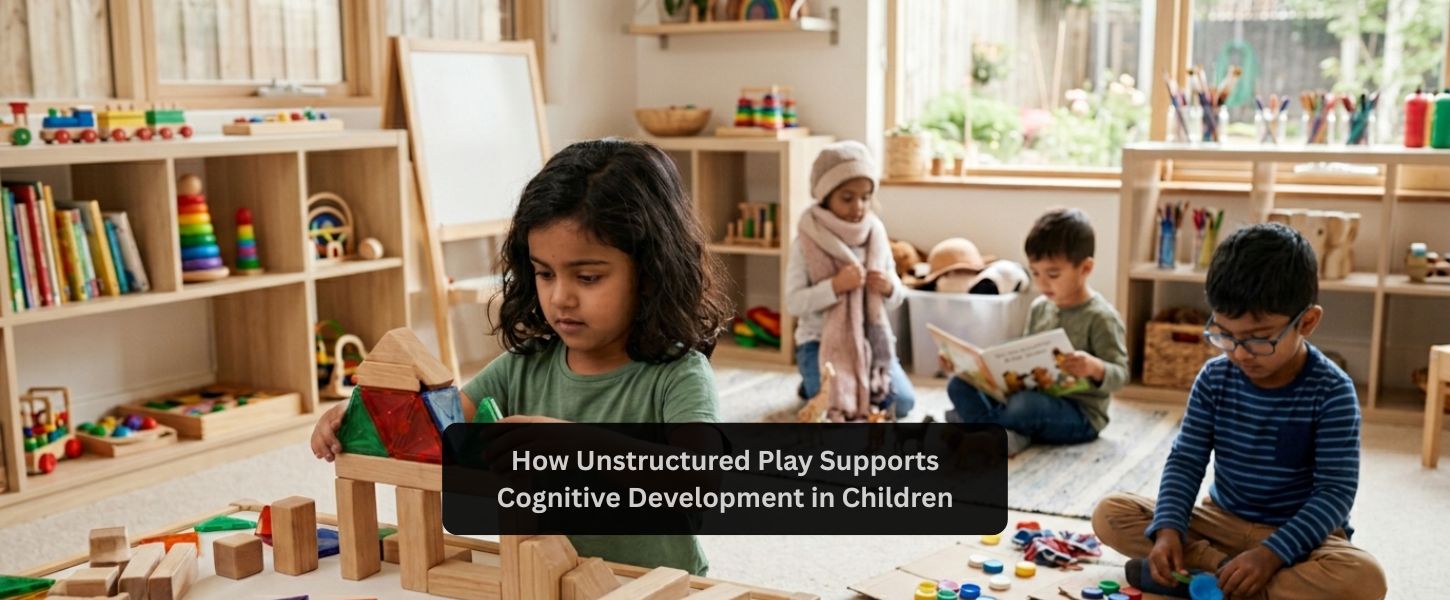

In an increasingly structured world, children often have limited opportunities for independent exploration and creativity. While formal education plays a crucial role, Cognitive Development is also significantly influenced by experiences that foster curiosity, imagination, and self-directed learning. This is where unstructured play becomes invaluable. Whether children are creating imaginary adventures, building with everyday objects, or exploring the outdoors, these child-led activities support child cognitive development by strengthening problem-solving abilities, creativity, decision-making skills, and a natural love for learning.
Many parents view play as a way for children to stay entertained, but it is actually one of the most effective learning tools available. Through play, children naturally develop skills that support academic success, emotional well-being, and intellectual growth.
Unlike activities with fixed rules and outcomes, unstructured play allows children to make decisions, take risks, and learn from their experiences. This process strengthens curiosity and encourages independent thinking.
Every play experience presents new challenges. Whether children are building a fort, creating a treasure hunt, or organizing a game with friends, they constantly make decisions and adapt to changing situations.
These experiences improve:
Such skills are fundamental to child cognitive development and help children become more confident learners.
Children absorb information most effectively when they are actively involved in the learning process. Learning through play allows them to explore concepts naturally rather than memorizing information.
For example, children learn:
This hands-on approach makes learning through play both engaging and effective.
Early childhood is a crucial period for children’s brain development. During these years, the brain rapidly forms connections that influence future learning and behavior.
Activities such as imaginative play, outdoor exploration, and creative challenges stimulate multiple areas of the brain simultaneously. As a result, children strengthen memory, concentration, and information-processing abilities while having fun.
The benefits of play extend far beyond intellectual growth. Unstructured activities help children develop important life skills that support their overall development.
Some of these benefits include:
When children are free to explore their interests, they develop a stronger sense of self and a willingness to embrace new experiences.
Creativity is an essential skill that helps children adapt, innovate, and solve problems effectively. Through creative play for kids, children are encouraged to use their imagination, explore new ideas, and view situations from different perspectives.
Activities such as pretend play, drawing, storytelling, building with blocks, and role-playing allow children to think freely and experiment with ideas. These simple yet engaging experiences foster innovation, flexible thinking, and contribute significantly to healthy Cognitive Development.
Supporting play for kids does not require expensive toys or highly structured activities. In many cases, the simplest environments create the richest learning opportunities.
Parents can encourage meaningful play by:
The goal is to provide opportunities for discovery while giving children the freedom to direct their own experiences.
The environment in which children grow up has a significant influence on their development. Communities that provide parks, open spaces, play areas, and opportunities for social interaction naturally encourage exploration and creativity.
Recognizing the importance of holistic child development, Ashiana Housing has focused on creating child-friendly environments where children can enjoy meaningful play experiences. At Ashiana Aaroham, a curated kid centric community in Sector-80, Gurgaon, thoughtfully designed spaces encourage interaction, outdoor activities, and opportunities for free exploration. Such environments support learning through play, promote healthy children’s brain development, and create conditions that positively influence overall growth.
The role of Cognitive Development extends beyond classroom learning, and unstructured play remains one of the most effective ways to support it.
By giving children the freedom to explore, imagine, and create, parents and communities can help build the foundation for lifelong learning, adaptability, and success.
Unstructured play is child-led, free play without fixed rules or adult direction, allowing children to explore, create, and learn at their own pace.
It helps children develop problem-solving, decision-making, creativity, critical thinking, and independent learning skills, all of which contribute to cognitive development.
Examples include pretend play, building with blocks, drawing, storytelling, outdoor exploration, role-playing, and creating games with friends.
Parents can provide open-ended materials, create safe play spaces, limit screen time, encourage outdoor activities, and allow children to lead their own play experiences.