How Navratri and Dussehra Are Celebrated in a Gated Community
Few things lift the mood of a neighbourhood like the nine nights of Navratri. The beat of the...
Read More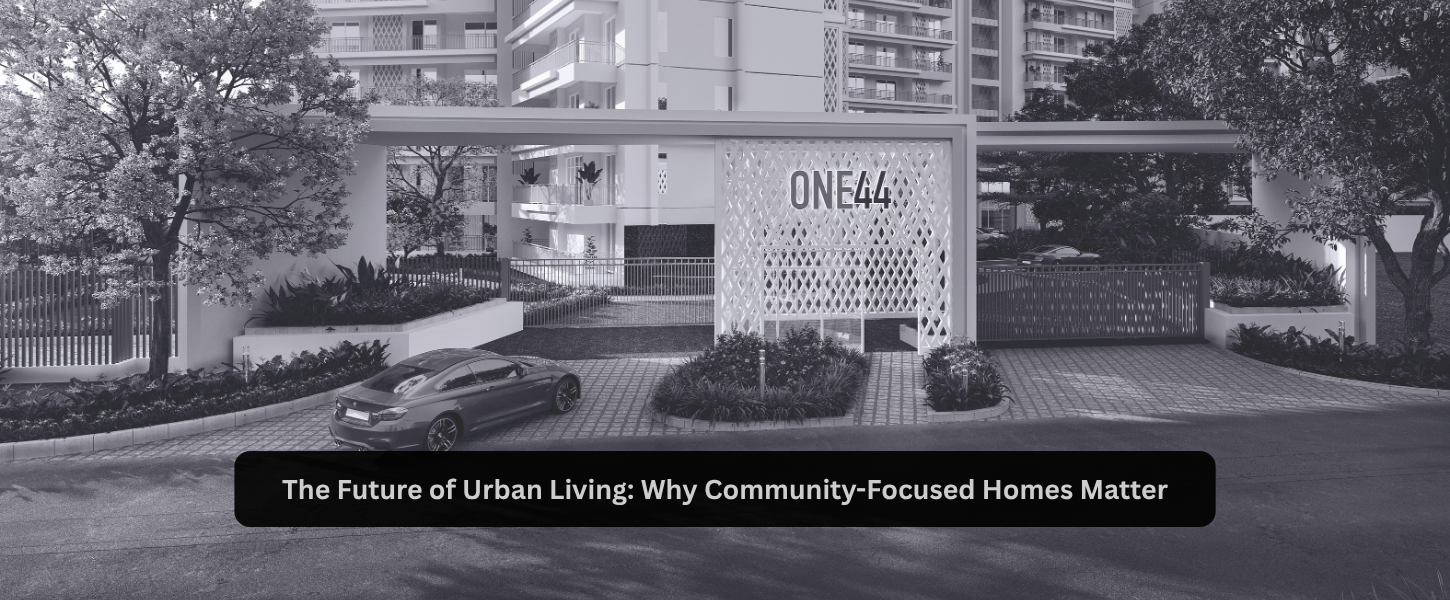

Square footage, location, and specifications remain important considerations when choosing a home. But increasingly, the decision doesn’t end at the front door. The quality of shared spaces, the sense of privacy inside a home, and the character of the community around it are shaping how comfortably people actually live, day to day.
As Indian cities grow denser, homebuyers are asking a genuine question: what does the future of urban living actually look like?
Understanding the future of urban housing in India increasingly means looking past the apartment itself, toward how a whole community is planned.
For a long time, premium homes in Jaipur and other growing cities were largely defined by space, location, and finishes. That hasn’t stopped mattering. What’s changed is that buyers now also weigh what happens beyond their own walls, how a development is planned, and whether the community around it truly adds to daily life.
This shift touches density, shared-space design, wellness, and how well a home connects to the rest of the city. None of these ideas works in isolation.
Together, they sketch out the future of urban living more completely than any single feature could.
As cities grow taller and denser, privacy is becoming harder to take for granted, and low-density housing is starting to feel less like a luxury and more like a genuine consideration. The number of homes in a development affects far more than exclusivity.
Shared spaces feel less crowded, common areas stay easier to navigate, and residents are more likely to recognize the people they share a building with, rather than passing strangers in a lobby.
This is part of what modern urban living increasingly means: choosing density on purpose, not by accident.
A clubhouse or a pool alone doesn’t make a community. What actually builds community living is whether a space is designed for people to genuinely use it, and whether it naturally brings neighbors into contact with each other instead of just sitting there as an amenity checklist item.
A café works when it sparks casual conversation. A pool works when it becomes a shared family experience.
A yoga studio supports wellness routines that residents actually build into their week. The physical space matters less than what it lets people do together, and this is exactly where premium residential communities tend to separate themselves from ordinary apartment blocks.
Not every amenity gets used the same way, and that’s rarely about the amenity itself. It usually comes down to accessibility from residences, whether the space is sized appropriately for how many people will actually use it, and whether it works for different age groups and different times of day.
Good amenity planning isn’t about listing the most facilities. It’s about whether residents can realistically build these spaces into their everyday routine, rather than walking past them on the way somewhere else. This is a quiet but important part of the future of urban living: fewer, better-used spaces over a long list of underused ones.
Fitness, recreation, and time outdoors used to feel optional in urban housing. In denser cities, they’re becoming part of what a home is expected to offer. Natural light, ventilation, landscaped surroundings, and spaces to walk or simply sit outside all affect how livable a home feels well beyond its floor plan.
It matters across age groups too. Children need space to play, working adults benefit from convenient recreation and wellness options, and older residents often value quieter, more accessible outdoor spaces.
A community that only plans for one stage of life tends to feel incomplete for everyone else, which is one reason community-focused residential development is gaining ground over single-purpose apartment complexes.
Two trends are steadily becoming part of what buyers expect from newer developments, even if they aren’t always the first thing mentioned in a brochure.
The first is technology: smarter access and visitor management, stronger security systems, and simpler ways for residents to manage day-to-day community life. The second is sustainability: thoughtful water and energy use, better landscape planning, and design choices that reduce a development’s environmental footprint over time.
Neither replaces good architecture, but both are becoming standard expectations, not extras.
A premium community doesn’t exist in isolation from the city around it. Proximity to employment centers, schools, hospitals, and everyday retail affects daily life just as much as what happens inside the gates. A well-designed home in a poorly connected location still asks residents to compromise somewhere.
This is worth factoring in early, not as an afterthought once the interiors and amenities have already won someone over, especially for anyone comparing luxury apartments in Jaipur across different parts of the city.
A thoughtfully planned development shouldn’t force a choice between personal space and social connection. Private residences can coexist with shared environments that let interaction happen naturally, through a shared café, a landscaped courtyard, or a wellness space, rather than forcing it.
The buyer doesn’t have to trade exclusivity for isolation, or community for crowding, and that balance is quickly becoming central to modern urban living.
A few practical things are worth checking beyond the floor plan itself:
This kind of checklist matters just as much for premium residential communities as it does for more affordable ones, since scale and design intent shape daily life regardless of price point.
ONE44 by Ashiana Housing is a part of Ashiana’s Elite Homes category in Jagatpura, Jaipur, and brings these ideas to life. Ashiana’s presence in Jaipur also spans its premium homes portfolio, across a wider range of residential categories.
With 3BHK and 4BHK apartments alongside 4BHK and 5BHK duplex configurations, ONE44 has been planned around a comparatively limited residential community rather than a high-density format.
The development’s architecture brings ample natural light, ventilation, and balconies overlooking landscaped surroundings, alongside shared spaces like the 100-ft pool, rooftop yoga studio, and pool-facing café designed for genuine everyday use. Together, they show how ONE44 brings space, design, and community into one experience.
The future of urban living isn’t going to be defined by any single feature. It’s the combination of thoughtful density, genuine community living, wellness-oriented spaces, sustainable planning, useful technology, and real connectivity to the city, working together rather than competing for attention.
The developments that get this right won’t have the longest amenity list. They’ll be the ones where privacy and community simply coexist, inside the home and beyond it.
Consider the scale of the development, variety in shared spaces, usability across age groups, proximity to daily essentials, and how thoughtfully the design integrates open space and light.
No. Coliving typically involves shared living arrangements among unrelated residents, while community living refers to independent private homes supported by shared spaces and amenities.
ONE44 is part of Ashiana’s Elite Homes category, offering spacious 3BHK to 5BHK duplex configurations along with landscaped surroundings and community-oriented amenities in Jagatpura, Jaipur.
ONE44 is located in Jagatpura, Jaipur, as part of Ashiana’s Elite Homes portfolio.