


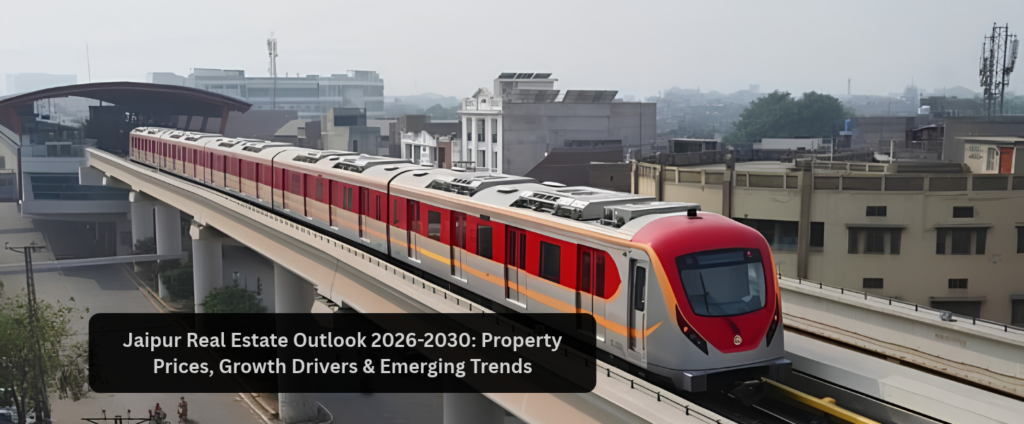
Jaipur Real Estate Outlook 2026-2030: Property Prices, Growth Drivers & Emerging Trends
Jaipur’s transformation from a traditional Tier-2 city into a growing residential and commercial destination has made the city…
7 min read
Read more
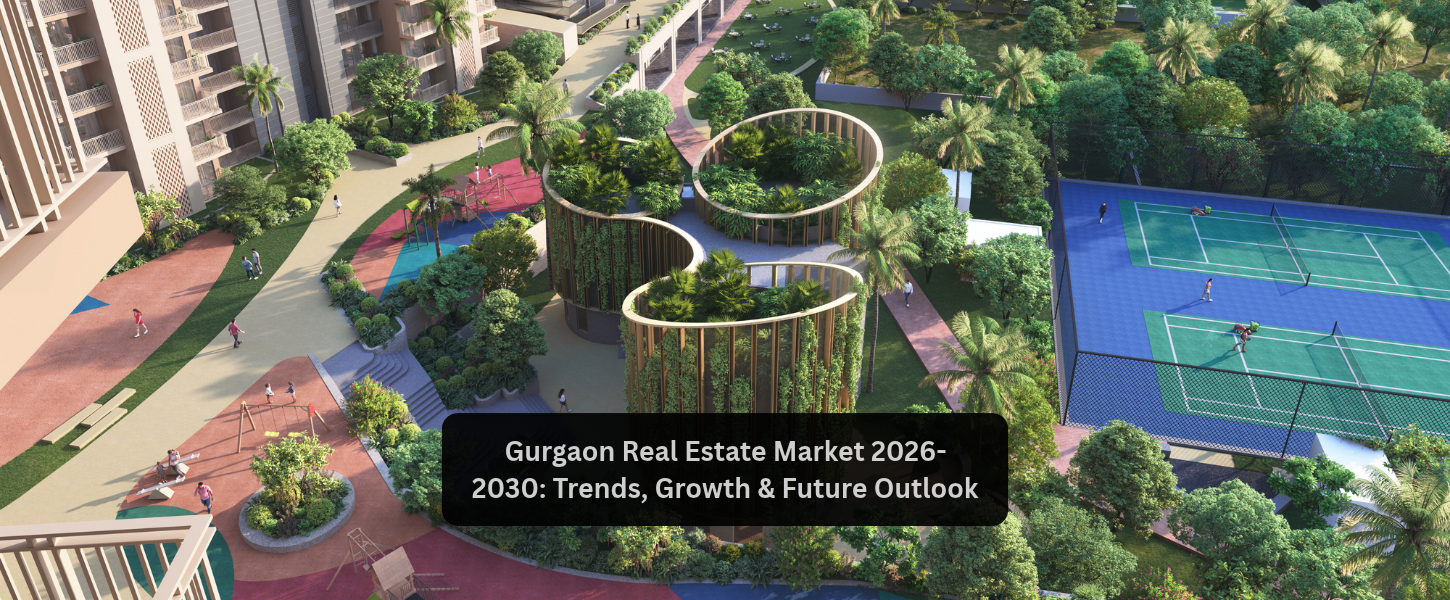
The Gurgaon real estate market has evolved significantly over the past decade. Once primarily recognised as a corporate and IT hub, Gurgaon, officially Gurugram, has developed into one of India’s most important residential, commercial and infrastructure-led growth markets.
As the city enters the next phase of development, the Gurgaon real estate market is being shaped by new infrastructure, expanding employment hubs, premium housing demand, improving connectivity and changing buyer preferences.
The outlook for 2026-2030 is therefore less about rapid expansion alone and more about how different micro-markets mature, how infrastructure improves accessibility, and how developers respond to evolving housing demand.
Gurugram remains one of the strongest residential markets in the National Capital Region. In Q2 2026, Gurgaon accounted for 43% of Delhi NCR’s residential sales, with demand particularly concentrated in Dwarka Expressway, Golf Course Extension Road, New Gurgaon and Manesar. Gurgaon also accounted for 45% of new NCR residential launches during the quarter.
At the same time, the market is showing signs of recalibration. NCR residential sales declined 11% year-on-year during January-September 2026, with Gurugram accounting for much of the decline. The slowdown was particularly visible in the ₹5-10 crore segment, while demand in the ₹2-5 crore segment remained comparatively steady.
This suggests an important trend: demand remains present, but affordability and product positioning are becoming increasingly important.
Infrastructure is likely to remain one of the strongest factors influencing Gurgaon real estate through 2030.
The opening and development of major road corridors have improved connectivity between Gurgaon, Delhi and surrounding areas. The Dwarka Expressway, Southern Peripheral Road, Sohna Road and other major routes have already influenced residential development patterns.
The Gurugram Metro is another important long-term factor. Construction of the Millennium City Centre-Cyber City metro corridor began in September 2025, with the project expected to improve internal connectivity across key employment and residential areas.
As infrastructure improves, residential demand could increasingly move towards locations that combine connectivity with relatively newer housing stock and planned development.
Dwarka Expressway has emerged as one of the most closely watched corridors in Gurgaon real estate.
Its connectivity between Delhi and Gurugram, along with new residential and commercial development, has significantly changed the area’s positioning.
According to ANAROCK data reported in September 2026, residential prices along Dwarka Expressway rose approximately 135% between 2021 and H1 2026, reaching around ₹14,180 per sq. ft.
The sharp growth of recent years, however, also means buyers should be cautious about assuming similar appreciation every year. As the corridor matures, factors such as actual infrastructure usage, supply, affordability, and project quality will become increasingly important.
New Gurgaon, particularly sectors along the NH-48 corridor, is another important part of the city’s residential story.
The area has attracted substantial residential development, with sectors 76-95 accounting for 175 of 595 new RERA projects registered across Gurugram district between 2021 and 2025, according to a 2026 market analysis.
The appeal of New Gurgaon lies in its combination of planned residential communities, newer infrastructure, employment connectivity, and relatively large-scale developments.
By 2030, some of these locations could become significantly more self-sufficient as schools, retail, healthcare and other social infrastructure expand.
Luxury and premium housing have been major contributors to Gurgaon’s recent residential growth.
However, the market is showing signs of a transition from broad-based luxury expansion towards more selective demand. Savills reported that luxury housing launches in Gurugram declined 28% in H1 2026, even as demand remained steady and developers became more cautious.
This does not necessarily indicate weakening long-term demand. Instead, it suggests that buyers are becoming more selective about location, developer credibility, amenities, construction quality and overall value.
For the Gurgaon real estate market, this could lead to greater differentiation between well-planned developments and projects that rely primarily on location or branding.
The modern Gurgaon homebuyer is increasingly looking beyond the apartment itself.
Connectivity remains important, but buyers are also considering:
This is particularly relevant for families looking at larger homes and planned communities.
As more residential developments compete for buyers, projects that combine location with practical lifestyle infrastructure could have an advantage through 2030.
Southern Gurgaon has also become increasingly relevant to the city’s growth story.
Sohna benefits from improved road connectivity, the Delhi-Mumbai Expressway ecosystem and growing residential development. Its relatively lower entry point compared with some established Gurgaon corridors can make it attractive to buyers seeking newer housing options.
However, the 2026-2030 outlook will depend heavily on how quickly supporting infrastructure and social amenities develop.
For buyers considering emerging locations, current livability should be evaluated alongside future development potential.
Property prices between 2026 and 2030 will depend on several interconnected factors.
New roads, metro connectivity and regional transportation improvements can increase accessibility and influence residential demand.
Expansion of corporate offices, GCCs, technology companies and other businesses can support both ownership and rental demand.
If new supply increases faster than demand, price growth may moderate. Conversely, limited supply in high-demand micro-markets can support pricing.
Home-loan rates and household purchasing power will continue to influence buying decisions.
Changes in taxation, development regulations, RERA implementation and infrastructure planning can affect the market.
Demand is increasingly shifting towards homes that combine location, quality, amenities and long-term liveability.
The next four years may offer opportunities, but buyers should avoid making decisions based solely on projected appreciation.
Before purchasing a property, evaluate:
A strong location can support property demand, but it does not eliminate project-specific risks.
The Gurgaon real estate market is entering a more mature phase.
The rapid price growth witnessed across several corridors in recent years may not continue at the same pace every year. Instead, the market could increasingly differentiate between established premium locations, infrastructure-led growth corridors and emerging residential areas.
Dwarka Expressway, New Gurgaon, Golf Course Extension Road, Southern Peripheral Road and Sohna are likely to remain important areas to watch, although their growth trajectories may differ.
By 2030, the Gurgaon of today is likely to look substantially different. Improved infrastructure, expanding employment hubs, new residential communities and stronger social infrastructure could make several currently developing areas more established.
For homebuyers, the opportunity lies in identifying locations where connectivity, employment, infrastructure and everyday liveability are developing together.
For investors, the focus should be on sustainable demand rather than short-term speculation.
Ultimately, the future of Gurgaon real estate will not be determined by one project or one infrastructure announcement. It will be shaped by the combined impact of employment, connectivity, housing supply, affordability and the quality of urban development.
That makes 2026-2030 an important period to watch, not simply for how much Gurgaon property prices change, but for how the city’s residential landscape evolves.
The Gurgaon real estate outlook remains positive, supported by infrastructure development, employment growth, premium housing demand and expanding residential corridors. However, buyers should expect market conditions and price growth to vary across different micro-markets.
Dwarka Expressway, New Gurgaon, Golf Course Extension Road, Southern Peripheral Road and Sohna are among the key corridors to watch because of infrastructure development, residential activity and improving connectivity.
Gurgaon continues to have strong real estate fundamentals, but investment decisions should be based on location, developer credibility, infrastructure, rental demand, supply and affordability rather than expected appreciation alone.
Major drivers include corporate and GCC expansion, infrastructure development, improved connectivity, residential demand, premium housing and the development of new commercial and mixed-use districts.
Prices may continue to experience upward pressure in well-connected and high-demand locations, but future appreciation is not guaranteed. Supply, affordability, interest rates, economic conditions and infrastructure execution will influence price movements.
Jaipur’s transformation from a traditional Tier-2 city into a growing residential and commercial destination has made the city…
Mumbai’s property market has always operated under a different set of rules. Limited land, high population density, a…
It is 7:40 in the morning. One shoe is missing, the school bag is half packed, and your…