
How Navratri and Dussehra Are Celebrated in a Gated Community
Few things lift the mood of a neighbourhood like the nine nights of Navratri. The beat of the...
Read More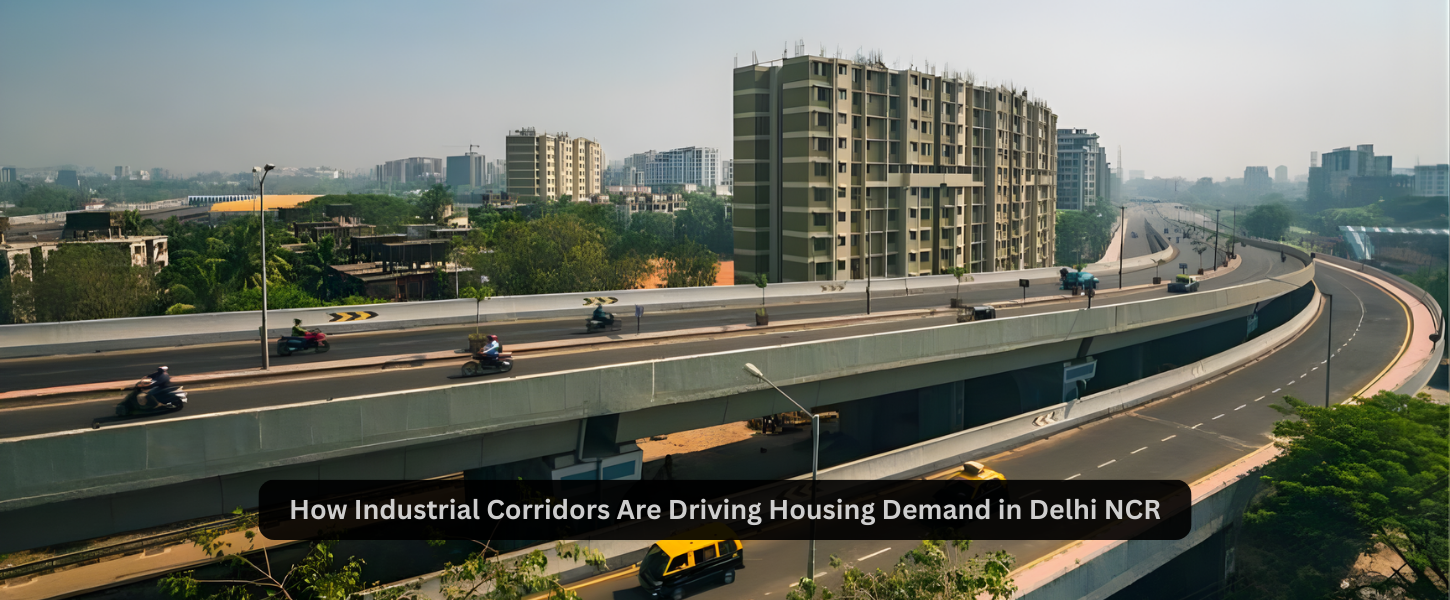

The real estate landscape in India’s capital region is changing rapidly. Once seen mainly as a hub for government and corporate offices, Delhi NCR property has now become a magnet for homebuyers, investors, and developers alike. At the heart of this transformation are the industrial corridors that are reshaping the economic and residential future of the region.
Industrial corridors represent strategic infrastructure frameworks that link production centres, transport networks, logistics hubs, and business clusters. As these corridors evolve with new connectivity projects and commercial activity, they are also triggering a surge in demand for housing, making them compelling drivers of growth for residential real estate in Delhi NCR.
Industrial corridors are planned economic zones that connect major manufacturing, warehousing, and logistics areas through robust road, rail, and freight infrastructure. In Delhi NCR, corridors such as the Western Peripheral Expressway or Kundli-Manesar-Palwal (KMP) Expressway, Eastern Peripheral Expressway, Yamuna Expressway, and dedicated freight routes are transforming the way goods and people move.
These corridors attract businesses by improving supply chain efficiency and reducing transit times. As companies set up operations in these industrial zones, employment opportunities multiply, and local economies strengthen. Over time, such developments have a direct impact on housing demand and the vibrancy of nearby communities.
The influence of industrial corridors on the real estate market is multifaceted. Here’s how they are driving demand for homes across Delhi NCR:
Industrial corridors help generate large-scale employment across manufacturing, logistics, technology, and services. When job opportunities increase, so does the influx of professionals and their families, many of whom seek Delhi NCR property near their workplaces for convenience and quality living.
As industrial activity grows, developers are responding by launching more residential projects in and around corridor areas. These residential project developments are designed to meet the growing need for homes that are well-connected to industrial hubs and transportation networks.
Industrial corridors often coincide with major expressways, freight lines, and transit routes. This improved connectivity makes commuting easier and more predictable, encouraging homebuyers to invest in Delhi NCR property farther from core city centres but closer to employment clusters.
As industrial corridors mature, supporting infrastructure such as schools, healthcare facilities, shopping centres, and entertainment hubs spring up in their vicinity. These amenities make nearby residential locations more attractive and livable.
Developers are increasingly recognising the potential of corridor-led growth. Residential projects strategically located near industrial corridors are now among the most sought-after in the Delhi NCR market. They offer:
Communities built around these corridors appeal to buyers who prioritise both convenience and quality of life. As a result, even previously overlooked locations have become hotspots for new residential project launches.
The appeal of industrial corridors extends beyond end-users to investors and real estate professionals. With improved infrastructure and strong economic activity, corridors are delivering higher returns on property investments. They create stable long term demand as jobs, amenities, and connectivity continue to anchor residential growth.
Additionally, industrial development brings diverse housing needs into focus, from affordable homes for workers to premium properties for executives and professionals. This broadens market depth and brings a healthy balance to real estate demand across segments.
As industrial corridors continue to expand and integrate with transport networks, the trajectory of the Delhi NCR real estate market is unmistakably positive. Housing demand near these corridors is expected to grow steadily, driven by:
In essence, industrial corridors are not just about manufacturing and logistics. They are catalysts for holistic urban development, strengthening the fabric of communities and empowering residents to enjoy better job prospects, smoother commutes, and fulfilling lifestyles.
The influence of industrial corridors on housing demand is clearly visible in growing locations such as Bhiwadi. Positioned close to key industrial hubs, Bhiwadi has emerged as a preferred choice for professionals seeking well-connected living options within the Delhi NCR property market.
Ashiana Housing has responded to this growth with Ashiana Tarang in Bhiwadi, a thoughtfully planned residential project that aligns with the region’s expanding industrial development. Its strategic location supports easier commuting while offering a comfortable and community-focused living environment, reflecting how corridor-led growth is shaping residential demand in Delhi NCR.
In today’s fast-evolving real estate environment, industrial corridors are proving to be powerful engines of growth for Delhi NCR’s property market. By enhancing connectivity, job opportunities, and local economies, these corridors are creating strong demand for residential living spaces. As a result, thoughtfully planned residential projects near industrial zones have emerged as preferred choices for homebuyers and investors alike.
For anyone looking to understand the future of housing demand in the capital region, recognising the vital role of industrial corridors offers valuable insight into real estate trends and opportunities in Delhi NCR.