


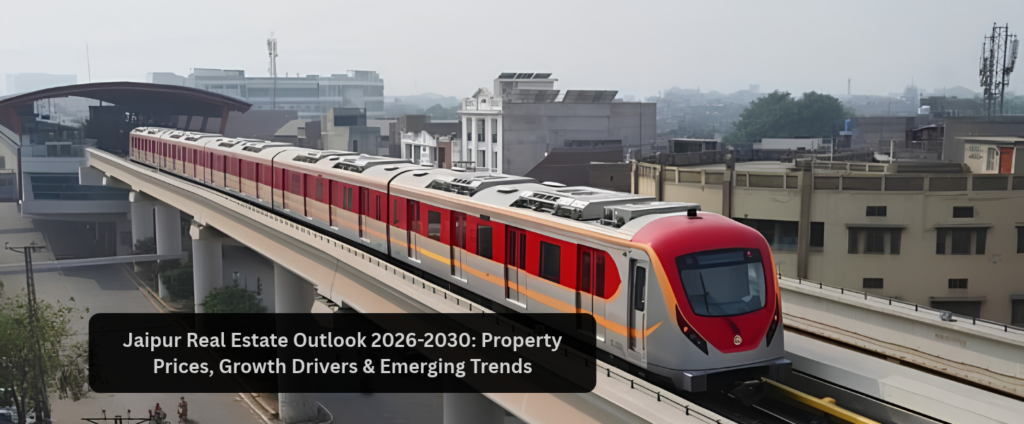
Jaipur Real Estate Outlook 2026-2030: Property Prices, Growth Drivers & Emerging Trends
Jaipur’s transformation from a traditional Tier-2 city into a growing residential and commercial destination has made the city…
7 min read
Read more
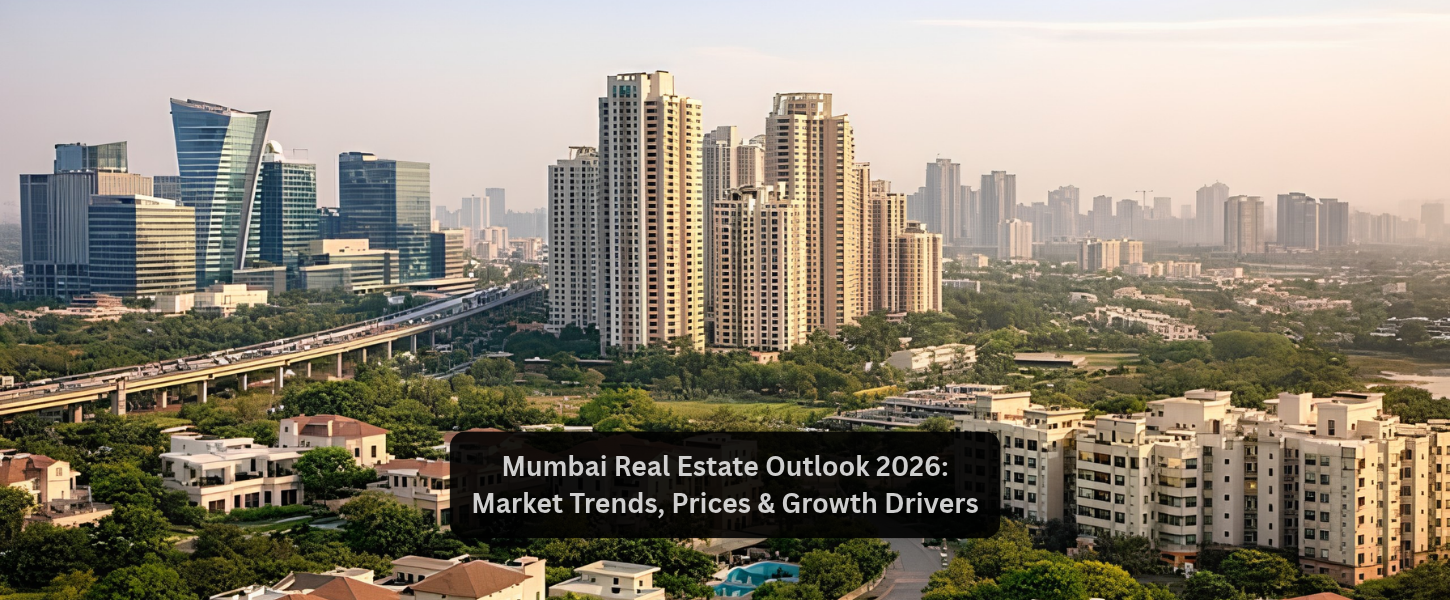
Mumbai’s property market has always operated under a different set of rules. Limited land, high population density, a powerful employment base, and a strong preference for well-connected locations have made housing in the city one of India’s most closely watched real estate markets.
In 2026, the Mumbai real estate story is not simply about rising property prices. It is about how the city is creating new residential possibilities through redevelopment, expanding transport networks, suburban growth, and the increasing integration of Mumbai with the wider Mumbai Metropolitan Region (MMR).
For homebuyers and investors, understanding these structural changes is more useful than looking at the city as one single property market.
Mumbai’s geography has always placed a natural limit on how much new land can be brought into the market. As a result, the city has increasingly relied on redevelopment, vertical growth and expansion towards the suburbs and neighbouring MMR markets.
This is creating two parallel stories.
In established parts of Mumbai, redevelopment is replacing ageing buildings with modern residences. At the same time, areas beyond the traditional city core are gaining importance as infrastructure improves and new residential communities emerge.
This makes the Mumbai real estate market increasingly diverse, with significant differences in price, housing formats, and buyer profiles from one micro-market to another.
In Mumbai, connectivity has always carried a premium.
Homes close to established business districts, railway stations, metro corridors and major roads often command higher prices because residents are paying not only for the property but also for the time saved on daily travel.
This explains why two neighbourhoods located relatively close to each other can have very different property values.
For buyers in 2026, the question is therefore not simply, “What is the property price?”
A smaller home in an established location may make sense for one buyer, while another may prefer a larger residence farther out with better amenities and newer infrastructure.
Few factors are as uniquely important to Mumbai as redevelopment.
Large numbers of ageing residential buildings, housing societies and older urban structures occupy valuable land in established neighbourhoods. Redevelopment can unlock this land without requiring the city to expand geographically.
For residents, redevelopment can mean newer buildings, improved amenities and better-designed homes. For developers, it creates opportunities in locations where acquiring vacant land is increasingly difficult.
The growing role of redevelopment could therefore reshape the supply side of Mumbai real estate over the coming years.
It also means buyers should look beyond new-launch activity when assessing the city’s future housing supply.
One of the biggest changes in the city’s residential landscape is that Mumbai can no longer be viewed independently from MMR.
Navi Mumbai, Thane, Panvel and other surrounding markets are becoming increasingly connected to Mumbai’s economic ecosystem.
The Mumbai Trans Harbour Link has strengthened the physical connection between Mumbai and Navi Mumbai, while the development of Navi Mumbai International Airport is adding another major economic and transportation node to the region.
For homebuyers, this creates a wider geographical choice.
Instead of asking only which Mumbai neighbourhood they can afford, buyers can increasingly ask which part of MMR offers the best combination of price, space, connectivity and lifestyle.
Navi Mumbai’s development is particularly significant because it offers something Mumbai itself struggles to provide: planned urban expansion.
Large-scale infrastructure, planned nodes, commercial development, and improved regional connectivity are supporting the area’s residential appeal.
The airport is another factor that could strengthen Navi Mumbai’s position as an independent destination for employment and housing over time.
For the Mumbai real estate ecosystem, this could mean that future growth is increasingly distributed across multiple urban centres rather than concentrated within Mumbai city.
Mumbai’s western and central suburbs continue to account for a significant share of residential activity.
Areas with established transport links, employment access, schools, hospitals and retail infrastructure remain attractive because they offer something emerging locations cannot immediately replicate: everyday convenience.
At the same time, newer developments in the peripheral suburbs can offer larger homes and modern amenities at comparatively higher price points.
This creates an interesting trade-off for buyers:
Established convenience versus newer housing and greater space.
The right choice depends on the buyer’s priorities rather than a simple ranking of locations.
Mumbai’s infrastructure expansion is gradually changing how buyers perceive distance.
Metro connectivity, road improvements, bridges and regional transportation projects can make previously distant locations more accessible.
This does not mean that every infrastructure project will immediately translate into property appreciation. But improved accessibility can influence where people are willing to live and how far they are prepared to commute.
For the Mumbai real estate market, this could gradually widen the residential catchment of major employment centres.
The biggest takeaway for 2026 is that Mumbai is no longer one uniform residential market.
South Mumbai continues to operate as a premium, land-constrained market. The western and central suburbs remain driven by connectivity and established infrastructure. Redevelopment is reshaping mature neighbourhoods. Navi Mumbai and other MMR locations are creating new centres of residential and economic activity.
The result is a market with multiple growth stories unfolding simultaneously.
For investors, this means opportunities need to be assessed carefully rather than through city-wide price predictions. For homebuyers, it means having more choices, but also more factors to compare.
The future of Mumbai real estate will ultimately be shaped by how successfully the city balances affordability, connectivity, redevelopment and liveability.
In 2026, the most compelling opportunity may not necessarily be the location that has risen the most in the past. It could be the one where infrastructure, employment, housing quality and everyday convenience are beginning to align.
Mumbai real estate is expected to remain supported by employment, redevelopment, infrastructure expansion and sustained housing demand. However, performance is likely to vary significantly across micro-markets.
Limited land availability, redevelopment, construction costs, employment concentration, infrastructure and sustained demand are among the major factors influencing property prices.
Yes. Redevelopment can unlock housing supply in established neighbourhoods while replacing ageing buildings with modern residential developments.
Yes. Improved connectivity, large-scale infrastructure and the development of Navi Mumbai International Airport could strengthen Navi Mumbai’s role within the wider MMR residential market.
Buyers should evaluate location, actual commute time, developer reputation, construction quality, infrastructure, total ownership costs, rental demand and future supply rather than relying only on projected price appreciation.
Jaipur’s transformation from a traditional Tier-2 city into a growing residential and commercial destination has made the city…
The Gurgaon real estate market has evolved significantly over the past decade. Once primarily recognised as a corporate…
It is 7:40 in the morning. One shoe is missing, the school bag is half packed, and your…