How Navratri and Dussehra Are Celebrated in a Gated Community
Few things lift the mood of a neighbourhood like the nine nights of Navratri. The beat of the...
Read More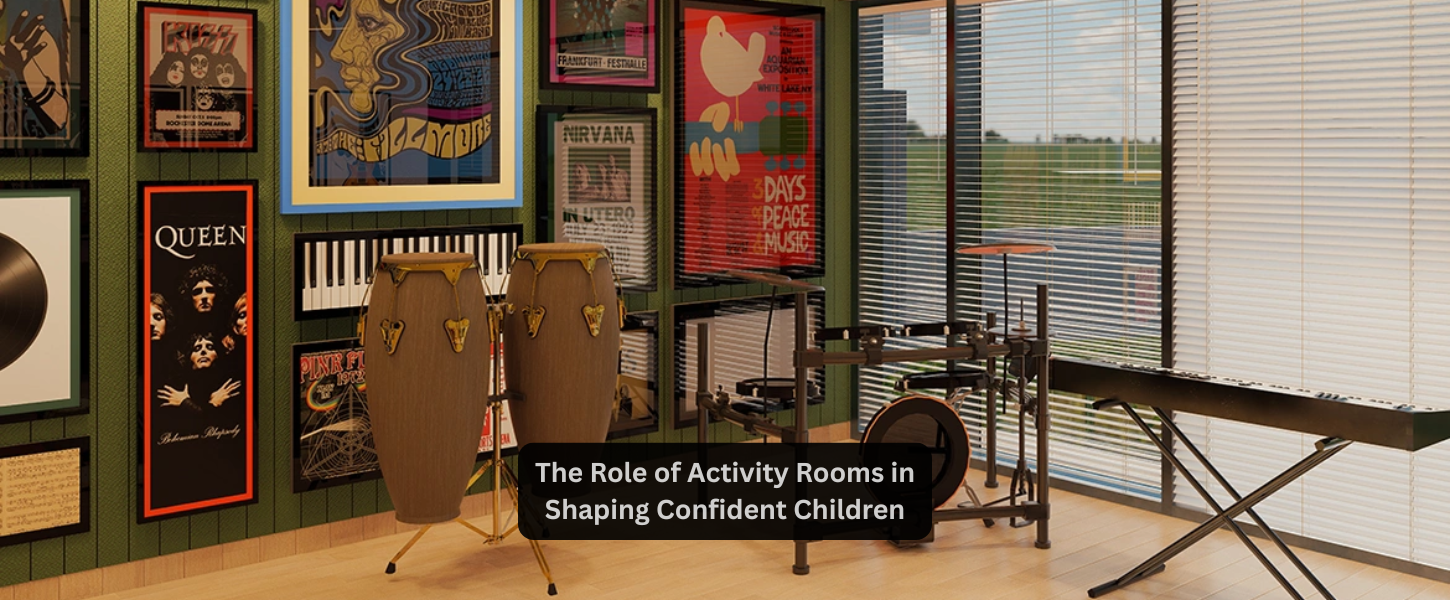

In today’s fast-evolving world, nurturing confidence in children is as important as academic learning. Beyond textbooks and classrooms, children benefit immensely from environments that encourage exploration, creativity, social skills, and emotional expression. One of the most powerful catalysts for well-rounded growth is the presence of activity rooms, dedicated spaces that foster active learning, imaginative play, and constructive interaction.
These environments go far beyond casual play areas; they are thoughtfully curated children’s activity rooms and kids’ activity spaces that actively support confidence-building for children. Parents and educators increasingly recognise that Activity Rooms are more than just places to kill time. They serve as child development spaces where cognitive growth, social communication, and emotional resilience are nurtured naturally. By integrating diverse activities and purpose-driven settings, these spaces help children discover their strengths, overcome fears, and build a strong sense of self-esteem.
Traditional play at home or in open parks supports physical movement, but activity rooms elevate the experience by offering structured yet flexible environments that engage a child’s mind, body, and emotions together. Through learning-through-play, these spaces nurture creativity, encourage social interaction, sharpen focus and problem-solving skills, and help children build confidence. During formative years, such thoughtfully designed environments play a vital role in shaping positive habits, self-belief, and a healthy sense of identity.
Not all play areas deliver the same developmental impact. The most effective activity rooms share common characteristics that make them conducive to confident learning and growth:
Purposeful design elements make these rooms engaging and versatile. From art nooks and reading corners to sensory play zones and collaborative tables, these spaces encourage choice and independence.
A blend of quiet, creative, and active areas allows children to switch modes, whether they want to draw, build blocks, role-play, or focus on puzzles. This adaptability supports diverse learning styles and keeps children engaged longer.
Safety is paramount. Soft flooring, rounded edges, natural lighting, and ergonomic seating make these rooms comfortable and inviting. This physical comfort boosts mental ease, allowing children to focus on activities without fear or distraction.
The inclusion of age-appropriate tools and materials, whether educational toys, craft supplies, sensory panels, or interactive installations, ensures that children have the right stimuli to explore and learn at every developmental stage.
When designed with children’s needs at the centre, children’s activity rooms become more than just spaces; they become environments that inspire discovery and self-assurance.
One of the standout features of kids’ activity spaces is their focus on learning through play. Play is deeply rooted in childhood development and is recognised by psychologists and educators as a major influencer of cognitive and emotional growth.
Here’s how structured play in activity rooms benefits children:
Unlike passive screen time, structured play in these rooms engages the whole child, mind, body, and emotions, promoting well-rounded and confident individuals.
Recognising the importance of holistic child development, many modern residential developments now include child development spaces as part of community planning. Well-designed activity rooms become shared neighbourhood assets, encouraging families to prioritise learning, play, and socialisation close to home.
These shared spaces contribute significantly to a community’s overall appeal. They not only benefit children but also provide parents with the reassurance that their children have access to purposeful play and learning environments without needing to travel far.
Confidence building for children is not a single event; it is an ongoing process that grows from repeated positive experiences. Each time a child masters a puzzle, creates a piece of art, collaborates on a group activity, or simply shares an idea, their sense of self-belief strengthens. Activity rooms act as a nurturing backdrop for these micro-successes, turning everyday play into opportunities for emotional and social empowerment.
These rooms also help children cope with challenges and develop resilience. In safe, encouraging environments, children learn that mistakes are part of growth, and trying again is not only acceptable but rewarding.
As parents and communities increasingly focus on holistic development, the importance of activity rooms in shaping confident, adaptable, and socially skilled children becomes ever clearer. These spaces foster creativity, learning through play, emotional balance, and social confidence, equipping children to thrive in an ever-changing world.
Thoughtfully designed residential communities that include quality kids’ activity spaces are not only places to live but environments that support every stage of a child’s growth. In response to this growing need, thoughtfully planned residential communities are increasingly placing children at the heart of their design. Builders like Ashiana Housing integrate dedicated learning and play environments into their developments, and communities such as Ashiana Aaroham illustrate how well-designed neighbourhoods can support joyful childhood experiences while naturally fostering confidence, independence, and emotional growth. When community living integrates purposeful activity rooms into daily life, it does more than entertain; it empowers, inspires, and contributes to the foundation of lifelong confidence.