Top 5 Proven Persuasion Frameworks Every Sales Professional Needs in 2026
A buyer shows interest, asks a few questions, and appears ready to take the next step. Then the...
Read More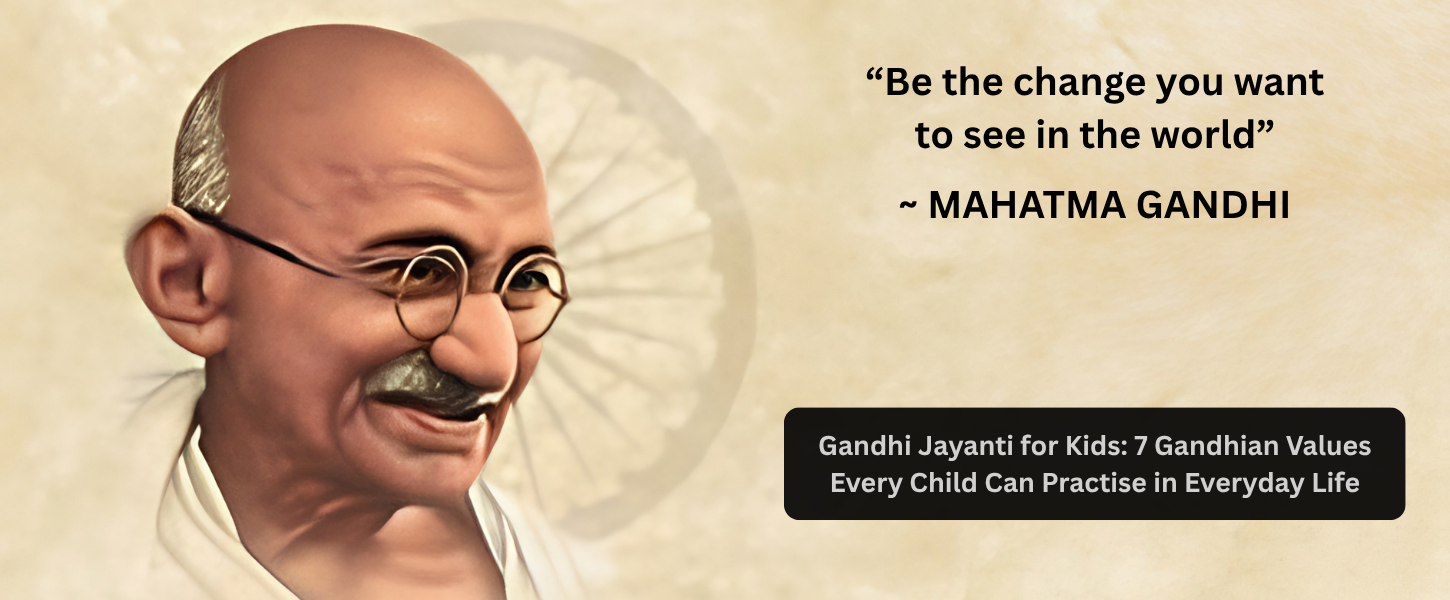

Every year, Gandhi Jayanti reminds us of the life, thoughts, and principles of Mahatma Gandhi. While the day is observed to remember one of India’s most influential leaders, it also provides an opportunity for children to understand values that remain meaningful in everyday life.
For children, the teachings of Mahatma Gandhi are not just lessons from history books. They are simple principles that can guide how they speak, behave, treat others, and make decisions. Introducing Gandhian values to kids in a practical way can help parents and educators encourage kindness, honesty, discipline, and responsibility from an early age.
The true purpose of celebrating Gandhi Jayanti is not only remembering a great leader but also helping children understand how small actions can create positive changes. These Gandhian values for children can become habits that support emotional growth, confidence, empathy, and overall child development.
Children today are growing up in a world filled with new experiences, digital influences, and rapidly changing social environments. While academic knowledge and skills are important, strong values help children understand how to use their knowledge responsibly and interact positively with the world around them.
Value-based learning focuses on developing qualities such as honesty, empathy, respect, discipline, and responsibility. These qualities influence how children make decisions, build relationships, handle challenges, and contribute to society.
Children learn best when values are connected to real experiences. Instead of only explaining moral lessons, parents can encourage children to practise them through daily actions.
The Mahatma Gandhi teachings for kids focus on qualities such as truthfulness, kindness, simplicity, respect, cleanliness, self-discipline, and responsibility. These are not complicated ideas; they are everyday choices that help children become thoughtful individuals.
Celebrating Gandhi Jayanti for kids through conversations, activities, and examples allows children to understand that values are not limited to special occasions. They are part of how we live every day.
One of the most important Gandhian values is truthfulness. Mahatma Gandhi believed that truth, or Satya, was the foundation of a meaningful life.
For children, truthfulness means being honest even when telling the truth feels difficult.
Being truthful builds trust. A mistake can be corrected, but honesty helps build strong relationships.
During Gandhi Jayanti, parents can encourage children to share situations where telling the truth helped solve a problem.
Kindness is one of the most important values for children because it teaches them to understand and respect other people’s feelings.
Mahatma Gandhi believed that compassion and non-violence were signs of true strength. Children can practise kindness through small gestures that make others feel valued.
A kind action, no matter how small, can make someone’s day better.
These lessons are especially important for child development, as kindness helps children build empathy and stronger social relationships.
Cleanliness was an important part of Mahatma Gandhi’s philosophy. He believed that keeping our surroundings clean was everyone’s responsibility.
For children, cleanliness can begin with simple habits at home and school.
A clean environment reflects responsible choices and respect for everyone around us.
Parents can include cleanliness-based Gandhi Jayanti activities for kids, such as organising their rooms or participating in community cleanliness drives.
Simplicity was another important principle followed by Mahatma Gandhi. It teaches children that happiness does not come only from having more things.
In today’s world, where children are often surrounded by advertisements and new trends, learning simplicity can help them appreciate what they already have.
True happiness comes from appreciating people, experiences, and small moments, not just possessions.
Teaching simplicity through daily habits is one of the meaningful Mahatma Gandhi teachings for kids.
Respect was central to Gandhi’s belief in equality and dignity for all people.
Children can learn respect by understanding that every person deserves kindness, regardless of differences.
Respect creates a world where everyone feels accepted and valued.
A respectful child becomes more understanding, cooperative, and socially aware.
Self-discipline helps children manage their time, emotions, and responsibilities. Gandhi’s life demonstrated the importance of consistency and personal control.
Discipline helps us achieve goals by teaching us patience and determination.
Self-discipline is one of the essential values for children because it supports confidence and independence.
Responsibility teaches children that their actions have an impact on others.
From helping at home to caring for nature, children can learn responsibility through small tasks.
Being responsible means understanding that every action matters.
These habits contribute significantly to positive child development and help children become dependable individuals.
The environment children grow up in can quietly shape the people they become. A child-friendly community with safe spaces to play, opportunities to make friends, and room to explore and create gives children countless chances to learn beyond the classroom. Through everyday interactions, a simple game can teach teamwork, a new friendship can build empathy, and taking care of shared spaces can nurture responsibility and respect.
This is the idea behind Ashiana Housing’s kid-centric homes, where residential planning focuses on creating environments that support children’s overall growth along with comfortable family living. Projects such as Ashiana Amarah and Ashiana Aaroham in Gurugram are designed around the concept of providing children with spaces where they can play, learn, explore, and build social connections.
In such communities, everyday experiences can become learning opportunities. Playing with other children can teach cooperation and empathy. Participating in group activities can encourage confidence and communication. Taking responsibility for shared spaces can help children understand respect and accountability.
By combining learning, play, and community interaction, kid-centric homes can support child development and help children grow into more aware, responsible, and compassionate individuals.
The true meaning of Gandhi Jayanti lies in practising values consistently, not just discussing them on a national occasion.
Truthfulness, kindness, cleanliness, simplicity, respect, self-discipline, and responsibility are qualities that can shape a child’s character over time.
For parents, teachers, and communities, Gandhi Jayanti for kids is an opportunity to introduce these principles through practical examples and activities.
When children learn these values early, they develop not only into successful individuals but also into compassionate and responsible members of society.
When and why is Gandhi Jayanti celebrated?
Gandhi Jayanti is celebrated every year on 2 October to commemorate the birth anniversary of Mahatma Gandhi and remember his enduring values of truth, non-violence, simplicity, and equality.
What are the important Gandhian values for children?
Some important Gandhian values for children include honesty, kindness, respect, non-violence, cleanliness, simplicity, discipline, and responsibility.
What are some Gandhi Jayanti activities for kids?
Storytelling, cleanliness drives, drawing and essay competitions, role-playing, and community service activities can help children understand Gandhian values through practical experiences.
How can parents teach Gandhian values to children?
Parents can teach these values by connecting them with everyday experiences, encouraging honesty, kindness, responsibility, cleanliness, and respect at home and in the community.