What Is a Senior Living Resort? A Complete Guide for Families in India
Retirement should be about enjoying life at a comfortable pace, staying connected with loved ones, and having the...
Read More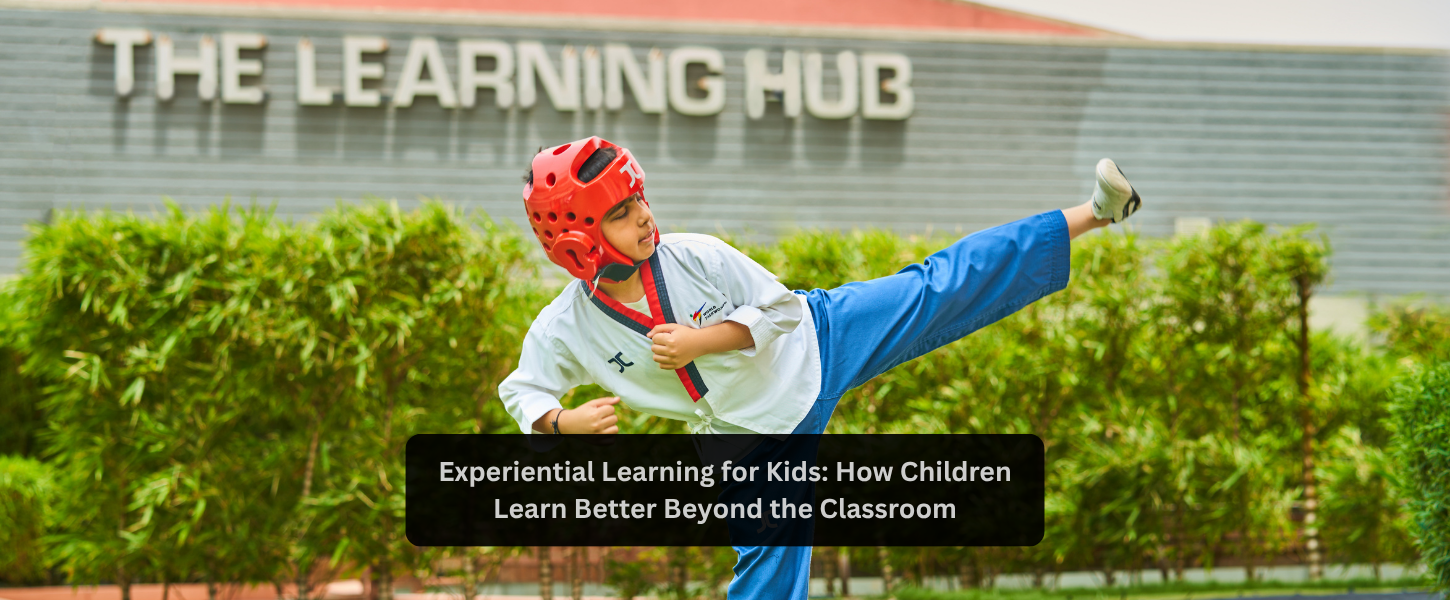

A child may learn about plants in a science class, but planting a seed, watering it every day, and watching it grow teaches a completely different lesson. A maths chapter may explain measurements, but baking cookies with parents turns those numbers into something children can actually understand and enjoy.
This is what experiential learning is all about.
Children don’t learn only by reading textbooks or listening to teachers. They learn best when they explore, ask questions, solve problems, create, play, and participate in real-life experiences. These everyday moments strengthen understanding and help children remember lessons long after the classroom session ends.
As families look for better ways to support holistic child development, experiential learning is becoming an important part of childhood. It also explains why many parents now value a kid-centric home and thoughtfully planned residential societies that encourage learning through everyday experiences.
Experiential learning is a learning approach where children gain knowledge and skills through hands-on experiences rather than passive memorisation. They learn by doing, observing, experimenting, reflecting, and applying ideas in real-life situations.
In simple words, experiential learning helps children understand concepts by experiencing them instead of simply studying them.
Children are naturally curious. When they are encouraged to explore and participate, learning becomes enjoyable instead of feeling like a task.
These experiences prepare children for everyday life while making learning more meaningful.
Learning beyond the classroom contributes to multiple areas of a child’s development at the same time.
Children develop stronger thinking skills when they experiment, observe, compare, and ask questions. Activities like gardening, building models, solving puzzles, and exploring nature improve cognitive development by encouraging children to think independently.
Instead of memorising answers, children begin understanding why something happens.
Children build friendships and communication skills through group activities, sports, games, and community events.
Social learning teaches children how to cooperate, share responsibilities, resolve conflicts, and work together toward common goals. These are valuable life skills that cannot be developed through academics alone.
Everyday experiences also teach children how to recognise emotions, handle disappointment, celebrate achievements, and develop empathy.
Whether it is participating in a school play, helping a younger sibling, or learning a new sport, emotional learning helps children become more resilient and self-aware.
Children spend only a few hours each day in school. Much of their learning happens at home, in parks, playgrounds, and neighbourhood spaces.
This is why the environment where children grow up matters.
A family-friendly home should give children opportunities to move, explore, interact, and learn independently. Similarly, thoughtfully planned residential societies create spaces where children can experience learning through everyday play and community activities.
These everyday experiences contribute to experiential learning without feeling like formal education.
A well-designed neighbourhood can become an extension of the classroom.
Children learn valuable lessons while playing with neighbours, participating in festivals, joining sports activities, or exploring nature within their community. These shared experiences encourage independence, confidence, communication, and teamwork.
| Community Feature | Learning Benefit |
| Outdoor play areas | Physical confidence and exploration. |
| Sports facilities | Teamwork and social learning. |
| Community celebrations | Communication and cultural awareness. |
| Gardens and green spaces | Curiosity and cognitive development. |
| Activity zones | Creativity and emotional learning. |
For parents, choosing the right family-friendly home also means choosing an environment that supports everyday growth.
At Ashiana Housing, learning doesn’t stop when children return home from school. Its Kid-Centric Homes are designed around the belief that children grow best when learning becomes part of everyday life.
The communities include dedicated play areas, sports facilities, cycling tracks, landscaped open spaces, and activity zones that encourage children to stay active, curious, and socially engaged.
Ashiana Housing’s Live and Learn Programme takes experiential learning a step further by offering structured activities led by trained instructors.
Children participate in programmes focused on:
Projects like Ashiana Amarah and Ashiana Aaroham in Gurugram demonstrate how a kid-centric home can create an environment where children continue learning beyond school through meaningful experiences every day.
Children don’t stop learning when the school bell rings. They continue learning every time they explore a park, join a game, solve a problem, help at home, or participate in a community activity.
That’s the true value of experiential learning. It combines knowledge with experience, helping children build confidence, creativity, communication skills, and emotional resilience.
A thoughtfully designed kid-centric home and vibrant residential societies make these learning opportunities part of everyday life, giving children the freedom to grow, explore, and discover the world beyond the classroom.
Experiential learning is a hands-on learning approach where children learn through activities, observation, exploration, and real-life experiences instead of only studying theory.
Experiential learning supports cognitive development, social learning, and emotional learning, helping children build confidence, creativity, and problem-solving skills.
Well-designed residential societies provide outdoor play areas, sports facilities, community activities, and green spaces where children learn through interaction and exploration every day.
A kid-centric home is designed to support a child’s holistic development through child-friendly amenities, safe play spaces, learning programmes, and opportunities for experiential learning beyond the classroom.