
How Navratri and Dussehra Are Celebrated in a Gated Community
Few things lift the mood of a neighbourhood like the nine nights of Navratri. The beat of the...
Read More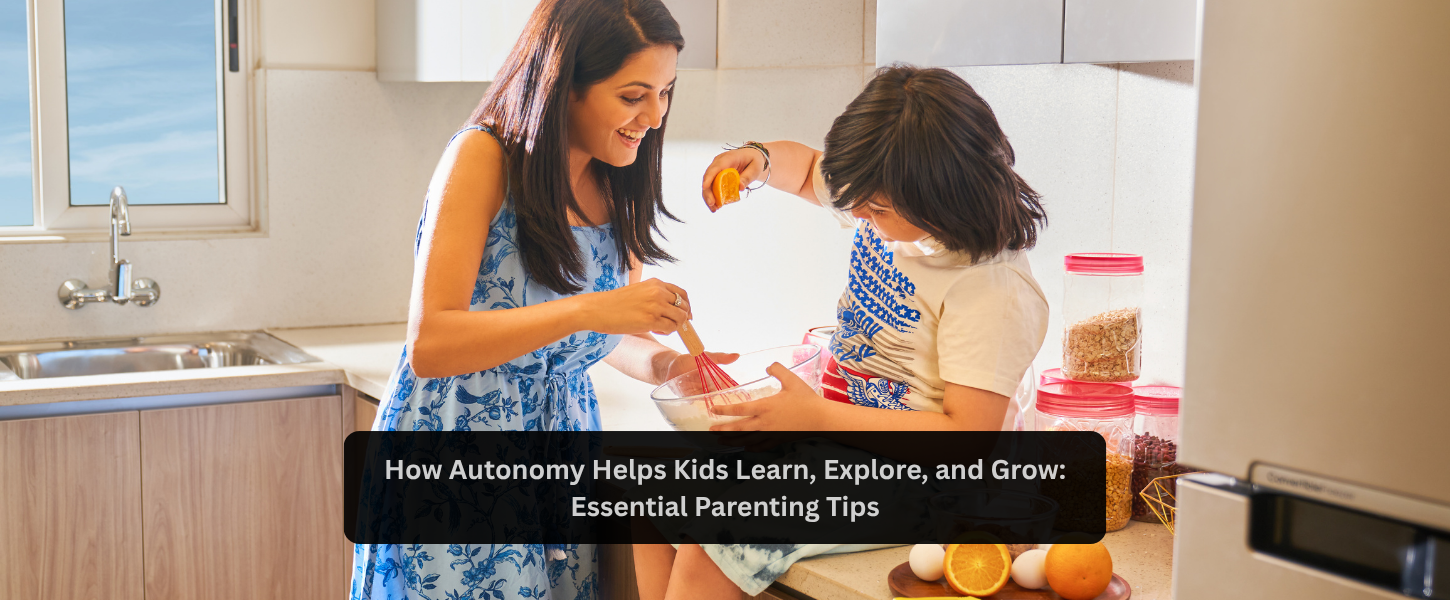

Every parent wants to raise a child who is confident, capable and ready to face the world. Among the many parenting tips families come across, one of the most valuable is also one of the hardest to practise: knowing when to step back and let children take the lead.
Giving kids autonomy does not mean leaving them without guidance. It means creating opportunities for them to make choices, solve problems and take responsibility while knowing that a parent is still there to support them.
The journey towards independence begins much earlier than most parents realise. A child choosing what to wear, packing their school bag or deciding how to spend their free time may seem like small moments, but these experiences gradually teach them to trust their own abilities.
Autonomy is the ability to make choices and take action independently within boundaries that are appropriate for a child’s age and maturity.
It does not mean allowing children to do whatever they want. Parents still have an important role in setting rules, ensuring safety and providing guidance. The difference is that children are given some control over decisions that they are capable of making.
For example, instead of deciding exactly how your child should complete a school project, you can let them choose the topic, approach or presentation style. Instead of reminding them repeatedly to organise their belongings, you can give them responsibility for doing it themselves.
These everyday experiences are an important part of raising children who are comfortable making decisions.
Children appreciate having a say in decisions that affect them.
Start with simple choices. Ask whether they want to read or draw, choose between two outfits or decide which activity they would like to do first.
For older children, choices can gradually become more complex, such as selecting extracurricular activities or planning their weekend.
The goal is not to give unlimited options but to give children meaningful control within reasonable boundaries.
When children face a problem, parents often want to solve it immediately.
Before stepping in, pause and ask, “What do you think you could do?”
This simple question encourages children to think rather than immediately depend on an adult for an answer.
If they struggle, offer guidance without taking over completely. These moments are among the most valuable parenting tips for developing problem-solving skills.
Children do not need every minute of their day planned.
Unstructured play gives them the freedom to decide what they want to do, create their own games and negotiate with other children.
Whether they are building with blocks, playing outdoors or inventing imaginative games, children learn to make decisions and solve disagreements without constant adult direction.
Independence grows when children are trusted with responsibilities.
Younger children can put away toys, arrange their books or help with simple household tasks. Older children can manage school materials, organise parts of their routine or take responsibility for personal belongings.
These responsibilities should be realistic. The objective is not perfection but participation.
Parents looking for practical parenting tips can start by identifying one or two tasks their child is already capable of managing independently.
Perhaps the most difficult part of encouraging autonomy is allowing children to get things wrong.
Parents naturally want to protect their children from disappointment. But when mistakes happen in safe and manageable situations, they can become powerful learning experiences.
Instead of immediately correcting the mistake, ask what happened and what your child might try differently next time. This approach helps children develop resilience rather than becoming afraid of failure.
The environment in which children grow can also influence how naturally they develop independence.
A home and community with safe outdoor areas, play spaces and opportunities for interaction can give children more freedom to explore. Instead of spending all their time indoors or requiring an adult to organise every activity, children can gradually become comfortable playing, socialising and discovering things on their own.
This is where thoughtful community planning can complement the parenting tips families practise at home.
Ashiana’s Kid Centric Homes are designed with children’s everyday experiences in mind. Safe community spaces, landscaped areas and dedicated play zones give children opportunities to explore, interact and participate in activities while parents can have greater peace of mind.
The Live and Learn Programme adds another dimension by encouraging children to participate in sports, arts, hobbies and skill-based activities. Such experiences allow children to discover their interests, build confidence and learn valuable lessons beyond the classroom.
Autonomy does not mean parents become less involved. Instead, their role evolves. As children grow, parents can gradually move from doing things for them to guiding them and eventually allowing them to take the lead.
A younger child may need you to show them how something works. An older child may only need a reminder or a question. Eventually, they may be able to handle the situation themselves. This balance between freedom and guidance is at the heart of effective parenting guidelines.
Giving children autonomy can feel uncomfortable at first. After all, doing something for them is often quicker and easier than waiting while they figure it out themselves.
But childhood is also the time when children need opportunities to practise being independent.
The most meaningful parenting tips are often found in these ordinary moments: letting a child make a choice, allowing them to solve a small problem, giving them responsibility or simply resisting the urge to step in.
With patience, appropriate boundaries and consistent support, these small opportunities can help children become confident, responsible and capable individuals.
Autonomy is a child’s ability to make age appropriate decisions, take responsibility and act independently within safe and supportive boundaries.
Parents can encourage autonomy by offering meaningful choices, assigning age appropriate responsibilities, allowing children to solve manageable problems and giving them opportunities for independent play.
No. Children still need clear rules and boundaries. Autonomy means giving them choices and responsibilities within those boundaries rather than removing parental guidance.
Unstructured play gives children opportunities to make decisions, create their own activities, interact with others and solve problems independently, helping develop confidence and social skills.
Safe play areas, open spaces and child-friendly community environments can give children opportunities to explore, interact and participate in activities independently while parents maintain peace of mind.