What Is a Senior Living Resort? A Complete Guide for Families in India
Retirement should be about enjoying life at a comfortable pace, staying connected with loved ones, and having the...
Read More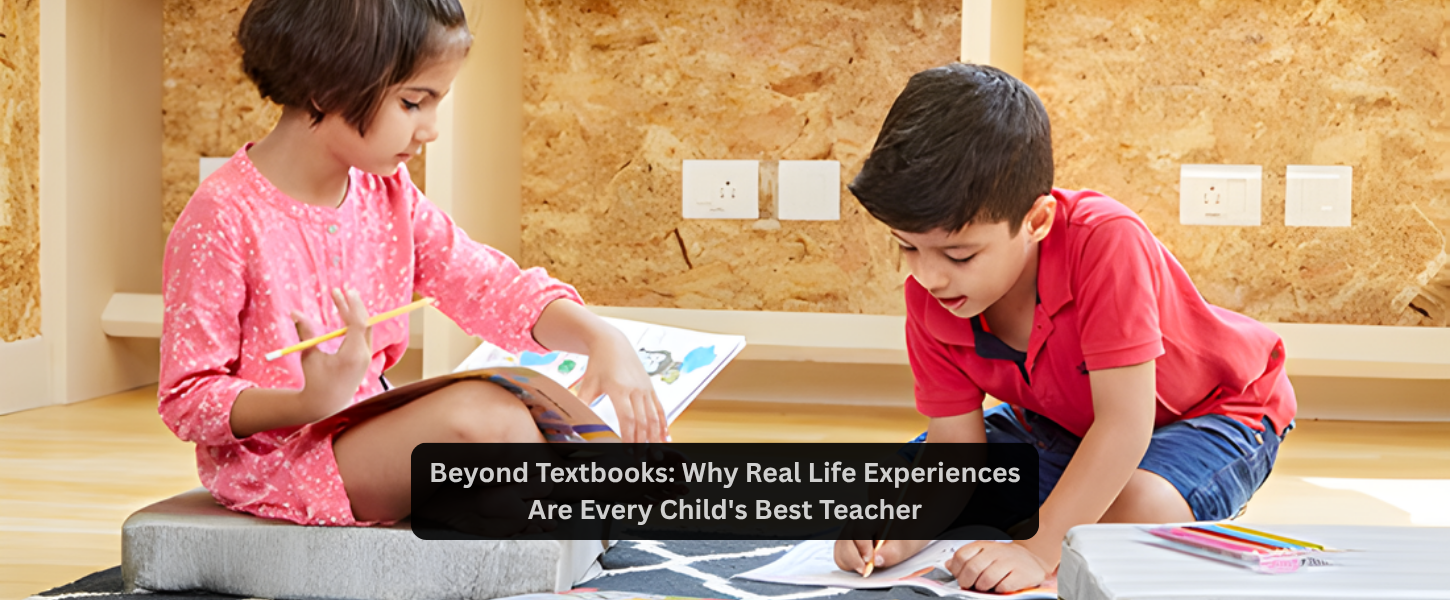

Every parent wants their child to grow into a confident, kind, and capable individual. While school teaches subjects like mathematics and science, some of the most important life lessons are learned outside the classroom. Whether it’s making a new friend at the playground, solving a disagreement during a game, or planting a seed and watching it grow, these everyday moments quietly shape a child’s personality.
That’s why real-life experiences are often a child’s best teacher. They help children develop life skills, emotional intelligence, creativity, and confidence in ways textbooks cannot.
In today’s fast-paced cities, especially growing urban hubs like Gurugram, parents are increasingly looking for environments where children can learn through play, exploration, and community experiences. This blog explores why experiences matter just as much as academics and how the right residential communities can become a child’s everyday learning space.
Real-life experiences allow children to apply what they learn in practical situations. Instead of memorising concepts, they observe, experiment, communicate, solve problems, and make decisions.
According to UNICEF, play and experiential learning support children’s cognitive, emotional, social, and physical development, especially during their early and middle childhood years.
Research in child development also shows that experiential learning helps children retain knowledge better because they actively participate in the learning process rather than simply receiving information.
Education is much bigger than academic performance. A child’s best teacher also helps develop the life skills children need as they grow.
These skills become an important part of childhood because they prepare children for situations they encounter both inside and outside school.
Children learn continuously through everyday moments, often without realising it.
Children learn courage, balance, and resilience by climbing, running, cycling, and exploring outdoor spaces.
Sports help children understand teamwork, leadership, communication, and handling both success and failure.
Gardening, bird watching, and observing seasonal changes teach patience and scientific thinking naturally.
Celebrating festivals and community events helps children understand traditions, empathy, and togetherness.
Packing a school bag, watering plants, or helping at home teaches accountability.
Art, music, dance, theatre, and storytelling encourage imagination and confidence.
Resolving conflicts, sharing toys, and playing together teach empathy and communication.
Each of these experiences becomes a child’s best teacher because learning happens naturally through participation.
Experiential learning means children learn through observation, participation, reflection, and practice.
Instead of only reading about teamwork, children experience teamwork. Instead of only learning about plants, they grow one themselves.
| Experience | What Children Learn |
| Gardening | Patience, responsibility, and care for nature. |
| Sports | Discipline, teamwork, and resilience. |
| Creative workshops | Imagination and problem-solving. |
| Community events | Social confidence and communication. |
| Outdoor exploration | Curiosity and observation skills. |
This combination of experiences makes the world itself a best teacher for growing children.
The environment where children grow plays a significant role in how they learn outside school.
Thoughtfully designed residential communities provide children with opportunities to explore, interact, and participate in everyday activities that foster holistic development.
These experiences help children learn naturally while becoming part of a larger community, making the environment itself a child’s best teacher.
At Ashiana Housing, childhood is viewed as a journey of continuous learning that extends far beyond school classrooms and textbooks. The belief is simple: children learn best when they have the freedom to explore, interact, play, ask questions, make friends, and discover the world around them through everyday experiences. While academic education plays an important role, some of the most valuable life lessons are learned outside the classroom through real-world interactions and hands-on experiences.
Ashiana believes that children grow best when they have opportunities to learn through play, exploration, and community interaction. That is why its residential communities are designed with dedicated children’s play areas, sports facilities, cycling tracks, landscaped open spaces, and activity zones that encourage active childhoods.
One of Ashiana Housing’s unique initiatives is the Live and Learn Programme, where trained instructors conduct structured activities that help children develop life skills beyond academics.
Children participate in activities that encourage leadership, creativity, public speaking & teamwork in kids. This approach reflects the idea that experiences can become a child’s best teacher when learning happens every day through participation and discovery.
Projects like Ashiana Amarah and Ashiana Aaroham in Gurugram are built around this philosophy, creating communities where childhood is active, engaging, and full of learning opportunities.
Books teach knowledge, but experiences teach life. From outdoor adventures and teamwork to creativity and responsibility, everyday experiences become a child’s best teacher because they help children develop skills that stay with them long after school lessons are forgotten.
Parents cannot create every learning opportunity alone, but the right environment can make those experiences part of everyday life. Communities that encourage play, exploration, friendships, and structured life-skill activities help children grow into confident, capable, and compassionate individuals.
That is exactly what Ashiana Housing’s kid-centric homes and Live and Learn Programme are designed to support, because some of the most important lessons are learned not from textbooks, but from life itself.
Real-life experiences help children build confidence, communication, teamwork, responsibility, and problem-solving skills by learning through participation rather than memorisation.
Thoughtfully designed residential communities provide safe spaces for outdoor play, sports, community activities, friendships, and experiential learning that support holistic child development.
Experiential learning is a hands-on approach where children learn by doing, observing, experimenting, and reflecting on real-life situations instead of only studying theory.
Ashiana Housing’s Kid Centric Homes include outdoor play spaces, sports facilities, and the Live and Learn Programme, which helps children develop creativity, leadership, teamwork, and life skills through structured activities.