





Jaipur Real Estate Outlook 2026-2030: Property Prices, Growth Drivers & Emerging Trends
Jaipur’s transformation from a traditional Tier-2 city into a growing residential and commercial destination has made the city…
7 min read
Read more
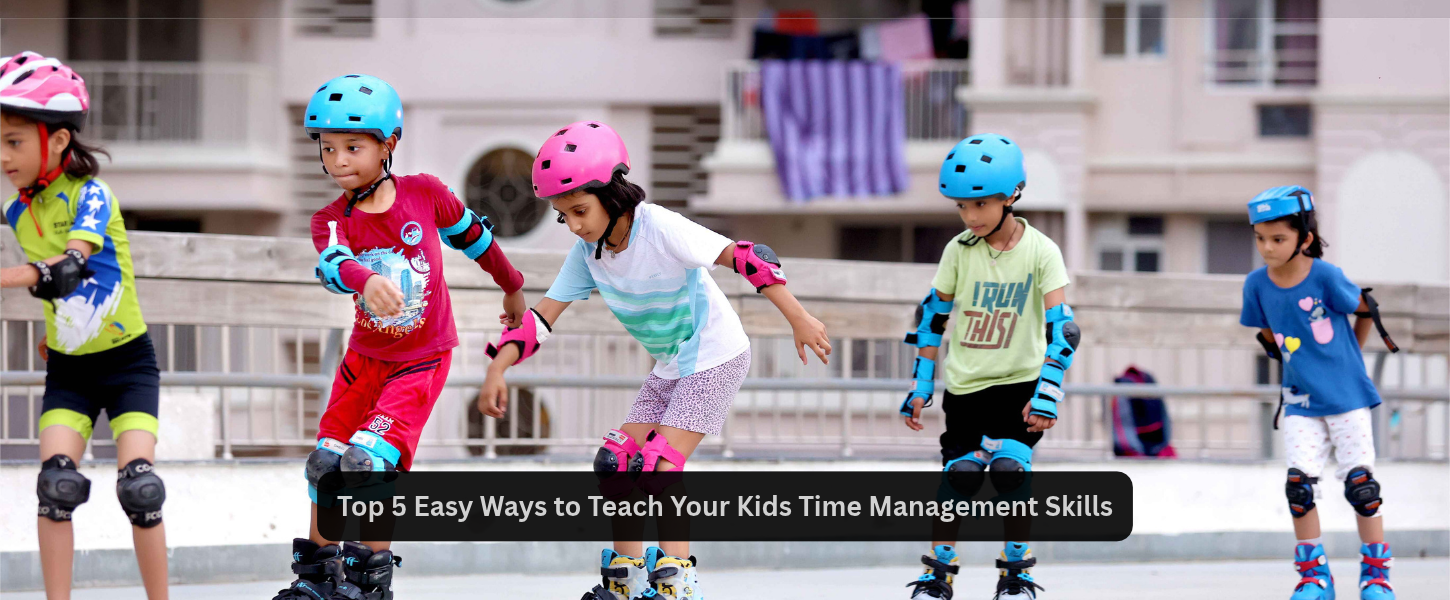
It is 7:40 in the morning. One shoe is missing, the school bag is half packed, and your child has just remembered a project that is due today. Sound familiar?
Most parents have been there. The good news is that time management is not an inborn talent. It is a skill, and like all skills, it can be taught gently and steadily. Children who learn to manage their time early tend to feel calmer, more confident and more independent, and these habits stay with them for life.
Here are five easy, practical ways to build time management skills in your kids, along with a few ideas for making the everyday environment work in your favour.
Before we get to the how, it is worth asking why. Strong time management skills help children to:
These benefits are not limited to the classroom. They help in friendships, hobbies, sports, and eventually in careers and family life.
Young children find time abstract. A routine they can see makes it real. Create a colourful chart or board that shows the day in simple steps, such as wake up, breakfast, school, homework, play, dinner, and bedtime.
Try this:
Prioritising is the heart of good time management skills. Children often treat all tasks as equal, or they start with what they enjoy most. A simple three-box system helps.
Explain that must-dos come first, should-dos next, and fun-to-dos are the reward. This builds an understanding of cause and effect without lectures.
Try this: Each evening, ask your child to sort tomorrow’s tasks into the three boxes. Over time, they will begin to do it on their own.
Timers turn vague time into something children can see and feel. A sand timer, a kitchen timer, or a simple countdown on a clock can make tasks feel manageable and even exciting.
Try this:
Keep the tone playful rather than pressured. The goal is awareness, not anxiety.
Children thrive on predictability. When wake-up time, study time, play time, and bedtime stay roughly the same each day, they spend less energy deciding and more energy doing.
Try this:
Routines do not need to be rigid. A little flexibility for holidays and special days keeps the system realistic and kind.
Children build time management skills best when they take part in planning, not when they are simply told what to do. Offering choices builds responsibility.
Try this:
Reflection teaches children to learn from experience, which is the foundation of lifelong planning skills.
Here is a simple example for a child of about 8 to 12 years. Adjust it to your family’s schedule.
| Time | Activity | Skill built |
| 6:30 to 7:30 am | Wake up, get ready, breakfast | Self-care and punctuality |
| 8:00 am to 2:30 pm | School | Responsibility |
| 3:00 to 3:45 pm | Lunch, rest and free time | Balance |
| 4:00 to 5:00 pm | Outdoor play or sports | Health and teamwork |
| 5:15 to 6:30 pm | Homework and revision | Focus and prioritising |
| 6:30 to 7:30 pm | Hobby, reading or family time | Creativity |
| 7:30 to 8:30 pm | Dinner and tidy-up | Routine |
| 8:30 to 9:00 pm | Pack bag, wind down, bedtime | Planning ahead |
The home and the community around it can make teaching time management skills easier or harder. A child who has safe, nearby spaces for study, play and activities finds it simpler to follow a balanced routine. This is the idea behind the kid-centric communities developed by Ashiana Housing.
Ashiana’s kid-centric philosophy is built on principles such as safety first, more learning with less screen time, international-standard sports infrastructure and a dedicated Learning Hub. In practice, this means children can move naturally between study, sport and play without long trips or constant supervision.
At Ashiana Amarah in Gurugram, children have access to sports facilities, a Learning Hub and structured activity spaces within the community. At Ashiana Aaroham in Sector 80, Gurugram, a low-density layout with a vehicle-free ground level gives children room to play safely, supported by a Learning Hub of about 6,022 sq ft and a sports arena with a football court, pickleball courts, a box cricket arena, a basketball court and a tennis court.
Teaching time management skills does not require complicated systems. A visible routine, simple prioritising, a few timers, consistent habits and regular reflection can make a real difference. Most importantly, it works best when it feels like a team effort between parent and child.
Start small, be patient and celebrate each step. The child who learns to manage a school morning today is the adult who will manage a busy life with calm and confidence tomorrow.
You can begin as early as 3 to 4 years with simple routines and picture charts. Planners and timers work well from about 7 or 8 years.
Involve them in creating the routine, keep it flexible and focus on praise. Start with one or two habits instead of changing everything at once.
This depends on age and family rules. Many parents set clear limits, place screen time after must-do tasks, and keep devices out of study and bedtime routines.
Habits usually form over several weeks of consistent practice. Progress is often gradual, with some good days and some difficult ones.
Yes. Safe play areas, a quiet study space and nearby activities make it easier for children to follow a balanced routine.
Jaipur’s transformation from a traditional Tier-2 city into a growing residential and commercial destination has made the city…
The Gurgaon real estate market has evolved significantly over the past decade. Once primarily recognised as a corporate…
Mumbai’s property market has always operated under a different set of rules. Limited land, high population density, a…