


Gurgaon Real Estate Market 2026-2030: Trends, Growth & Future Outlook
The Gurgaon real estate market has evolved significantly over the past decade. Once primarily recognised as a corporate…
8 min read
Read more
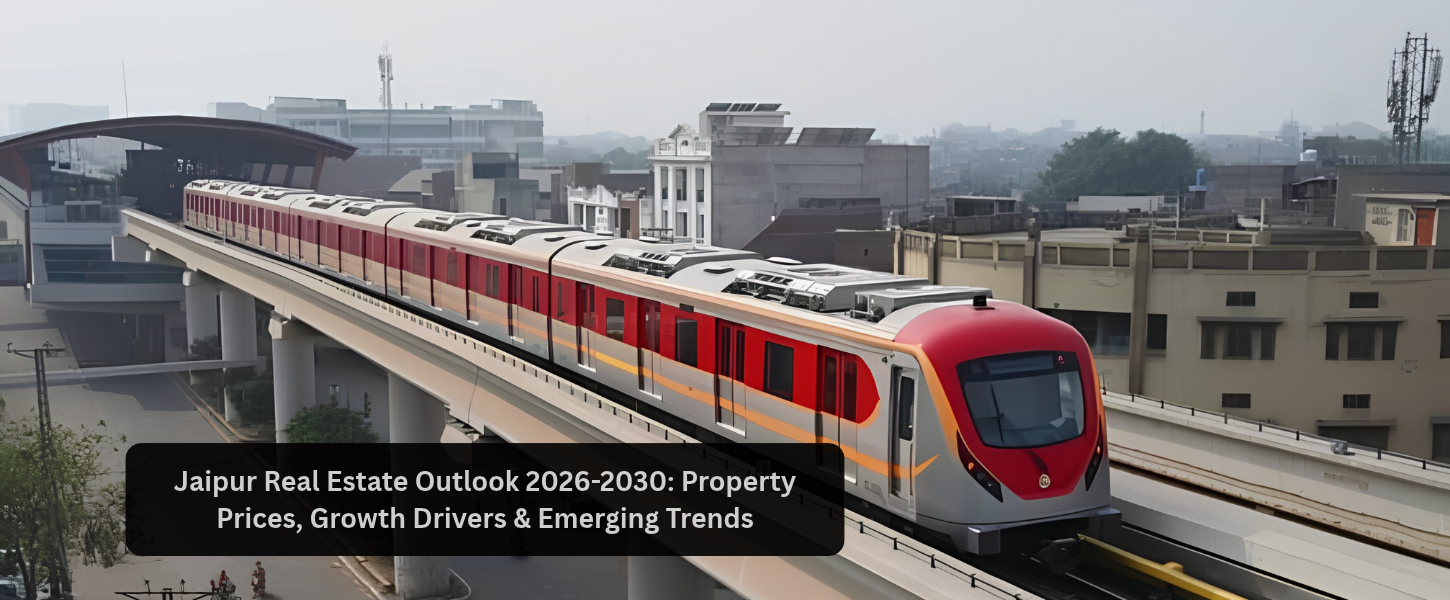
Jaipur’s transformation from a traditional Tier-2 city into a growing residential and commercial destination has made the city increasingly relevant to homebuyers and property investors. Improved connectivity, expanding employment corridors, new residential developments, and changing buyer preferences are reshaping the city’s housing landscape.
As we look towards 2030, the Jaipur real estate market is entering an interesting phase. The opportunity is no longer concentrated around one or two established neighbourhoods. Residential development is spreading across multiple corridors, with areas such as Jagatpura, Ajmer Road, Tonk Road, Mansarovar Extension and Vaishali Nagar Extension attracting new projects.
But the next four years may not simply be about rising prices. The more important question is where demand will remain sustainable, which locations will mature faster, and what kind of homes buyers will prefer.
The Jaipur real estate market has seen considerable expansion in recent years, supported by new housing projects, infrastructure development, and increasing interest from both end-users and investors.
However, the market is not moving at the same pace everywhere.
Current 2026 data shows substantial residential activity in both established and emerging locations. Jagatpura, for instance, has a large pipeline of under-construction projects, while Ajmer Road continues to develop as a western residential corridor. Vaishali Nagar, meanwhile, combines an established residential ecosystem with new premium developments.
This suggests that Jaipur’s future growth story will increasingly be micro-market driven.
Jaipur’s real estate market is expected to remain an important part of the city’s growth story. As infrastructure improves and new residential developments emerge, demand for homes may continue to grow.
By 2030, locations that benefit from better connectivity, employment opportunities, housing demand, and social amenities could attract greater interest from homebuyers.
For buyers, the key is to look beyond the overall market and choose a location that aligns with their lifestyle needs and long-term goals.
Infrastructure is one of the most important factors to watch between 2026 and 2030.
Improved road connectivity and regional links can make emerging residential corridors more accessible, while new transport infrastructure can influence where people choose to live.
The Jaipur-Bandikui link to the Delhi-Mumbai Expressway and the city’s wider road network are among the developments being watched for their potential influence on connectivity and regional growth.
However, buyers should distinguish between infrastructure that is operational and projects that are still proposed or under development. Future infrastructure can support a property’s long-term potential, but it should not be the sole reason for paying a premium today.
Jagatpura has become one of Jaipur’s major residential growth zones.
The area has a substantial pipeline of apartment developments spanning different configurations and price segments. Current listings show more than 180 under-construction projects in the locality, demonstrating the scale of residential activity.
Its appeal comes from the combination of newer housing, established educational and employment infrastructure nearby, and a broad choice of apartments.
For buyers looking at properties in Jaipur, Jagatpura could remain relevant through 2030. However, the high volume of supply also means buyers will need to compare projects carefully rather than assuming that every development will perform equally.
Ajmer Road is another corridor likely to remain important in the Jaipur real estate story.
The western belt around Mahapura has attracted substantial residential development, including apartments, villas and larger housing projects. Current indicative listings place several developments in the ₹5,000-7,000 per sq. ft. range, although actual prices vary by project and micro-location.
The corridor may appeal particularly to families looking for larger homes and buyers who are comfortable investing in a developing residential ecosystem.
The key consideration will be how quickly infrastructure and social amenities catch up with residential supply.
Jaipur’s residential market is not only about affordability.
Demand for premium homes has also become increasingly visible, particularly in established neighbourhoods and select new developments.
Recent market reporting suggests that while the mid-segment has experienced some moderation, interest in higher-value homes remains relatively resilient. This points towards a more segmented market rather than a uniform slowdown.
For the Jaipur real estate sector, developers may increasingly focus on differentiated projects offering larger homes, better amenities, stronger locations, and premium community experiences.
The typical Jaipur homebuyer is no longer one single category.
The city attracts:
This diversity is influencing the type of housing being developed.
The market now includes compact apartments, 2 and 3 BHK homes, larger family apartments, premium residences, villas and integrated communities.
As a result, the demand for flats in Jaipur is likely to remain broad, but buyers will increasingly differentiate between properties based on location, amenities, connectivity and quality.
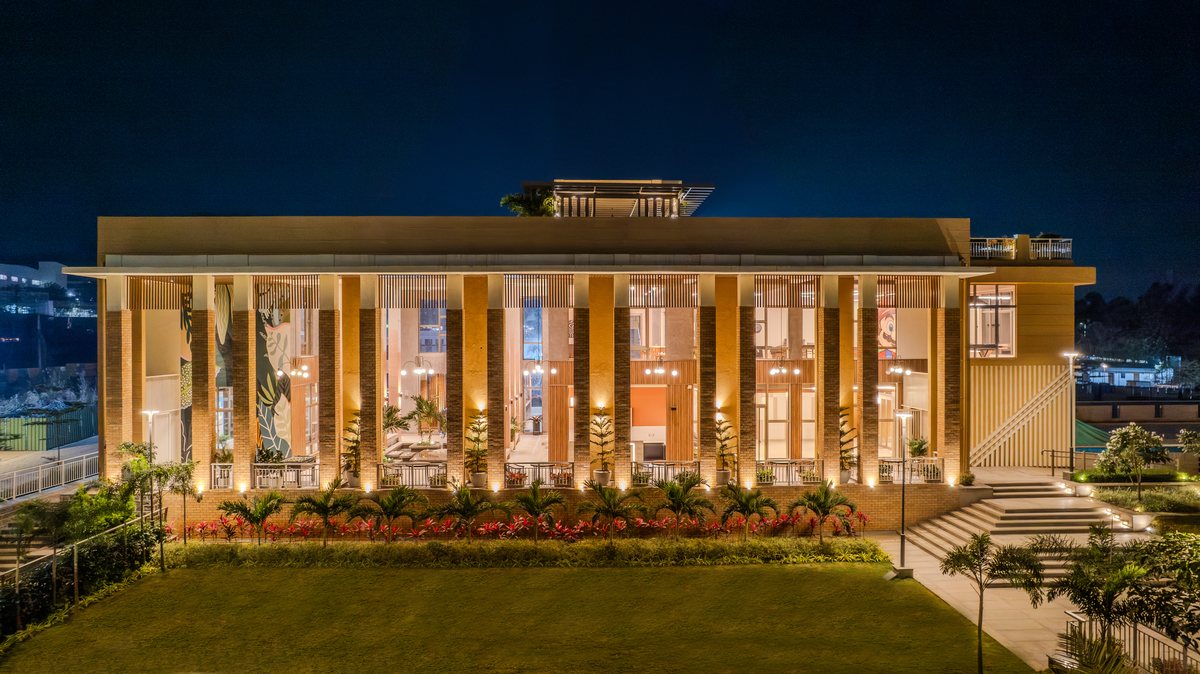
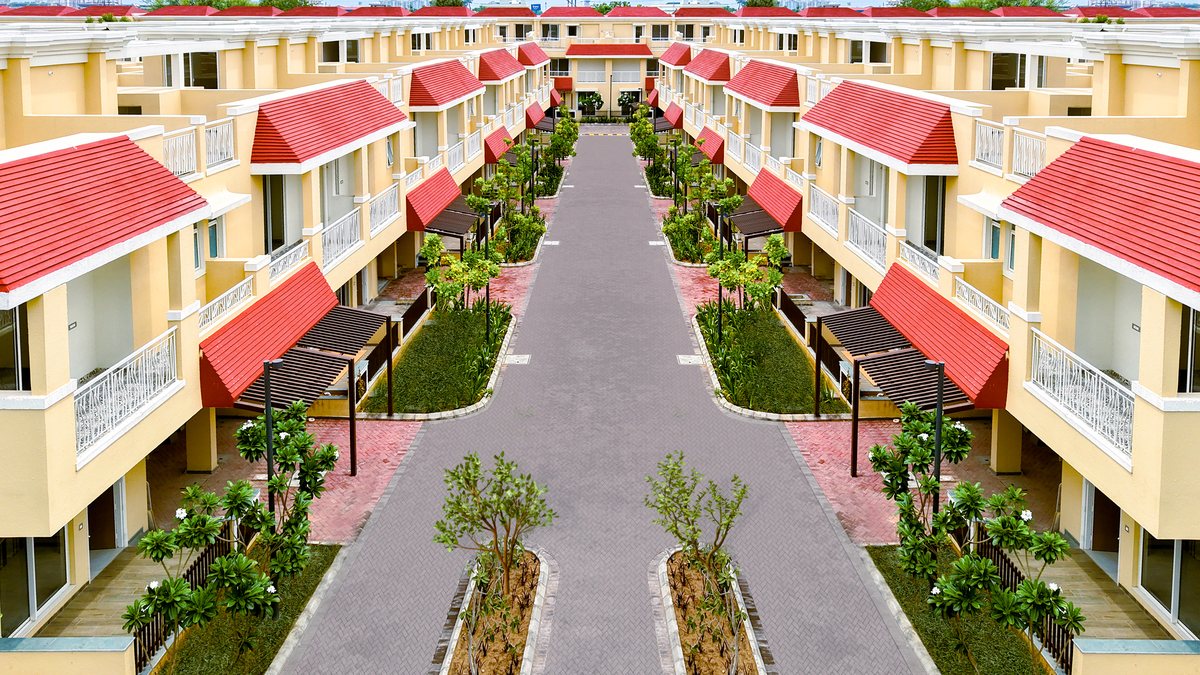
The changing nature of Jaipur real estate can also be seen in the variety of residential communities being developed across the city. Homebuyers are no longer looking only for a particular configuration or location; lifestyle, community planning, amenities and the intended use of the home are increasingly becoming part of the decision.
Ashiana Housing is one example of a developer with a long-standing presence in Jaipur. Its current portfolio includes residential projects across different segments and locations, reflecting the city’s diverse housing demand. The company’s Jaipur portfolio includes Ashiana Oma, Ashiana Aravali, Ashiana Nitara and Ashiana Ekansh, while ONE44 represents its elite-home offering.
The projects also illustrate how different parts of Jaipur are developing distinct residential identities. Ashiana Oma, located in Mansarovar Extension near Ajmer Road, focuses on low-density premium living with 3 and 4 BHK residences. The project is spread across approximately 10.35 acres, with a focus on open spaces, landscaping and community amenities.
The Jaipur real estate market appears positioned for continued long-term development, but the next phase is likely to be more selective than simply broad-based growth.
Established areas such as Vaishali Nagar will continue to benefit from mature infrastructure and strong end-user demand. Jagatpura and Ajmer Road are likely to remain important growth corridors, while Tonk Road, Mansarovar Extension, Pratap Nagar and other emerging areas could develop further as infrastructure and social amenities expand.
Property prices may continue to rise in well-performing micro-markets, but the pace is unlikely to be identical across the city.
For buyers, this makes the 2026-2030 period less about finding the cheapest property and more about finding the right combination of location, connectivity, quality, price and long-term liveability.
The future of Jaipur real estate will ultimately depend on how successfully the city converts infrastructure investment and economic expansion into sustainable residential growth.
For those considering properties in Jaipur or flats in Jaipur, that broader perspective can be more valuable than any single price prediction.
The Jaipur real estate market is expected to benefit from infrastructure development, expanding residential corridors, employment growth and changing buyer preferences. However, growth is likely to vary significantly between different locations and property segments.
Jagatpura, Ajmer Road, Tonk Road, Mansarovar Extension, Vaishali Nagar Extension and Pratap Nagar are among the locations seeing significant residential activity and development.
Property prices could continue to rise in well-connected, high-demand micro-markets, but future appreciation is not guaranteed. Supply, affordability, infrastructure, employment and overall economic conditions will influence price movements.
Jaipur can offer opportunities for both end-users and long-term buyers because of its expanding infrastructure, diverse housing options and growing economic base. However, buyers should evaluate individual properties in Jaipur based on location, approvals, developer credibility, pricing and long-term usability.
When comparing flats in Jaipur, buyers should consider carpet area, construction quality, connectivity, social infrastructure, maintenance costs, developer track record, RERA status, possession timelines and the future development of the surrounding neighbourhood.
The Gurgaon real estate market has evolved significantly over the past decade. Once primarily recognised as a corporate…
Mumbai’s property market has always operated under a different set of rules. Limited land, high population density, a…
It is 7:40 in the morning. One shoe is missing, the school bag is half packed, and your…